
Some releases do more than offer another collection of songs; they create an entire world to disappear into. With Luxuria Sanguis Plenilunium, Vampyriia delivers a record drenched in nocturnal mysticism, vampiric romanticism and the atmosphere of the full moon.
The album embraces the aesthetics of classic black metal while carving out its own identity through theatrical compositions and a strong narrative presence. We sat down with the mind behind Vampyriia to discuss the inspiration behind this new chapter, the creative process, and the blood-soaked vision that fuels Luxuria Sanguis Plenilunium.
You’ve been releasing material at a relentless pace since 2022. When you look back at those early demos, what was the single idea you were trying to exorcise that still drives Vampyriia today?
Misanthropy. And it’s not just an idea, but an unstoppable force that drives my music andmy life. Human society is rotten to the core. It’s beyond repair. Therefore, I just want to watch it burn.
Which early mistake or happy accident taught you the most about how you want this project to sound?
There were many mistakes, especially at the beginning. I started playing in ’95, when I was 15. The first five years were spent practicing, first with the guitar, then with other instruments.
I’m not a virtuoso, and I don’t care about becoming one. Initially, I recorded material for old projects in two recording studios, trying to learn the engineers’ secrets and understand how to apply them to achieve a rough, raw, yet distinctive sound, where all the instruments could be recognized.
The time and effort paid off. The sound you hear is what I wanted to achieve. But that’s not all. Because as you can hear, each production, however similar, is not the same as the others, but deliberately distinct, because I like to experiment with sound as well as with writing riffs.
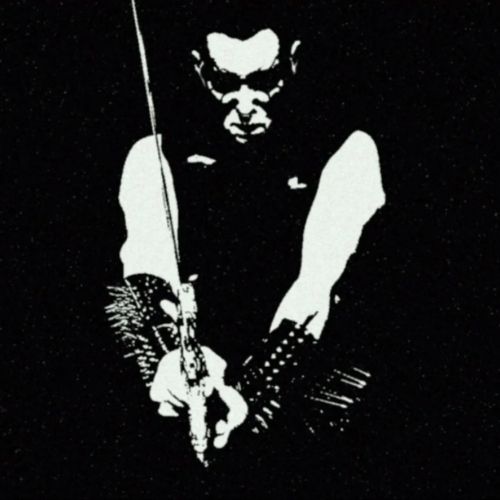
Your name and imagery are deliberately vampiric and ritualistic. Is that aesthetic a literal belief system, a poetic device, or a performance mask? Push me beyond the cliché.
I hate masks and poetic devices. I hate it when I see bands take inspiration from books and movies to portray a decadent, totally fictional gothic imagery. So, I believe in vampires? It depends on what you mean by vampires.
People have always given credence to books and movies, as mentioned before. From ancient history to us, only legends have come down to us. But it is said that legends have a grain of truth. A truth most likely distorted by superstition, where the figure of the vampire became myth due to the irrational, atavistic fear of the unknown inherent in human beings.
This fear has driven humans to see diversity as absolute evil. Therefore, the vampire is the outcast from society because of his differences, the one who becomes the monster everyone fears because of the hatred shown by humanity. Hatred, apathy, sadness, and loneliness can corrupt even the most good of souls.
Has that stance ever cost you opportunities or created misunderstandings in the scene?
Honestly, I try to stay as far away from the scene as possible. I’m not interested in being part of it. And I don’t care if my positions offend anyone. As long as what I express through my compositions corresponds to the truth, I have nothing to be ashamed of. After all, the world has revolved around itself until now thanks to the lies people tell.
People are accustomed to lying and living in lies. Politicians lie. Lobbyists lie. Businessmen lie. Film directors lie. Musicians lie. Record companies lie. Environmentalists lie. Married people lie. Children lie. Ordinary people lie.
And the only benefit they pursue is their own. Am I cynical and negative? Of course. But this is the society I’ve had before my eyes since I was born.
Your new album leans heavily on synths and drone while keeping raw black-metal edges. Walk me through your writing process: do synths come first, or do the riffs demand the atmosphere?
In fact, this blend of raw black metal and drone/ambient has existed since the first demo. The musical conception of Vampyriia began with this very purpose: to blend these unique sonic elements. The riff is the foundation of everything. I generally compose with guitar, but on more than one occasion, I’ve composed riffs with bass, piano, or synths. Usually, one riff leads to another, until I have enough riffs for an arrangement. Then I create the harmonies and, finally, I add further atmosphere with samples.
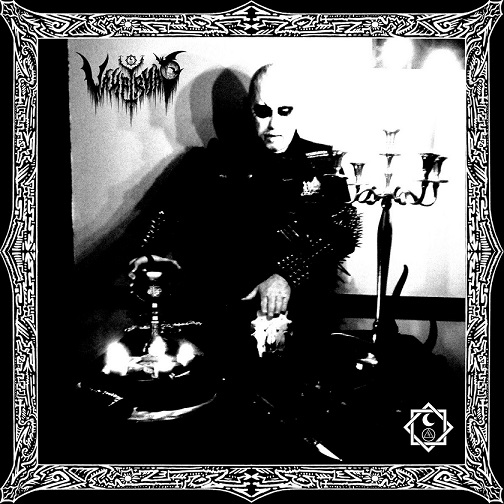
When a passage becomes “too pretty,” how do you decide to corrupt it again?
I don’t think one of my songs can become “too good.” This is because, before I start composing, I choose the type of distortion I want to use. I’m also very old-school when it comes to sound settings. I have a pedalboard with various effects, and I always tend to end up with very dirty sounds. I like it that way. And if a riff becomes “too sunny,” it’s immediately modified or, if necessary, discarded.
Production on Luxuria Sanguis Plenilunium is intentionally claustrophobic and repetitive in places. Is repetition a trance device for you?
The concept of drone music is based on the reiteration of sound and the often circular repetition of sounds and riffs, which inevitably lead to a state of trance. So yes, repetition is definitely a trance tool. Many people fail to understand this. They think my compositions lack ideas because I repeatthe structures of my songs. But this is a well-defined, deliberate archetype. It’s part of myexperimental conception. It often happens to those who use dissonant riffs and are criticized by those who only appreciate the melodies. Some people can’t conceive of a type of music that goes beyond their own standards, but that doesn’t mean the music is bad.
Black metal has always flirted with extremity, aesthetic, thematic, spiritual. Do you think thegenre still has the capacity to shock meaningfully, or has it become a museum of its own myths?
More than the music itself, I believe it was the actions of certain people that shocked publicopinion. When Varg was sent to prison, the judge focused on the church burnings and the murder, rather than discussing the musical aesthetic. No one ever cared about the music itself, until the deaths began. Some time ago, someone said that “Black Metal has failed,” because Christians, Jews,and Muslims continue their lives unaware of the Black Metal scene. They don’t care because, in reality, it doesn’t pose a real threat to the status quo. Even the much-debated NSBM, which I’ve often heard called “the last true bastion of Black Metal,” often doesn’t transcend its rhetoric. Recently (via social media) I’ve seen more and more bands pounding the stage like irritable
monkeys. A huge sonic chaos, and then everyone goes home. It’s over. Why this? Because the system screwed us. It took our dissent and turned it into entertainment. And here I am: an old wolf with a gray coat, still pursuing his goal of transforming emotions into music, convinced that it still has meaning.
Perhaps old wolves like me continue in this endeavor because they feel the need, apersonal need. But I’m sure that for the new generations, the meaning of this music is very different.
Critics compare your work to early Burzum, Mortiis and raw Scandinavian strands. Do you accept those comparisons, or do they miss something essential about your Italian context?
I’ve never experienced any epiphanies about being Italian. In fact, I’ve felt more comfortablevisiting other countries, like Norway, Scotland, and the Czech Republic. And I’ve often foundmyself at odds with the music scene in my home country. There are many bands here, but they’ve rarely crossed national borders. Unfortunately, old national stereotypes die hard.
In any case, I think certain comparisons are inevitable. They reflect the pulse of one’s own musical tastes. Although I must admit, I’ve never been a big fan of Mortiis. The musical conception of my synth playing draws mainly from Goblin, the prog rock band from my home country. And it’s not just about listening to two bands. I’m sure many who appreciate my music would be surprised by the diverse influences that inform my compositions. This is because there’s a deep-rooted belief that extreme musicians only listen to extreme music. But that’s a mistake.
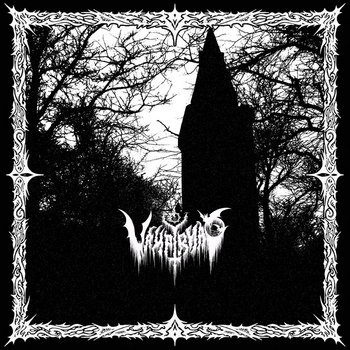
Luxuria Sanguis Plenilunium reads like a ritual cycle. Which track is the altar piece for you, and why?
To be honest, I don’t have a favorite or a song that I consider superior to the others. For me, all songs have the same value. This is because, when I compose, I try to have an overall vision. Even if the songs don’t form a true concept, they still have a common thread that ties them together. I’m the first “fan” of my music, and as such, I’m demanding of myself. I’m not satisfied with a song simply sounding good. It has to be perfect, at least for me.
Especially during mixing and mastering, I risk becoming obsessive. My productions present themselves as ritual cycles because they are. Every aspect of the composition denotes a well-defined ritual passage. The same goes for the lyrics. Added to this is my spiritual faith, which adds another layer to the compositions. But here we enter a personal sphere, and I prefer to keep it that way.
Tell me about a lyric or sonic moment on the record that still unsettles you when you listen back.
Unsettles me? No. My music thrills me! This is the most appropriate term. First of all, the bass lines. They have an intense groove. When the bass hits the track, it’s truly unstoppable! I really appreciate the sudden slowdown in Language of Baphomet. I really like the main riff of Viper Venom. Absolutely epic! And I really enjoy the necrotic atmosphere that pervades Dragon Necromancy! The doom rhythms of bands like Candlemass have always held a great fascination for me.
However, extracting only individual moments wouldn’t be right for me. I appreciate everysingle moment of my compositions. In the specific case of this album, I’m thrilled by the ’80satmosphere that permeates the entire work. It’s no coincidence that one of the albums I listened to before starting to compose was The Return… by Bathory.
Regarding the lyrics, I’ve never published them because of what I said before, because I don’t think there are still people interested in the meaning behind the words. Their intrinsic value would be wasted. Furthermore, my lyrics are always composed in multiple languages, typically including English, Italian, the dialect of my area,and some ancient languages like Latin, Greek, and Aramaic. Sometimes, I blend certain terms, creating a sort of personal glossolalia. Many would find them incomprehensible. So I decided to leave only the titles, generally written in English, so everyone can have an idea of the lyrical content.
The cassette run was limited. How do you view physical objects in an era of instant streaming?
I grew up with physical formats. Initially cassettes, then vinyl and CDs. For me, it’s normal for a musical production to be developed through one of these formats. Sure, today streaming and MP3s have made it faster to find music. But this speed has ruined the enthusiasm we felt in the years before the digital revolution when a new album was released.
I remember the trepidation when I went to Orion (a store in my hometown), or when I went to Sound Cave (the Avantgarde Music store) in Milan, to buy the new album of a band I liked and had seen advertised and reviewed in one of the music magazines I bought at the newsstand. The adrenaline rush was sky-high!
Today, that magic is gone, and I resent it a little when the younger generations, who haven’t experienced those sensations, belittle our feelings simply because they don’t understand them. They’re missing out on a piece of history!
You released this through Void Wanderer. How has working with them shaped the record’spresentation and reach? Were there creative compromises?
Absolutely not. I don’t like to compromise, not even for my art. In the past, I’ve had (a few) contacts with labels who wanted to change the image and sound I’ve created. The usual “you should have a cleaner sound.” Or “you should sound more like Cradle of Filth.” Needless to say, I respectfully said goodbye and looked elsewhere.
My “band” isn’t a money-making machine. I’m not concerned about satisfying the demands of a trendy audience. I don’t make music for fun or entertainment. Sad to say, many bands have turned the purity of their art into a long-term investment. Honestly, I think they would have been better off changing their musical genre. True Black Metal isn’t a lazy musicintended as a soundtrack for bored nerds who spend their days posting trash on social media!Having a true attitude means taking your beliefs to the next level, even at the risk of being labeled a fanatic! Fuck tourists!
What would you change about the underground network if you could?
I think I’d change almost everything. Those who were part of the underground were once proud of it. Today, however, the underground is just a starting point for trying to make big money. There are few acts, even in Black Metal, that are proud of belonging to the underground. For me, everything else can catch fire.
Where does Vampyriia go next, more ritual, more melody, or a darker silence?
For now, I’ll remain silent and maintain this silence until I have something new to say. Assuming I still have the desire to produce something new.
If someone hears Luxuria Sanguis Plenilunium at 3 a.m. and it changes them, what do you hope they carry out of that it?
If, while listening to this album of mine, someone were to hear “the call of the blood,” it wouldmean that, in their own way, they too are a vampire. Therefore, I hope they draw from it the strength needed to face the rottenness of this world. To everyone else, we are evil. But a necessary evil, to escort this society towards its inevitable end…