
English:
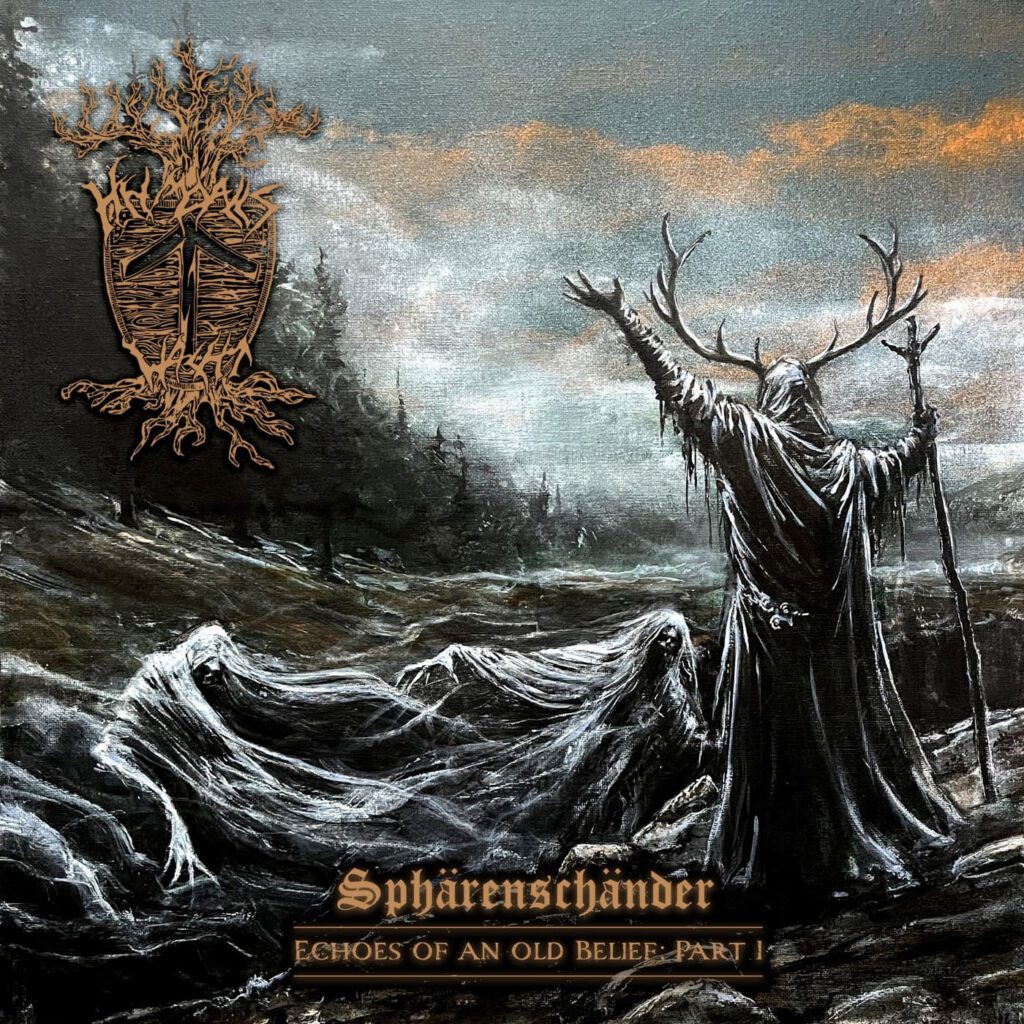
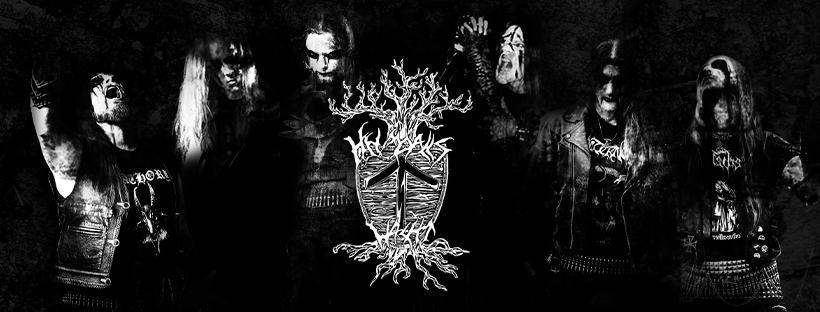
Since 2004, Germany’s Heimdalls Wacht have been relentlessly pounding the cobblestones with their brutal Pagan Black Metal, or Rostiges Ruhrmetall, as their 2025 compilation was appropriately titled. But these gentlemen from Westphalia are far from finished, as their ninth studio album is merely the first part of a much larger story. An album on which the ancient gods are once again awakened, while the modern world is certainly not spared from criticism.
The story behind Sphärenschänder: Echoes of an Old Belief – Part I revolves around Heimdall, the watchman of the gods, who awakens from a long slumber in a world he barely recognises. Ancient customs, the connection with nature and pagan beliefs have largely given way to a society in which materialism and individualism seem to walk hand in hand. Heimdall witnesses how the world he once guarded has gradually become alienated from its original values. An intriguing concept from which Saruman, responsible for the concept, music and lyrics, has clearly drawn a great deal of inspiration.
Heimdalls Wacht rarely disappoint, and once again these Germans manage to live up to expectations. Armed with a powerful production and a fine collection of songs, they once again manage to strike exactly the right chord. The rawness is still very much present, but over the years the band has learned to give the melodic and melancholic side of their music enough room to breathe. Along the way, they regularly venture beyond the boundaries of traditional Black Metal without losing that characteristic Heimdalls Wacht sound.
With Urgrund, the listener is slowly drawn into the story. Spoken words, choral vocals and ominous guitar work lay the foundations for what is to come. But it doesn’t take long before the gentlemen unleash their familiar aggression. Schwarze Wacht Westfalia, in particular, demonstrates that there are hardly any signs of wear and tear. The guitars rage, the drums drive everything forward and the different vocal styles create a thoroughly grim atmosphere. Flames of Awakening also fits perfectly into the underlying narrative of awakening, resistance and rediscovering one’s own identity.
Fortunately, the band doesn’t spend the entire album charging through the Westphalian forests at full speed. In der Seelenmühle is a particularly direct composition that unleashes a considerable amount of aggression, while Runes to Heal – Weapons to Cure reveals a more epic and melodic side of the band. It is precisely this variation that prevents the album from becoming monotonous. These gentlemen know exactly when to loosen the reins and when it is time to put their foot firmly back on the accelerator.
With Widukind-Theme, an interesting connection is also made to the history of the Saxons. Widukind was the Saxon leader who resisted Frankish expansion and forced Christianisation under Charlemagne during the eighth century. His presence therefore fits perfectly within the themes of a band that has drawn inspiration from the pagan past and the history of its native region for more than twenty years.
One of the most striking compositions is Echo eines alten Glaubens, which also features guest vocalist Córka. Here, the music takes on an almost ritualistic character, with choral vocals, aggressive passages and more restrained sections complementing one another beautifully. The nearly eight-minute-long Das Horn – gebrochen also deserves particular attention. This composition brings together several elements heard throughout the album, making it a fitting musical highlight before the brief Forlorn brings the record to a subdued conclusion. Of course, this is far from a definitive ending, as Heimdall’s story has not yet been fully told.
There is also little to complain about when it comes to the production. The album was recorded, mixed and mastered by Saruman and Mario at Liquid Aether Studio. The sound is powerful and remarkably clear, but fortunately not so polished that all the rough edges have disappeared. The guitars retain their venom, the drums cut through nicely and the various vocal performances are given plenty of room. Particularly during the more epic passages, this approach works exceptionally well.
After more than twenty years and nine studio albums, one might expect Heimdalls Wacht to have pretty much said everything there is to say by now. Nothing could be further from the truth. With Sphärenschänder: Echoes of an Old Belief – Part I, the Germans once again deliver a convincing album in which their familiar raw Black Metal goes hand in hand with melancholy, melody and a healthy dose of pagan mysticism. This is certainly no revolutionary change of direction, but rather a band that knows exactly where its strengths lie and continues to make excellent use of them. And since this is only the first chapter of the story, we can undoubtedly look forward to another healthy dose of Westphalian fury.
Nederlands:
Sinds 2004 hamert het Duitse Heimdalls Wacht al op de kinderkopjes met hun brute Pagan Black Metal, oftewel Rostiges Ruhrmetall, zoals de compilatie uit 2025 werd genoemd. Maar klaar zijn deze Westfaalse heren nog zeker niet, want hun negende studioalbum is tenslotte het eerste deel van een groter geheel. Een album waarop de oude goden opnieuw tot leven worden gewekt en waarbij de moderne wereld er niet bepaald genadig vanaf komt.
Het verhaal achter Sphärenschänder: Echoes of an Old Belief – Part I draait om Heimdall, de wachter van de goden, die na een lange slaap ontwaakt in een wereld die hij nauwelijks nog herkent. De oude gebruiken, de verbondenheid met de natuur en de heidense overtuigingen hebben grotendeels plaatsgemaakt voor een samenleving waarin materialisme en individualisme op een merkwaardige manier hand in hand gaan. Heimdall ziet hoe de wereld die hij ooit bewaakte langzaam van haar oorspronkelijke waarden is vervreemd. Een interessant gegeven waar Saruman, verantwoordelijk voor het concept, de muziek en de teksten, behoorlijk wat inspiratie uit heeft weten te halen.
Heimdalls Wacht stelt eigenlijk maar zelden teleur en ook deze keer weten de Duitsers de verwachtingen weer waar te maken. Met een stevige productie en een mooie lading nummers weten ze opnieuw precies de juiste plek te raken. De rauwheid is nog altijd aanwezig, maar de band heeft door de jaren heen geleerd om ook de melodieuze en melancholische kant van hun muziek voldoende ruimte te geven. Daarbij wordt er regelmatig buiten de grenzen van de traditionele Black Metal gekeken, zonder dat het karakteristieke geluid van Heimdalls Wacht verloren gaat.
Met Urgrund wordt de luisteraar langzaam het verhaal binnengetrokken. Gesproken woorden, koorzang en dreigend gitaarwerk leggen de basis voor wat komen gaat. Maar lang duurt het niet voordat de heren hun vertrouwde agressie weer tevoorschijn halen. Vooral Schwarze Wacht Westfalia laat horen dat er van enige vorm van slijtage nog nauwelijks sprake is. De gitaren razen, de drums jagen het geheel vooruit en de verschillende vocalen zorgen voor een behoorlijk grimmige sfeer. Ook Flames of Awakening sluit mooi aan bij het achterliggende verhaal van ontwaken, verzet en het opnieuw ontdekken van de eigen identiteit.
Toch wordt er niet voortdurend op volle snelheid door de Westfaalse bossen geraasd. In der Seelenmühle is een behoorlijk direct nummer waarin de nodige agressie wordt losgelaten, terwijl Runes to Heal – Weapons to Cure juist een meer epische en melodieuze kant van de band laat horen. Het is precies deze afwisseling die ervoor zorgt dat de plaat nergens eentonig wordt. De heren weten wanneer ze de teugels moeten laten vieren en wanneer het tijd is om het gaspedaal weer stevig in te drukken.
Met Widukind-Theme wordt bovendien een interessante verbinding gelegd met de geschiedenis van de Saksen. Widukind was de Saksische leider die zich in de achtste eeuw verzette tegen de Frankische expansie en de gedwongen kerstening onder Karel de Grote. Daarmee past zijn aanwezigheid uitstekend binnen de thematiek van een band die zich al ruim twintig jaar laat inspireren door het heidense verleden en de geschiedenis van de eigen streek.
Een van de meest opvallende composities is Echo eines alten Glaubens, waarop ook gastzangeres Córka te horen is. Hier krijgt de muziek een bijna ritueel karakter, waarbij de koorzang, de agressieve passages en de meer gedragen stukken elkaar mooi aanvullen. Ook het bijna acht minuten durende Das Horn – gebrochen verdient de nodige aandacht. Het nummer brengt verschillende elementen van het album samen en vormt daarmee een passend muzikaal hoogtepunt voordat het korte Forlorn de plaat op een ingetogen manier afsluit. Een definitief einde is het natuurlijk niet, want het verhaal van Heimdall is hiermee nog lang niet verteld.
Ook over de productie valt weinig te klagen. Het geheel werd opgenomen, gemixt en gemasterd door Saruman en Mario in de Liquid Aether Studio. Het geluid is stevig en behoorlijk helder, maar gelukkig niet zo gladgestreken dat alle scherpe randjes verdwenen zijn. De gitaren behouden hun venijn, de drums komen goed door en ook de verschillende zangpartijen krijgen voldoende ruimte. Vooral tijdens de meer epische passages komt deze aanpak uitstekend tot zijn recht.
Na ruim twintig jaar en negen studioalbums zou je misschien verwachten dat Heimdalls Wacht inmiddels wel zo’n beetje alles heeft verteld wat er te vertellen valt. Niets blijkt minder waar. Met Sphärenschänder: Echoes of an Old Belief – Part I leveren de Duitsers opnieuw een overtuigend album af waarin hun vertrouwde rauwe Black Metal hand in hand gaat met melancholie, melodie en een flinke dosis heidense mystiek. Geen revolutionaire koerswijziging, maar wel een band die precies weet waar haar kracht ligt en daar nog altijd dankbaar gebruik van maakt. En aangezien dit pas het eerste deel van het verhaal is, mogen we ons voorlopig nog op het nodige Westfaalse geweld verheugen.
87/100
Heimdalls Wacht:
Bandcamp
Website
Talheim Records:
Bandcamp
Facebook
Instagram
Website