
English:
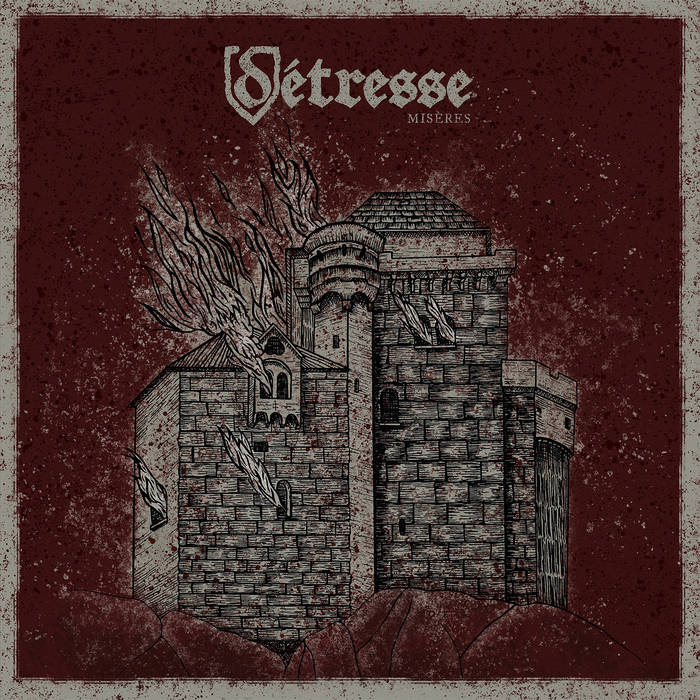
With one foot in Vienna, Austria, and the other in Québec, Canada, Détresse is an international Black Metal trio presenting its second full-length album, Misères. The band consists of guitarist and vocalist Patrick Stoiber, bassist Cynthia Paré, and drummer Lukas Lichtenfels. Following last year’s debut, Pessimismes, the trio has certainly not been sitting idle, as barely a year later, new material has already arrived. Released on October 9 through Vendetta Records, a label that has established quite a reputation within the international Black Metal underground, Misères offers seven tracks spanning just over forty minutes, accompanied by themes that leave little room for optimism.
The album title pretty much speaks for itself. Détresse focuses on the misery of human existence, with oppression, deprivation, and despair taking centre stage. Past and present seem to merge, as though human history is little more than an endless repetition of the same mistakes. Musically, the band has chosen to scale back some of the atmospheric elements of its debut, placing greater emphasis on aggression and intensity. That does not mean melody has been completely abandoned. Quite the opposite, as the combination of raw Black Metal and melodic undercurrents remains an essential part of the band’s sound.
Opening track Vallée de Misères immediately sets things in motion with considerable force. The guitars build a wall of melodic riffs, supported by relentless drumming and a vocal delivery that leaves little to the imagination. The track carries considerable intensity without descending into an impenetrable wall of noise. The melodies remain clearly audible, adding a certain emotional weight to the music. The following Verrottet continues along similar lines. Its German title, roughly translating to “rotten”, fits perfectly with the album’s bleak themes. Once again, the band pushes forward relentlessly, with the guitars playing a major role in maintaining a constant sense of tension.
With Schwefel, the band eases off the accelerator somewhat. This gives the composition a heavier and more threatening character, allowing the rhythm section more room to make its presence felt. The melodies unfold more deliberately, while the alternation between different passages provides a welcome sense of dynamics. As far as I am concerned, this is precisely where Détresse becomes most interesting. Not simply speed and aggression, but a combination of menace, melancholy, and a certain musical heaviness. Here, the band demonstrates that a well-constructed composition can sometimes make a greater impression than an uninterrupted barrage of blast beats.
The French-language Les Nuits Jaunes introduces a somewhat different atmosphere. The contribution of guest vocalist Vestal and the spoken passages by Cynthia Paré add another dimension to the track. The variation in vocal delivery fits nicely with the band’s international character, with both French and German finding a natural place within the music. The composition remains firmly rooted in Black Metal, but the vocal diversity gives it a more narrative quality. Nevertheless, not every transition is equally convincing, and the tension occasionally threatens to lose some of its momentum.
Peine Perdue also moves between aggression and melancholy. The melodic guitar passages regularly introduce a slightly mournful undertone, while the drumming keeps pushing the music forward. Stylistically, there are similarities with the more melodic side of modern European Black Metal, with bands such as Firtan and Harakiri for the Sky serving as useful reference points. Détresse, however, sounds rawer and less polished, although the band does not always manage to achieve the same emotional depth. The compositions are competently constructed, but certain passages remain just a little too superficial to leave a lasting impression.
With So Bitter, So Kalt, the German-language bleakness returns. The title could almost serve as a motto for the entire album. Détresse maintains its combination of melodic aggression and dark atmosphere without fundamentally altering its musical approach. This results in a consistent body of work, although towards the end I cannot help feeling that the band relies a little too heavily on the same formula. The riffs are convincing and the execution is solid, but a few unexpected twists might have given the album a little more character.
Closing track Verloren, running just under three minutes, serves as a relatively brief epilogue. Azrael Trailovic is credited with the instrumentation for this composition. The track remains consistent with the album’s sombre themes and provides a fitting conclusion. After more than forty minutes dominated by human misery, a suddenly optimistic ending would have felt rather out of place anyway.
The production also deserves attention. Détresse has opted for a sound that preserves the raw side of Black Metal while allowing the melodic structures sufficient room to breathe. The guitars sound sharp and cutting, while the drums provide a solid foundation. As a result, the album is accessible enough for the individual details to remain distinguishable without stripping the music of its rough edges.
Ultimately, Misères is a solid second album on which Détresse continues to refine its musical direction. The decision to adopt a more direct approach works particularly well at several points, especially when the band combines aggression with drawn-out melodies and a threatening atmosphere. On the other hand, not every composition leaves an equally strong impression, and the trio could occasionally have taken a few more risks. The international character and the combination of different languages give the music a distinct identity, but musically, Détresse does not yet consistently manage to distinguish itself from the competition.
Nevertheless, there is plenty to enjoy for listeners who appreciate raw, melodic Black Metal with a melancholic edge. Misères is not a revolutionary album, nor does it appear to have any ambition to be one. Above all, it is a convincing piece of work by three musicians who transform their frustration with the human condition into forty minutes of thoroughly bleak music. An album that reaches its strongest moments when Détresse takes its foot off the accelerator and allows misery all the room it needs to unfold.
Nederlands:
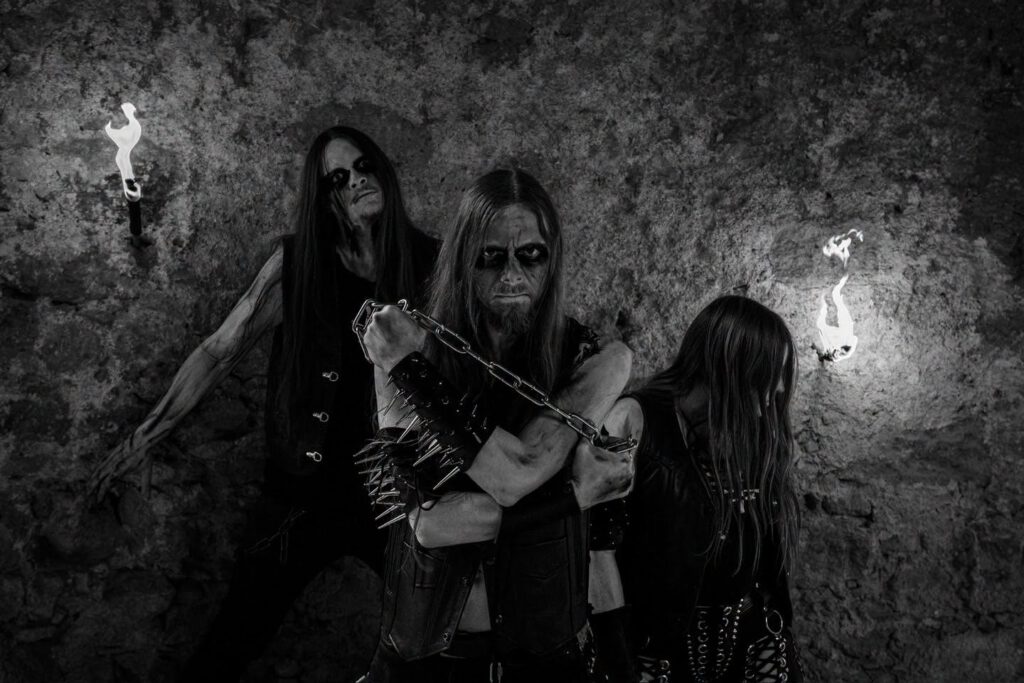
Met één been in het Oostenrijkse Wenen en het andere in het Canadese Québec opereert Détresse, een internationaal Black Metal-trio dat met Misères zijn tweede volledige album presenteert. De band bestaat uit gitarist en vocalist Patrick Stoiber, bassiste Cynthia Paré en drummer Lukas Lichtenfels. Na het vorig jaar verschenen debuut Pessimismes heeft het gezelschap niet bepaald stilgezeten, want amper een jaar later ligt er alweer nieuw materiaal. Op 9 oktober verscheen Misères via Vendetta Records, een label dat inmiddels een behoorlijke reputatie heeft opgebouwd binnen de internationale Black Metal-underground. Zeven nummers, ruim veertig minuten speelduur en een thematiek die weinig ruimte laat voor optimisme.
De albumtitel spreekt eigenlijk al voor zich. Détresse richt zich op de ellende van het menselijk bestaan, waarbij onderdrukking, ontbering en wanhoop centraal staan. Het verleden en heden vloeien daarbij in elkaar over, alsof de menselijke geschiedenis weinig anders is dan een eindeloze herhaling van dezelfde fouten. Muzikaal heeft de band ervoor gekozen de atmosferische elementen van zijn debuut wat terug te schroeven en de nadruk sterker op agressie en intensiteit te leggen. Dat betekent overigens niet dat alle melodie overboord is gegooid. Integendeel, juist de combinatie van rauwe Black Metal en melodieuze onderstromen vormt een belangrijk onderdeel van het geluid.
Opener Vallée de Misères trapt meteen stevig af. De gitaren trekken een muur van melodisch riffwerk op, ondersteund door voortjagende drums en een vocalistische voordracht die weinig aan de verbeelding overlaat. Het nummer bezit een behoorlijke intensiteit, zonder daarbij te vervallen in een ondoordringbare geluidsbrij. De melodieën blijven duidelijk aanwezig en geven de muziek een zekere emotionele lading. Het aansluitende Verrottet zet deze lijn voort. De Duitstalige titel, die zoveel betekent als ‘verrot’, sluit naadloos aan bij de sombere thematiek. Ook hier wordt stevig doorgeduwd, waarbij de gitaren een belangrijke rol spelen in het creëren van een voortdurende spanning.
Met Schwefel schakelt de band wat terug in tempo. De compositie krijgt hierdoor een zwaarder en dreigender karakter, waarbij vooral de ritmesectie meer ruimte krijgt om zich te laten gelden. De melodieën worden nadrukkelijker uitgesponnen en de afwisseling tussen de verschillende passages zorgt voor een aangename dynamiek. Wat mij betreft is dit precies het terrein waarop Détresse het interessantst wordt. Niet uitsluitend snelheid en agressie, maar een combinatie van dreiging, melancholie en een zekere muzikale zwaarte. Hier laat de band horen dat een goed opgebouwde compositie soms meer indruk maakt dan een onafgebroken spervuur aan blastbeats.
Het Franstalige Les Nuits Jaunes brengt vervolgens een andere sfeer met zich mee. De bijdrage van gastvocalist Vestal en de gesproken passages van Cynthia Paré geven het nummer een extra dimensie. De afwisseling in stemgebruik sluit goed aan bij het internationale karakter van de band, waarbij het Frans en Duits een vanzelfsprekende plaats innemen. De muziek blijft stevig geworteld in de Black Metal, maar krijgt door de vocale variatie een wat meer verhalend karakter. Toch is niet iedere overgang even overtuigend en dreigt de opgebouwde spanning hier en daar enigszins te verwateren.
Ook Peine Perdue beweegt zich tussen agressie en melancholie. De melodieuze gitaarpartijen zorgen regelmatig voor een licht weemoedige ondertoon, terwijl het drumwerk de muziek voortdurend vooruit blijft stuwen. Stilistisch zijn er raakvlakken met de meer melodieuze kant van de moderne Europese Black Metal, waarbij bands als Firtan en Harakiri for the Sky als referentie kunnen dienen. Détresse klinkt echter rauwer en minder gepolijst, al weet de band niet altijd dezelfde emotionele diepgang te bereiken. De nummers zitten degelijk in elkaar, maar sommige passages blijven net iets te veel aan de oppervlakte hangen.
Met So Bitter, So Kalt keert de Duitstalige somberheid terug. De titel had eigenlijk als motto voor het volledige album kunnen dienen. Détresse houdt vast aan de combinatie van melodieuze agressie en donkere atmosfeer, zonder zijn muzikale uitgangspunten wezenlijk te veranderen. Dat levert een consistent geheel op, al bekruipt mij tegen het einde ook het gevoel dat de band soms net iets te nadrukkelijk op dezelfde formule vertrouwt. De riffs zijn overtuigend en de uitvoering staat als een huis, maar een paar onverwachte wendingen hadden de plaat wellicht nog wat meer karakter gegeven.
Het afsluitende Verloren vormt met zijn speelduur van net geen drie minuten een relatief korte epiloog. Voor deze compositie werd Azrael Trailovic verantwoordelijk gesteld voor de instrumentatie. Het nummer sluit aan bij de zwaarmoedige thematiek en geeft de plaat een passend slot. Na ruim veertig minuten waarin menselijke ellende de boventoon voert, zou een plotseling optimistisch einde immers nogal misplaatst zijn geweest.
De productie verdient eveneens aandacht. Détresse kiest voor een geluid waarin de rauwe kant van Black Metal behouden blijft, maar waarbij de melodische structuren voldoende ruimte krijgen. Het gitaarwerk klinkt fel en snijdend, terwijl de drums een stevige basis vormen. De plaat klinkt daarmee toegankelijk genoeg om de details te kunnen onderscheiden, zonder dat de muziek haar scherpe randjes volledig verliest.
Misères is uiteindelijk een degelijk tweede album waarop Détresse zijn muzikale koers verder aanscherpt. De keuze voor een directere aanpak pakt op verschillende momenten goed uit, vooral wanneer de band de agressie laat samengaan met slepende melodieën en een dreigende atmosfeer. Daar staat tegenover dat niet alle composities evenveel indruk achterlaten en dat de groep soms wat meer risico had mogen nemen. Het internationale karakter en de combinatie van verschillende talen geven de muziek een eigen identiteit, maar muzikaal weet Détresse zich nog niet voortdurend van de concurrentie te onderscheiden.
Toch valt er voldoende te genieten voor liefhebbers van rauwe, melodieuze Black Metal met een melancholische inslag. Misères is geen revolutionaire plaat en pretendeert dat gelukkig ook nergens te zijn. Het is vooral een overtuigend werkstuk van drie muzikanten die hun frustratie over de menselijke toestand omzetten in veertig minuten zwartgallige muziek. Een album dat zijn sterkste momenten kent wanneer Détresse de snelheid even laat varen en de ellende alle ruimte geeft om zich te ontvouwen.
78/100
Détresse:
Bandcamp
Facebook
Instagram
Vendetta Records:
Vendetta Records Website
Bandcamp
Instagram
Facebook