
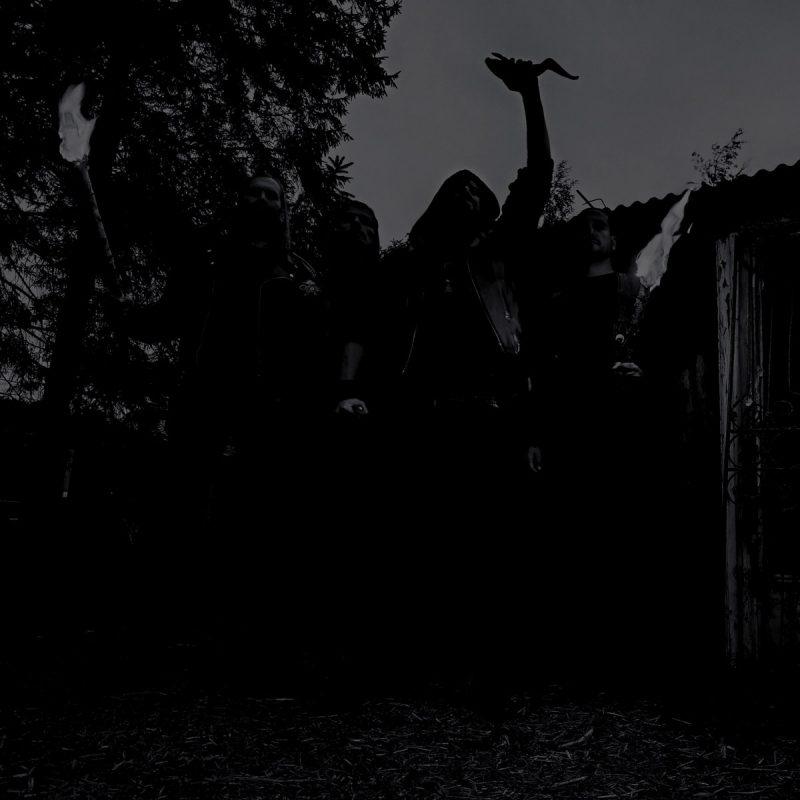
With When The Mist Falls…, Belgian Black Metal outfit Radbraker presents its debut album on October 30 through the renowned Osmose Productions. Although the band was only formed in 2024, the musicians involved are certainly no strangers to the Flemish Black Metal underground. Having previously been active in bands such as Aerdryk, Dudsekop and Nil Miserans, the four members bring a considerable amount of experience to the table.
Radbraker delivers raw, atmospheric Black Metal in which aggression, historical imagery and a distinctly rural character come together. The five lengthy compositions on When The Mist Falls… form a conceptual whole, exploring themes of oppression, despair, anger and ultimately resistance. Musically, the band embraces plenty of dynamics, while the Flemish lyrics give the material a distinctive identity of its own.
For a relatively new band to release its debut through an established institution like Osmose Productions is certainly noteworthy. It says something about the confidence the French label has in these Belgian musicians. But who exactly are the people behind Radbraker? Where does their fascination with the past come from, and what message do they hope to convey through their music?
For Merg & Been Magazine, we sat down with Radbraker to discuss the band’s origins, the creation of their debut album, the Flemish Black Metal scene and the deeper meaning behind their music.
1. Radbraker may be a relatively new name in the Belgian Black Metal underground, but its members have been active in the scene for quite some time. What was missing from your previous musical activities that made the creation of Radbraker necessary?
Radbraker is more than an artistic concept or a purely musical story. It is what resides within us. Metal has become so accessible and polished nowadays that it no longer always served our needs. Radbraker is pure emotion, however uncomfortable that may sometimes be.
The band Radbraker was founded in the summer of 2024. In times of automation, Radbraker stands for craftsmanship. All designs, artwork, and shirt prints are our own creations.
Vandal had been nurturing the idea of creating an atmospheric, authentic Black Metal album. He shared the stage with Tijsman in Dudsekop and quickly knew that Tijsman would become the vocalist for this project. At the same time, Tijsman, NCO, and BLHF were entertaining a similar idea: bring back the dark ages…
An evening of beer and mead brought everything together. Vandal’s musical ideas and the philosophical reflections of Tijsman and NCO quickly took on a life of their own. After several summer evenings in the rehearsal room and around the fire pit, RADBRAKER was born.
It is also important for us to see these projects and bands as separate entities. The other bands require a more straightforward approach. Where we sometimes stop with other bands, we continue with Radbraker. Out of necessity, yet very naturally. And that is perfectly fine.
2. Your band name refers to one of the most brutal execution methods in European history. However, you have transformed the victim into someone who eventually takes control. Is Radbraker primarily an expression of rebellion against authority, or does the name carry a more personal meaning?
People often say, “We’re going back to the Middle Ages…” Besides the fact that these so-called dark ages fascinate us immensely, we must admit that the similarities to today’s systems are remarkably characteristic of feudal structures.
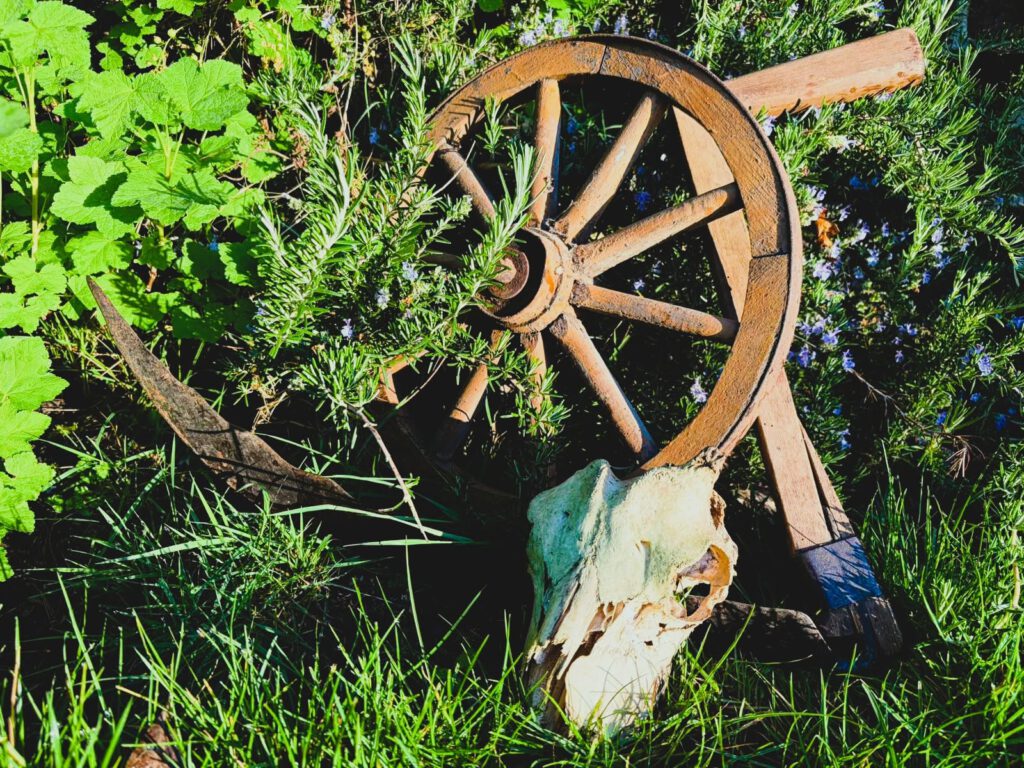
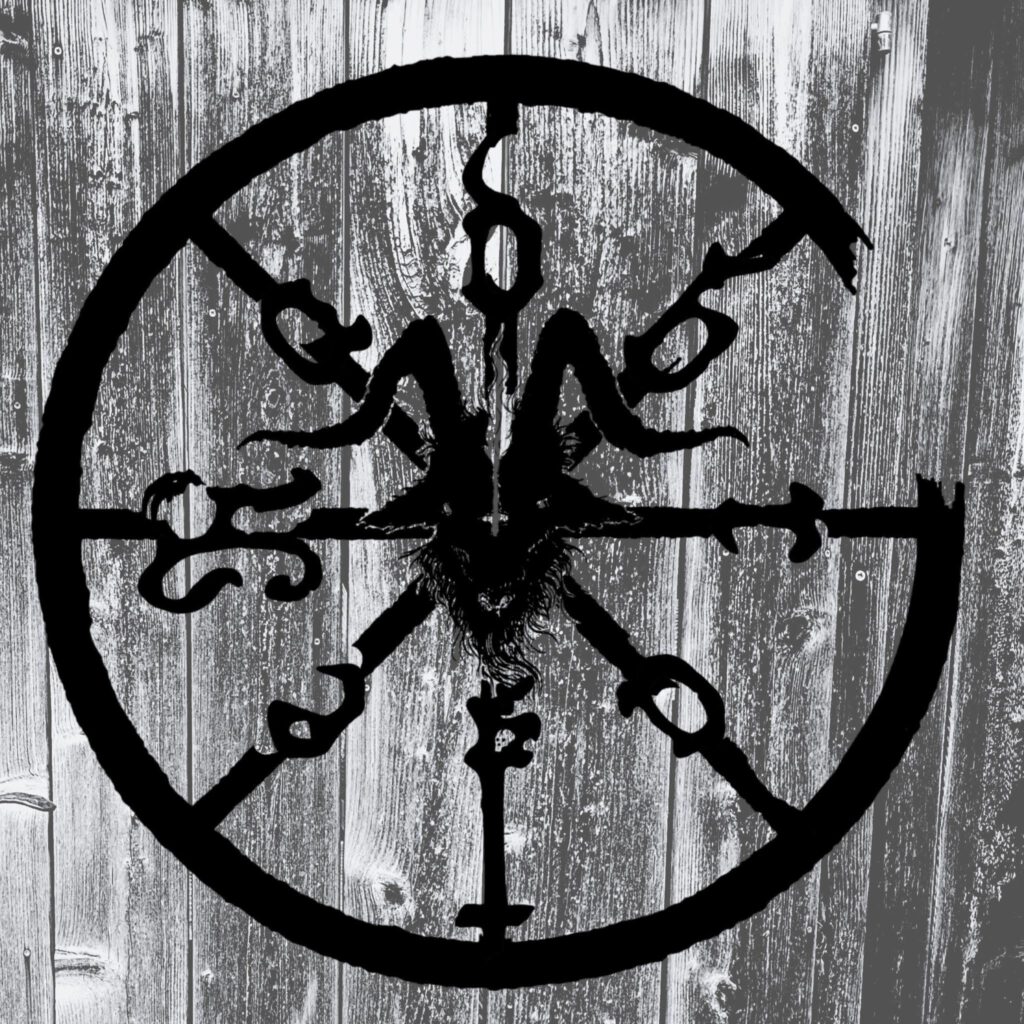
Our name, Radbraker, is indeed derived from “breaking on the wheel,” a punishment that was carried out in our regions centuries ago against thieves and murderers. It is also known that rebels often ended up on the scaffold, where their bones were broken upon the wheel. Those in power decide who gets punished.
To us, the wheel symbolizes the branches of power that we seek to break. Stories such as Michael Kohlhaas make you want to take up the sword again… or the pen. 🙂
At the same time, it is a story of endurance. This is where the inner struggle comes to the forefront. Oppression is timeless; it affects everyone, everywhere. When you live under oppression, you can either surrender and accept it or choose to fight. Making that choice can bring liberation.
We found that liberation by confronting our struggles, and we encourage others to dare make that same choice.
3. Your debut album, When The Mist Falls…, explores oppression, despair, anger and ultimately resistance. Are these themes primarily inspired by historical events, or do they reflect your observations of contemporary society?
Both, as mentioned above.
They are personal, yet universal and timeless. The struggle we wage for existence is a primal force that defines us as human beings. We see these stages as a process of defense and resistance.
The names we remember from history classes are those of kings, emperors, and dictators, but behind every movement stand countless individuals, each with their own motivations. As mentioned before, the old times and the new, the legacy of our ancestors in all its facets, the struggles of different worlds and empires… We live with the scythe in our hands, as it were, ready to tear conventions apart.
4. The album consists of five lengthy compositions that together form a conceptual journey. Was the musical material already written before the concept took shape, or did the narrative influence the actual songwriting process?
Everything happens simultaneously and naturally. In fact, both aspects reinforce one another.
Vandal already had a considerable amount of material prepared, after which NCO added the backbone. Meanwhile, we begin to imagine the concept alongside the soundtrack, or hear that melody that starts the dance like a clenched fist.
At that point, we must unleash the horde of Bokkenrijders…
The order of the songs is therefore deliberately progressive and difficult to separate from one another. The concept and our parallel life paths naturally provide a framework within which we work. However, we like to challenge each other through experimentation and intuition, stretching that framework whenever possible. A purist flame burns within each of us, in the sense that we strive for genuine forces rooted in origin and free from compromise. It is in our nature. From there, we rise above ourselves.
5. What strikes me about your music is the balance between raw aggression and the more atmospheric, almost melancholic passages. How important is this contrast to Radbraker, and do you consciously work towards it during the writing process?
Once again, I must seek the answer in natural alchemy.
We are artists and craftsmen. From that humble perspective, we wish to encourage people to slow down and honor what is real.
Loss and struggle go hand in hand.
This is the real deal.
6. The opening track, Kadaverdauw, exceeds ten minutes. That is quite an ambitious way to introduce a new band. Why did you choose this particular composition to open the album, and what role does it play within the overall concept?
Kadaverdauw does not function as a single, but those who listen carefully will hear a door opening…
This track contains everything we stand for. How powerful and mysterious is it to be confronted in the morning with a dense mist wandering across the fields?
The threat and symbolism place you in a state of readiness. What lies hidden beneath the mystery? What past conceals itself there, or what future approaches?
It does not matter how long the song lasts. We do not impose limitations upon ourselves. We encourage every listener to confront their personal demons while listening to the album and to search beyond the mist for the place where their liberation lies.
7. Katharsis seems to represent a crucial turning point in the album’s narrative, where resignation gives way to resistance. Does this transformation also have a personal significance for the members of Radbraker?
Oh yes, absolutely.
We have reached a turning point in our lives, and society appears to be standing at one as well. In Ancient Greece, this moment in the amphitheater referred to the point at which the audience experienced intense emotions and underwent purification alongside the actor.
8. The Flemish language gives Radbraker a distinctive identity. Do you believe Black Metal becomes more powerful and authentic when musicians express themselves in their native language, particularly when dealing with historical and emotional subjects?
We considered an English title important because it is a universal language.
The lyrics move across the boundaries of both time and region. In doing so, we connect with our origins as well as with our allies. Those who wish to discover what lies behind the titles will find answers in our lyrics and in history books
But how far back do we travel into our personal experiences to understand our identity? How far back into history and folklore must we go to recognize and rediscover our cultural identity?
A walk through nature, the smell of fresh resin, or the scent of a carcass can evoke a distant past… Language and symbols can unite people, but they can also divide them. Here as well, we refuse to pin ourselves down. Instead, we challenge those who would attempt to do so. The sound and rhythm of language and music go hand in hand and set our dance of death into motion.
Dance the end of times.
9. Your music and imagery seem deeply connected to the countryside, old traditions and the darker aspects of European history. How much of Radbraker’s identity comes from your immediate surroundings, and how much is rooted in a fascination with the past?
Place your hand on a sacrificial stone. Do you feel the chill of a dark past? Or do you feel the urge to take up the sword yourself? Do you seek revenge, or do you wish to break with the deeds of your ancestors? On countless street corners you still find statues of Mary or Christ. The long arm of the Church remains present in schools and institutions, while other influences and challenges lurk nearby. The power of technocrats seems overwhelming. Fear reigns once again. Through the past, we tell the story of today.
Again and again.
10. There is something interesting about the contrast between the brutality of your music and the beauty of the natural landscapes that seem to inspire it. Do you consider nature a source of comfort, a reflection of humanity’s darker instincts, or perhaps both?
During a beautiful, sunlit walk through the forest, a wild boar may be lying hidden in the tall grass, ready to defend its territory… As your question suggests, both elements belong to the concept of Black Metal.
We embrace both the peace and the challenge nature offers. It keeps us sharp.
11. Black Metal has become an increasingly broad genre, with countless subgenres and highly polished productions. Radbraker, however, seems to embrace a more traditional and uncompromising approach. Where do you draw the line between musical progression and losing the original spirit of Black Metal?
Many Black Metal bands in the past were actually more progressive musically than many artists are today. In that sense, your question almost sounds like a compliment.
We make no claim of bringing something entirely new, nor do we feel the need to put the word “true” before our name. However, authenticity combined with modern recording possibilities is essential if one wishes to express hatred in its primordial form. The average person should be frightened by it.
Which brings us to the next question. 🙂
12. The album was recorded partly at Blackout Studio in Brussels and partly in a home studio, with Deha handling the mixing and mastering. How important was it to preserve the raw character of your music while still achieving a powerful and well-balanced production?
Deha was enormously important to us. He knows exactly how to translate that balance into sound.
For us, it was important to hear and feel an almost rural roughness. At the same time, he creates space for genuine emotions to be released, enhances contrasts, and balances everything perfectly, as illustrated by the beautiful collaboration with Klaartje.
13. Releasing a debut album through Osmose Productions is quite an achievement, especially considering the label’s long history within extreme metal. What does becoming part of that legacy mean to you, and did it bring any additional expectations or pressure?
Osmose has an old-school reputation that is firmly established. We find ourselves in excellent company and appreciate the direct, ad hoc style of communication we have experienced with them. We intend to make the most of this opportunity, and it drives us forward.
14. Belgium has developed a particularly interesting Black Metal underground over the past decades. From your perspective as musicians who have been involved in the scene for years, how has it evolved? Is there still a genuine sense of community, or has the scene become increasingly fragmented?
The scene…
We all keep an eye on each other, share a beer, and judge or condemn one another’s band shirts… The sharp edges have softened a little, haha.
But hell, there’s always something happening every week. Many friends and acquaintances meet beneath the words of the Horned One. The diversity of often highly individualistic bands, each with its own unique sound and atmospheric approach, combined with underground performances and organizations that enjoy international recognition, makes me believe that we are firmly established on the map.
15. With When The Mist Falls…, Radbraker has established a strong musical and conceptual foundation. Do you see the band continuing along this path, or is there room to explore entirely different themes and musical directions in the future? And finally, what would you like listeners to take away from this first encounter with Radbraker?
Raise the horn, unleash the wrath!
We can continue along this path for quite some time.
Of course, we exclude nothing. But if our personal challenges do not stand in the way of our cohesion as a band and as a concept, then we call upon kindred spirits to keep the torch burning and set forth on the journey.
Our campaign of struggle has only just begun…
Break the wheel!
Met When The Mist Falls… presenteert het Belgische Radbraker op 30 oktober zijn debuutalbum via het gerenommeerde Osmose Productions. Hoewel de band pas in 2024 werd opgericht, zijn de betrokken muzikanten bepaald geen onbekenden binnen de Vlaamse Black Metal-underground. Met een verleden in onder meer Aerdryk, Dudsekop en Nil Miserans brengen de vier heren een behoorlijke dosis ervaring met zich mee.
Radbraker kiest voor rauwe, atmosferische Black Metal waarin agressie, historische beeldtaal en een uitgesproken landelijk karakter samenkomen. De vijf lange composities op When The Mist Falls… vormen een conceptueel geheel waarin onderdrukking, wanhoop, woede en uiteindelijk verzet centraal staan. Daarbij schuwt de band de nodige muzikale dynamiek niet, terwijl de Vlaamse teksten het geheel een eigen identiteit geven.
Dat een relatief nieuwe band zijn debuut meteen via een instituut als Osmose Productions mag uitbrengen, is op zijn minst opmerkelijk. Het zegt iets over het vertrouwen dat het Franse label in deze Belgen heeft. Maar wie schuilen er precies achter Radbraker, waar komt die fascinatie voor het verleden vandaan en welke boodschap willen de heren met hun muziek overbrengen?
Voor Merg & Been Magazine gingen we met Radbraker in gesprek over het ontstaan van de band, de totstandkoming van hun debuutalbum, de Vlaamse Black Metal-scene en de betekenis achter hun muziek.
1. Radbraker mag dan een relatief nieuwe naam zijn binnen de Belgische Black Metal-underground, de bandleden draaien al geruime tijd mee in de scene. Wat ontbrak er aan jullie eerdere muzikale activiteiten waardoor jullie de behoefte voelden om Radbraker op te richten?
Radbraker is een meer dan een artistiek concept of een zuiver muzikaal verhaal. Het is wat in ons schuilt. Metal is tegenwoordig danig toegankelijk en proper dat het ons niet altijd meer diende. Radbraker is pure emotie, hoe ongemakkelijk soms ook. De band Radbraker werd opgericht in de zomer van 2024. In tijden van automatisering staat Radbraker voor ambacht. Alle ontwerpen, artwork en shirt designs zijn dan ook eigen creaties.
Vandal broedde op het idee om een sfeervolle, authentieke BM plaat te maken. Hij deelde het podium met Tijsman in Dudsekop en hij wist al heel snel dat Tijsman de zanger van het project zou worden. Parallel zaten Tijsman, NCO en BLHF met een gelijklopend idee: Breng de donkere tijden terug… Een avondje bier en mede bracht alles op één lijn. De muzikale ideeën van Vandal en het filosoferende van Tijsman en NCO kreeg snel een eigen leven. Na enkele zomeravonden in het repetitiekot en rond de vuurput was RADBRAKER geboren. Het is voor ons ook belangrijk deze projecten of bands los van elkaar te zien. De andere bands vragen een meer rechttoe rechtaan benadering. Waar we met andere bands soms stoppen, gaan we verder met Radbraker. Uit noodzaak en toch heel natuurlijk. En dat is ok zo.
2. Jullie bandnaam verwijst naar een van de meest gruwelijke executiemethoden uit de Europese geschiedenis. Jullie hebben het slachtoffer echter veranderd in iemand die uiteindelijk zelf de touwtjes in handen neemt. Is Radbraker vooral een uiting van verzet tegen autoriteit, of heeft de naam ook een diepere, persoonlijke betekenis?
Mensen zeggen wel eens: “…we gaan terug naar de Middeleeuwen…” Naast het feit dat de zogenaamd donkere tijden ons mateloos boeien, moeten we toch toegeven dat de gelijkenissen heden ten dage toch kenmerkend zijn met die van de feodale systemen. Onze naam Radbraker is inderdaad een verbastering van ‘radbraken’, een straf die enkele eeuwen geleden in onze contreien werd uitgevoerd voor dieven en moordenaars. Verder was het bekend dat ook opstandelingen op het schavot belandden en hun botten op het wiel werden gebroken. Wie de macht heeft, kan bepalen wie er gestraft wordt. Het rad staat voor ons symbool voor de vertakkingen van macht die we willen doorbreken. Verhalen als Michael Kohlhaas doen je terug naar het zwaard grijpen…of pen…
Tegelijk is het een verhaal van standhouden. Dan komt de innerlijke strijd voorop. Onderdrukking is iets van alle tijden, iedereen en overal. Wanneer je in onderdrukking leeft heb je de optie om je over te geven en je erbij neer te leggen of om te strijden. Het maken van die keuze kan verlichting brengen. Wij vonden die verlichting door de confrontatie aan te gaan en roepen op om diezelfde keuze te durven maken.
3. Jullie debuutalbum When The Mist Falls… behandelt thema’s als onderdrukking, wanhoop, woede en uiteindelijk verzet. Zijn deze thema’s voornamelijk geïnspireerd op historische gebeurtenissen, of vormen ze ook een weerspiegeling van jullie kijk op de hedendaagse maatschappij?
Beiden, zoals hierboven wat vermeld. Persoonlijk, toch universeel en van alle tijden, de strijd die we voeren om het bestaan is oerkracht die ons als mens maakt. Deze fases zien we dan ook als een proces van verdediging en verzet. De namen uit historische verhalen die we in de geschiedenisles onthouden zijn die van koningen, keizers, dictators…maar achter elke beweging gaan vele namen schuil elk met hun drijfveer. Zoals aangehaald, de oude tijden en de nieuwe, de erfenis van onze voorvaderen in al zijn facetten, de strijd van verschillende werelden en rijken…wij leven met de zeis in de hand, als het ware, klaar om de conventies open te rijten.
4. Het album bestaat uit vijf lange composities die samen een conceptueel geheel vormen. Was het muzikale materiaal al geschreven voordat het concept vorm kreeg, of heeft het achterliggende verhaal ook daadwerkelijk invloed gehad op het schrijfproces?
Alles verloopt vrij simultaan en natuurlijk. Beiden versterken elkaar zelfs. Vandal had al heel wat materiaal liggen, waarna NCO er de ruggengraat aan toevoegde. Ondertussen vormen we een beeld over het concept met soundtrack, of horen we die melodie die als een gebalde vuist de dans inzet. Daar moeten we de horde bokkenrijders loslaten… De volgorde van de nummers is in die zin ook opbouwend en dus moeilijk los te zien van elkaar…
Het concept, onze paralelle levenslopen, bieden natuurlijk een kader waarin we werken. Maar we dagen elkaar graag uit om via experiment of intuitie dit kader te rekken. Er brandt in elk van ons een puristen vlam, in die zin dat we streven naar oprechte krachten, vanuit oorsprong en zonder compromissen. Dit zit in onze aard. Van hier uit stijgen we boven onszelf uit.
5. Wat mij opvalt aan jullie muziek is de balans tussen rauwe agressie en de meer atmosferische, bijna melancholische passages. Hoe belangrijk is dit contrast voor Radbraker en zoeken jullie tijdens het schrijfproces bewust naar deze afwisseling?
Alweer moet ik het antwoord in de natuurlijk alchemy zoeken. We zijn kunstenaars en ambachtslieden. Vanuit die nederigheid willen we oproepen om te vertragen en het echte te eerbiedigen. Verlies en strijd gaan hand in hand. Dit is the real deal!
6. Het openingsnummer Kadaverdauw duurt ruim tien minuten. Dat is behoorlijk ambitieus voor een band die zich met een debuutalbum aan het publiek presenteert. Waarom hebben jullie ervoor gekozen om juist deze compositie het album te laten openen, en welke rol speelt het nummer binnen het overkoepelende concept?
Kadaverdauw fungeert niet als single, maar wie goed luistert hoort een deur open gaan… Dit nummer bevat alles waar we voor staan. Hoe machtig en mysterieus is het niet als je ’s morgens geconfronteerd word met het landschap van een dikke mist die over de velden dwaalt? De dreiging, de symboliek brengen je als het ware in stelling…wat ligt onder de mystiek verscholen? Welk verleden verschuilt zich of welke toekomst dient zich aan?
Het maakt niet uit hoe lang dit numer duurt, we leggen onszelf geen beperkingen op.
Wij moedigen elke luisteraar aan om tijdens het luisteren van het album zijn persoonlijke demonen in de ogen te kijken en achter de mist te gaan zoeken waar zijn bevrijding ligt.
7. Katharsis lijkt een cruciaal keerpunt te vormen binnen het verhaal van het album, waarbij berusting plaatsmaakt voor verzet. Heeft deze omslag ook een persoonlijke betekenis voor de leden van Radbraker?
Oja zeker. We zijn op het kantelpunt van ons leven beland maar ook de maatschappij lijkt op dat punt te staan. In het oude Griekenland betekende dit moment in het amfitheater, het moment waar ook het publiek intense emoties ervoer en mee de reiniging van de speler onderging…
8. Het gebruik van de Vlaamse taal geeft Radbraker een geheel eigen identiteit. Denken jullie dat Black Metal krachtiger en authentieker wordt wanneer muzikanten zich in hun moedertaal uitdrukken, zeker wanneer ze historische en emotioneel beladen onderwerpen behandelen?
We vonden een Engelstalige titel belangrijk omdat het een universele taal is. De lyrics variëren zowel over de grenzen van tijd als regio. Hiermee verbinden we met onze herkomst en met onze bondgenoten. Wie wil weten wat er achter de titels schuilt zal antwoorden vinden in onze songteksten en in geschiedenisboeken. Echter, hoe ver keren we terug in onze persoonlijke ervaringen om onze identiteit te begrijpen, hoe ver keren we terug in geschiedenis en folklore om onze culturele identiteit te (her)kennen? Een stap in de natuur, de geur van verse hars of een kadaver kan een ver verleden oproepen… Taal en tekens kunnen daarna verbinden maar ook breken. Ook hier willen we onszelf niet vastpinnen maar diegenen die dat wel willen doen uitdagen… Klank en ritme van de taal of muziek gaan hand in hand en zetten onze dodendans in gang. Dans het einde der tijden…
9. Jullie muziek en beeldtaal lijken sterk verbonden met het platteland, oude tradities en de duistere kanten van de Europese geschiedenis. In hoeverre wordt de identiteit van Radbraker gevormd door jullie directe leefomgeving, en welk deel komt voort uit een fascinatie voor het verleden?
Leg je hand op een offersteen, voel je de kilte van het duistere verleden? Of voel je het branden het zwaard zelf op te nemen? Wil je wraak of wil je net breken met de daden van je voorvaderen? Op zovele hoeken van de straat zie je nog altijd een maria- of christusbeeld, de lange arm van de kerk is nog altijd aanwezig in scholen en instituten, andere invloeden en uitdagingen liggen op de loer. De macht van technocraten lijken onoverkomelijk. De angst regeert terug. Via het verleden vertellen we het verhaal van nu. Opnieuw en opnieuw.
10. Er schuilt een interessant contrast tussen de rauwe agressie van jullie muziek en de schoonheid van de natuurlijke landschappen die jullie lijken te inspireren. Beschouwen jullie de natuur als een bron van rust en troost, als een weerspiegeling van de duistere instincten van de mens, of misschien wel als allebei?
Tijdens een mooie zonovergoten boswandeling, ligt, verscholen in de hoge grassen een everzwijn beer klaar om zijn rotte te beschermen… Zoals in de vraag, liggen beiden in het concept Black Metal… We omarmen de rust en uitdaging die het brengt,…het houdt ons scherp.
11. Black Metal is door de jaren heen uitgegroeid tot een steeds breder genre, met talloze subgenres en vaak uiterst gepolijste producties. Radbraker lijkt daarentegen vast te houden aan een meer traditionele en compromisloze benadering. Waar ligt voor jullie de grens tussen muzikale ontwikkeling en het verliezen van de oorspronkelijke geest van Black Metal?
Vele Black Metal bands waren vroeger meer vooruitstrevend op musikaal vlak dan anderen vandaag. Uw vraag lijkt in die zin bijna als een compliment. We pretenderen niet iets nieuws te brengen en hoeven geen ‘true’ voor onze naam, maar authenticiteit met de huidige opnamemogelijkheden lijken wel een must te zijn om haat in zijn primordiale vorm te brengen. De modale mens moet er bang van worden. Dit brengt ons naar de volgende vraag 🙂
12. Het album werd deels opgenomen in de Blackout Studio in Brussel en deels in een thuisstudio, waarna Deha verantwoordelijk was voor de mix en mastering. Hoe belangrijk was het voor jullie om het rauwe karakter van de muziek te behouden en tegelijkertijd een krachtige, goed uitgebalanceerde productie neer te zetten?
Deha was enorm belangrijk voor ons. Hij kan die balans perfect vertalen in het geluid. Het was voor ons belangrijk een bijna rurale ruwheid te horen of voelen. Tegelijk biedt hij ruimte om echte emoties los te laten, contrasten tegelijk kracht te geven en in balans te zetten, zoals de mooie samenwerking met Klaartje illustreert.
13. Een debuutalbum uitbrengen via Osmose Productions is een behoorlijke prestatie, zeker gezien de lange en indrukwekkende geschiedenis van het label binnen de extreme metal. Wat betekent het voor jullie om deel uit te maken van die muzikale erfenis, en brengt dat ook bepaalde verwachtingen of extra druk met zich mee?
Osmose heeft een old school reputatie die staat al een huis. We vertoeven in mooi gezelschap en ervaren een ad hoc communicatie, waar we erg van houden. Deze kans willen we benutten en drijft ons.
14. België heeft de afgelopen decennia een bijzonder interessante Black Metal-underground voortgebracht. Hoe hebben jullie, als muzikanten die al jarenlang deel uitmaken van deze scene, de ontwikkeling ervan ervaren? Heerst er nog altijd een oprecht gevoel van saamhorigheid, of is de scene door de jaren heen steeds meer versnipperd geraakt?
The scene,… we kijken allen naar elkaar, delen een pint, beoordelen of veroordelen elkaars tshirt… De scherpte is er wat van af, haha. Maar hel, elke week is er wel wat te doen, vele vrienden, kenissen ontmoeten elkaar met de woorden van de gehoornde! De diversiteit van de, vaak eigenzinnige bands hun unieke sound en atmosferische benadering, de underground optredens en organisaties met internationale weerklank, doen me geloven dat we stevig op de kaart staan.
15. Met When The Mist Falls… heeft Radbraker een stevige muzikale en conceptuele basis gelegd. Zien jullie de band in de toekomst verdergaan op de ingeslagen weg, of is er ook ruimte om geheel andere thema’s en muzikale richtingen te verkennen? En tot slot, wat hopen jullie dat luisteraars meenemen na deze eerste kennismaking met Radbraker?
Rijst de hoorn, bevrijd de toorn! Hiermee kunnen we nog even verder. We sluiten natuurlijk niets uit, maar als onze persoonlijke uitdagingen niet in de weg staan voor onze cohesie als band en concept, dan roepen we gelijksgestemden de toorts te branden en op pad te gaan. Onze strijdreis is net begonnen,…breek het rad!!