
English:
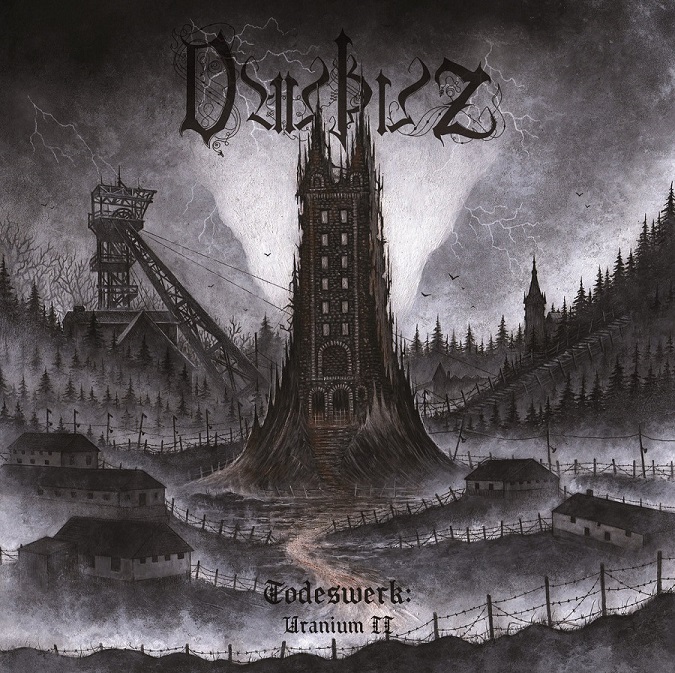
With Todeswerk: Uranium II, DAUÞUZ delivers yet another dark chapter in their self-styled Mining Black Metal. At a time when it seems increasingly difficult to find an original theme within the genre, DAUÞUZ once again turns to a forgotten piece of history. The band sets its sights on the dark legacy of uranium mining in Joachimsthal (Jáchymov), where forced labor, radioactive contamination, and human suffering form the foundation of an album that cuts deep both musically and conceptually.
Musically, the German duo continues to build on the melodic and atmospheric black metal that has become their trademark. Razor-sharp tremolo riffs, venomous screams, and haunting melodies are interwoven with acoustic passages, solemn choral arrangements, and subtle folk and symphonic elements. This constant interplay keeps the album engaging throughout while never compromising the oppressive atmosphere that hangs over every track.
Standout moments include the monumental opener Joachimsthal / Jáchymov, the captivating Uranlager I, and the powerful 211947, where melody and aggression are perfectly balanced. Der Turm des Todes is equally compelling thanks to its layered composition and the emotional weight that lies beneath its fierce riffs. The production is clear enough to let every detail breathe while preserving the raw essence that defines the genre.
What truly sets Todeswerk: Uranium II apart is the way DAUÞUZ intertwines music with historical documentation. Those willing to delve into the lyrics will discover remarkable historical depth. References to Joachimsthal, uranium veins, mine shafts, forced laborers, and the countless victims are far more than decorative themes—they form a carefully constructed narrative about a largely forgotten chapter of European history. The album invites listeners to look beyond the music itself and explore the historical context on their own. It is precisely this fusion of historical fact and artistic interpretation that gives Todeswerk: Uranium II an added dimension, making it far more than a collection of strong compositions.
Once again, DAUÞUZ proves that extreme metal can serve as a powerful medium for bringing forgotten history back into the light. Without resorting to sensationalism, the band creates a moving musical monument to those who lost their lives or were forever scarred in and around the uranium mines. As a result, the album is not only a compelling listening experience but also a rewarding one for anyone interested in the stories that lie beneath the music.
Nederlands:
Met Todeswerk: Uranium II levert DAUÞUZ opnieuw een donker hoofdstuk af in hun zelfgedoopte Mining Black Metal. In een tijd waarin het steeds moeilijker lijkt om binnen het genre een origineel onderwerp te vinden, kiest DAUÞUZ opnieuw voor een vergeten stukje geschiedenis. De band richt de blik op de donkere erfenis van de uraniumwinning in Joachimsthal (Jáchymov). Een geschiedenis van dwangarbeid, radioactieve vervuiling en menselijk leed vormt de basis voor een album dat zowel muzikaal als inhoudelijk diep onder de huid kruipt.
Muzikaal bouwt het Duitse duo voort op de melodische en atmosferische black metal die hun eerdere werk kenmerkt. Snijdende tremoloriffs, venijnige screams en meeslepende melodieën worden afgewisseld met akoestische passages, plechtige koorzang en subtiele folk- en symfonische invloeden. Die afwisseling houdt het album voortdurend in beweging, zonder afbreuk te doen aan de beklemmende sfeer die als een constante over de nummers hangt.
Hoogtepunten zijn de monumentale opener Joachimsthal / Jáchymov, het meeslepende Uranlager I en het krachtige 211947, waarin melodie en agressie elkaar perfect aanvullen. Ook Der Turm des Todes maakt indruk door de gelaagde opbouw en de emotionele lading die achter de felle riffs schuilgaat. De productie is helder genoeg om alle details tot hun recht te laten komen, terwijl de rauwe essentie van het genre volledig behouden blijft.
Wat Todeswerk: Uranium II werkelijk onderscheidt, is de manier waarop DAUÞUZ muziek en historische documentatie met elkaar verweeft. Wie de moeite neemt om in de teksten te duiken, ontdekt een indrukwekkende historische gelaagdheid. De verwijzingen naar Joachimsthal, de uraniumaders, de mijnschachten, de dwangarbeiders en de slachtoffers zijn geen losse decorstukken, maar vormen samen een zorgvuldig opgebouwd verhaal over een vergeten hoofdstuk uit de Europese geschiedenis. Het album nodigt uit om verder te kijken dan de muziek alleen en zelf op onderzoek uit te gaan. Juist die verwevenheid van historische feiten en artistieke interpretatie geeft Todeswerk: Uranium II een extra dimensie en maakt het tot meer dan een verzameling sterke composities.DAUÞUZ bewijst opnieuw dat extreme metal een krachtig medium kan zijn om vergeten geschiedenis tot leven te brengen. Zonder sensationeel te worden, schetst de band een indringend muzikaal monument voor de mensen die in en rond de uraniummijnen hun leven verloren of blijvend getekend werden. Dat maakt het album niet alleen meeslepend om naar te luisteren, maar ook waardevol voor wie geïnteresseerd is in de verhalen achter de muziek.
80/100
DauÞuz:
Bandcamp
Website
Facebook
Instagram
Amor Fati Productions:
Bandcamp
Instagram
Facebook
Official website