
English:
When J.R.R. Tolkien began working on The Lord of the Rings in 1937, he could never have imagined that his work would grow into one of the most influential and beloved fantasy stories ever written. What initially started as a sequel to The Hobbit eventually evolved into a mythical epic that would inspire generations of readers, writers, artists, and filmmakers.
In his wildest fantasies, Tolkien probably could not have foreseen that decades later something like Black Metal would emerge, a dark and extreme musical movement drenched in satanic symbolism, anti-religious themes, and cold mysticism, and that these very “devil-worshipping” musicians would turn to his world for inspiration in such great numbers.
Ironically, Tolkien himself was a deeply religious Catholic who likely would have reacted with horror to many of the extremes and controversies associated with parts of the Black Metal scene. Yet that contrast is exactly what makes it so fascinating: an Oxford professor who created a mythological world out of a love for language, history, and folklore unintentionally inspired one of the darkest and most radical musical genres of the modern age.
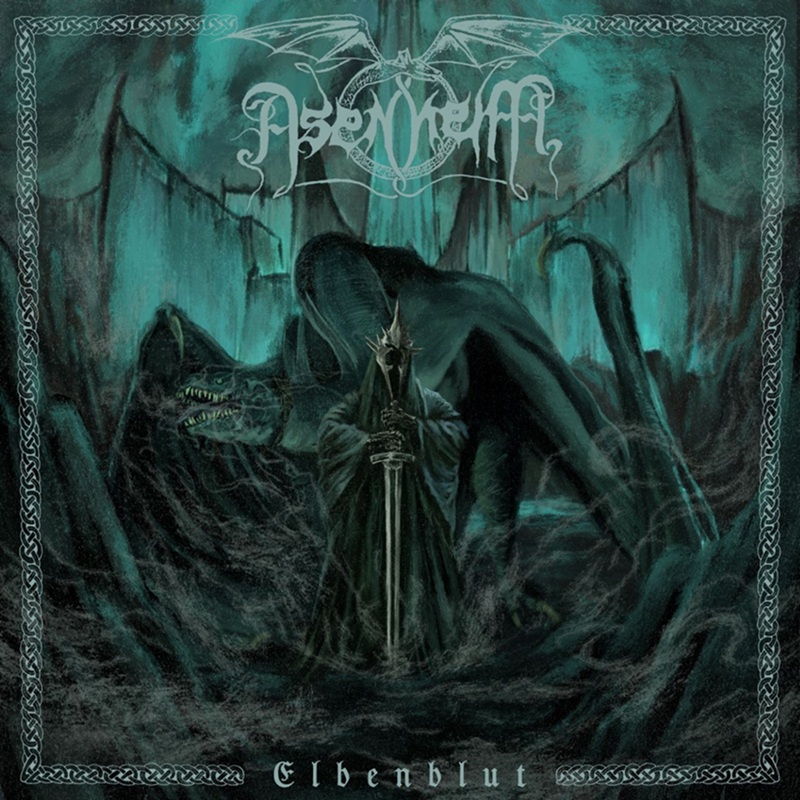
But enough speculation and history lessons, Asenheim is the real subject here. More specifically, this is the tenth full-length album by the German Black Metal band. Since 2006, the group has also released countless demos, EPs, splits, and other material, building up an impressively extensive discography within the underground scene.
Interestingly, this seems to be the first time the band has so openly drawn inspiration from the work of Tolkien. Their earlier releases contain little to no obvious references to Middle-earth, Tolkien’s mythology, or related themes. While previous albums were mostly rooted in traditional Black Metal subjects such as darkness, melancholy, and occultism, this record deliberately embraces a more epic and fantasy-oriented approach.
Across this album, which clocks in at well over an hour, Tiwaz, also active in Eisenkult, and Valfor, who is likewise involved in Atronos and Eisenkult, attempt to transport the listener into a world inhabited by elves, dwarves, Orcs, and Hobbits. All of this is wrapped in an atmospheric Pagan Black Metal sound that occasionally brings bands like Heimdalls Wacht or Nachfalke to mind.
The music constantly shifts between epic melodies, melancholic passages, and harsher Black Metal eruptions, giving the album a distinctly adventurous atmosphere. In particular, the combination of heroic riffs and sorrowful melodies evokes images of mist-covered mountain paths, ancient ruins, and endless journeys through forgotten kingdoms. With this album, Asenheim manages to create a sound that feels both nostalgic and immersive without completely disappearing into bombast or kitsch.
Nederlands:
Toen J.R.R. Tolkien in 1937 begon aan The Lord of the Rings, kon hij zich onmogelijk voorstellen dat zijn werk zou uitgroeien tot een van de meest invloedrijke en geliefde fantasyverhalen ooit geschreven. Wat aanvankelijk begon als een vervolg op The Hobbit, groeide uit tot een mythisch epos dat generaties lezers, schrijvers, kunstenaars en filmmakers zou inspireren.
Waarschijnlijk had Tolkien in zijn wildste fantasieën evenmin kunnen vermoeden dat er decennia later zoiets als Black Metal zou ontstaan, een duistere, extreme muziekstroming doordrenkt van satanische symboliek, anti-religieuze thematiek en kil mysticisme, en dat juist die “vreselijke duivelaanbiddende” muzikanten zich massaal tot zijn wereld zouden wenden voor inspiratie.
Ironisch genoeg was Tolkien zelf een diep religieuze katholiek die waarschijnlijk met afschuw zou hebben gereageerd op de extremen en controverses waarmee delen van de Black Metalscene geassocieerd werden. Maar juist dat contrast maakt het fascinerend: een professor uit Oxford die een mythologische wereld schiep vanuit liefde voor taal, geschiedenis en folklore, inspireerde onbedoeld een van de donkerste en meest radicale muziekgenres van de moderne tijd.
Maar genoeg speculaties en geschiedenislessen, Asenheim is nu het onderwerp van gesprek. Om precies te zijn gaat het hier om het tiende volwaardige album van deze Duitse Black Metalband. Daarnaast verschenen er sinds 2006 ook talloze demo’s, ep’s, splits en andere releases, waarmee Asenheim in de underground een indrukwekkend en omvangrijk oeuvre heeft opgebouwd.
Opmerkelijk genoeg lijkt de band zich juist met dit album voor het eerst nadrukkelijk tot het werk van J.R.R. Tolkien te hebben gewend voor inspiratie. Bij hun oudere releases zijn namelijk nauwelijks directe verwijzingen naar Midden-aarde, Tolkiens mythologie of aanverwante thema’s terug te vinden. Waar eerdere albums vooral geworteld waren in traditionele Black Metalthema’s zoals duisternis, melancholie en occultisme, lijkt de band hier bewust een meer epische en fantasierijke invalshoek te hebben gekozen.
Op deze meer dan een uur durende plaat proberen Tiwaz, eveneens actief bij Eisenkult, en Valfor, die naast Asenheim ook betrokken is bij Atronos en Eisenkult, ons mee te voeren naar de wereld van elfen, dwergen, Orcs en Hobbits. Dat alles wordt verpakt in een atmosferisch Pagan Black Metal-jasje dat af en toe doet denken aan Heimdalls Wacht of Nachfalke.
De muziek balanceert daarbij tussen epische melodieën, melancholische passages en rauwere Black Metal-uitbarstingen, waardoor het album een uitgesproken avontuurlijke sfeer krijgt. Vooral de combinatie van heroïsche riffs en weemoedige melodielijnen roept beelden op van mistige bergpassen, oude ruïnes en eindeloze reizen door vergeten koninkrijken. Asenheim weet daarmee een geluid neer te zetten dat zowel nostalgisch als meeslepend aanvoelt, zonder volledig weg te zinken in bombast of kitsch.
85/100
Asenheim:
Bandcamp
Facebook
Instagram
Dominance of Darkness Records:
Bandcamp
Facebook
Instagram
Dominance of Darkness Records Website