
Man, what is in that Belgian water? Or is something special leaking out of reactor 4 in Doel after all? Belgian black metal has a habit of being suspiciously convincing. Take Enthroned, for instance, who’ve been successfully grinding away since the mid-nineties.
Personally, I always had a serious soft spot for Gotmoor. Vlaemsche Premitieven was played to death. Quite literally; the compilation CD now suffers badly from disc rot, yet stubbornly refuses to leave the CD tray. As a sour old bastard of the “everything was better back then” variety, I usually swallow very little contemporary black metal. But Belgium’s nether went down surprisingly smoothly. Riding that same runaway train of hyperspeed double bass is Nyrak, who in 2025 mercilessly rammed their third full-length, Phoenix Mortis, straight down my throat via Void Wanderer Productions. The fact that Graaf Nevel handles guitars and orchestration here was reason enough on its own to give this record a shot. Why? Because this is the same man who once brought Gotmoor into existence. The big question: will Phoenix Mortis also end up succumbing to chronic CD rot?
Chances are pretty damn high. In fact, for yours truly, this is simply the black metal album of 2025. More than enough reason to ask all about Nyrak.
Written by Floris Velthuis
1. Congratulations on Phoenix Mortis. This is honestly my first real introduction to Nyrak, even though this is already your third full-length since the band’s founding in 2021. How did Nyrak come about, and was there a clear musical vision from the start?
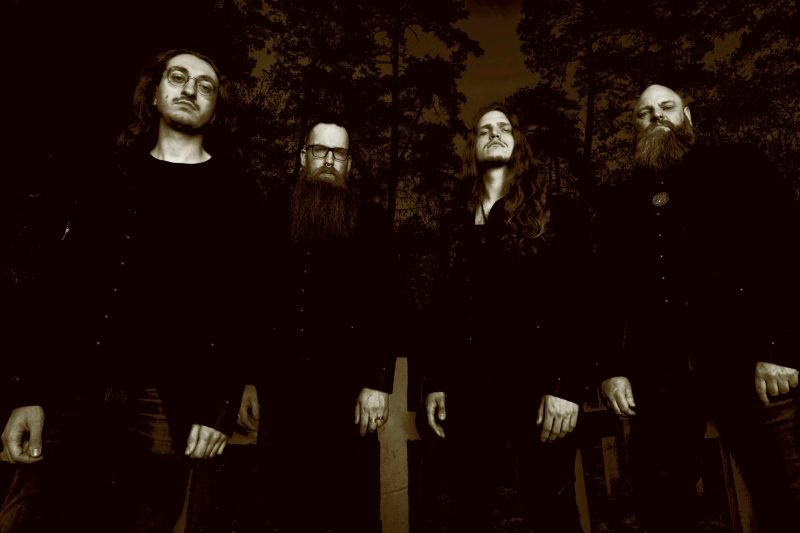
First of all, thank you! Nyrak originally started as a solo project. My idea was to develop a musical project in which I could fully follow my own path without having to make compromises. I wanted to create music that I personally found engaging and where different personal influences could intersect. The project emerged after the last Gotmoor album and during the early days of the COVID-19 pandemic, a period I used to develop these ideas in a focused and concrete way.
From the beginning, there was a clear vision: to create an intense and layered musical whole, with room for melody, atmosphere, and emotional depth. Classical music principles played a natural role, both in the composition structure and in the orchestral approach. Nyrak later evolved into a full band, but that original vision still forms the core of everything we do.
2. With three full-length albums in three years, you’ve been quite productive. How does Nyrak on Phoenix Mortis differ from the debut, and is this productivity a conscious strategy or just the result of a creative overdrive?
There is certainly a noticeable evolution in sound across the albums. The EP Faceless Tyrant served as an important bridge between our first two albums and Phoenix Mortis. That evolution is the result of several factors. Firstly, the start as a solo project meant that the music at that stage was approached primarily as a listening experience rather than with a live context in mind. Additionally, the change of vocalist on the second album had a clear impact on the sound, for example by removing clean vocals and by shifting the symphonics from a more chamber music approach to fully developed soundtracks.
My productivity is the result of constantly working on musical ideas, both for Nyrak and for orchestral works. This continuous inflow of creativity provides plenty of material for a new album. At the same time, I work in a very structured way: I follow a strict schedule and clear deadlines, both for myself and within the band, for feedback rounds, recordings, and further finishing touches. This combination of creative drive and organization makes it possible to turn ideas into completed albums within a short timeframe.
3. The compositions sound particularly thoughtful and detailed. How does the writing process work? Is there a central creative figure, or does the music emerge collectively during rehearsals?
Nyrak is my intellectual child. From the beginning, I had a very clear idea of how it should sound. Preserving that identity is essential for me in every song. Because this vision is strongly tied to the writing process, and because it’s easier for me to work uncompromisingly on songs in this way, I initially work the songs out mostly by myself. Only afterward do feedback sessions with the band occur, giving the songs their final form.
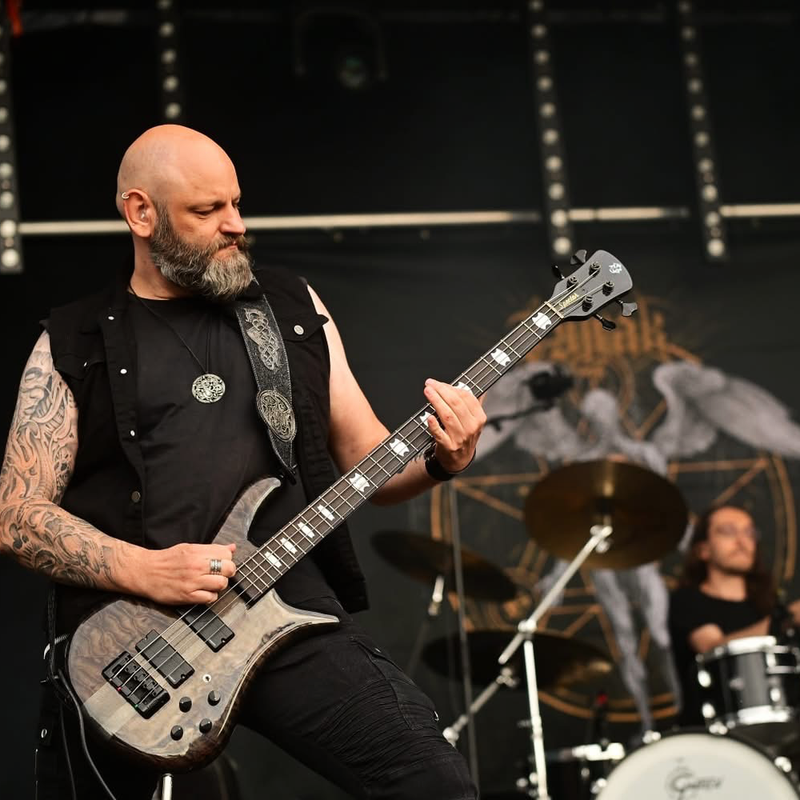
I create the structure, guitar and bass parts, and orchestral arrangements for each song. I also provide a basic drum track to capture the feel of the song. Bram then writes the final drum parts, and the other members provide feedback on the demos. At the same time, a song or idea sometimes originates from other band members, which I then further develop. On Phoenix Mortis, for example, the foundation for “In the Halls of the Aesir” was provided by Bram, and for “Leviathan” by Lukas, after which I further developed and integrated them into the Nyrak sound.
This results in a dynamic process in which the music is carried by the band while maintaining the essence and identity of Nyrak.
4. The album excels in layering, melody, and musical depth. The term ‘atmospheric black metal’ seems insufficient. What musical influences form the basis of your sound?
Our sound has always been the result of a combination of different influences. The foundation remains Scandinavian black metal; I’ve been active in the scene since the early ’90s, and bands like Emperor, Immortal, Satyricon, and Marduk have strongly shaped me as a musician. These are works I still often revisit today, not out of nostalgia, but because they have enduring power and relevance. From this wave, I take mainly the importance of atmosphere, intensity, and uncompromising expression into my writing process. These principles still form an essential part of the Nyrak sound.
In addition, both classical works and film and game music have played an important role in shaping how I approach music from a young age. Mozart’s Requiem, the works of Satie, and others serve as clear references, particularly in the way tension, layering, and emotional weight are built up and gradually lead to epic passages. These classical principles have been a foundation for the Nyrak sound from the start and determine how orchestration and guitar melodies are used. From the beginning, it was a conscious choice to combine this approach with the intensity and rawness of black metal.
If this authenticity connects with listeners of different generations, it is simply a confirmation that the chosen direction works.
5. I understand that many orchestral layers aren’t generated from a keyboard but recorded authentically. Can you talk about that choice, the recording process, and how it affects the music’s dynamics?
I first work out the guitars, bass, and drum structures. Only in the final phase do the orchestral layers come in. This is a deliberate choice, because I believe the guitar riffs should stand strong on their own. In Nyrak, the orchestration is built around the riff, unlike bands such as Dimmu Borgir, where riffs sometimes revolve around the orchestration.
For the orchestral work, I use extensive orchestral libraries, selecting the appropriate patch for each instrument. Arrangements are written as if intended for a real orchestra, with careful attention to articulation, dynamics, and balance between sections. This was particularly evident on Devourer of All, while on Phoenix Mortis the emphasis in some songs was primarily on creating a creepy, horror-like atmosphere.
6. The CD booklet doesn’t include the lyrics, but the titles are evocative. Who writes the lyrics, what themes does Nyrak explore, and how does Phoenix Mortis relate conceptually to previous albums? Was the decision not to publish the lyrics deliberate?
All lyrics in Nyrak are written by Lukas. For us, the lyrics are an extension of the music: they enhance the atmosphere, emphasize emotional intensity, and guide the album’s concept. In Phoenix Mortis, we consciously created a conceptual whole: a journey through mythology, self-destruction, and rebirth, with the cycle of destruction and resurrection at its center. Each song contributes to this thematic story.
The decision not to publish the lyrics was not an artistic choice, but rather a practical consideration.
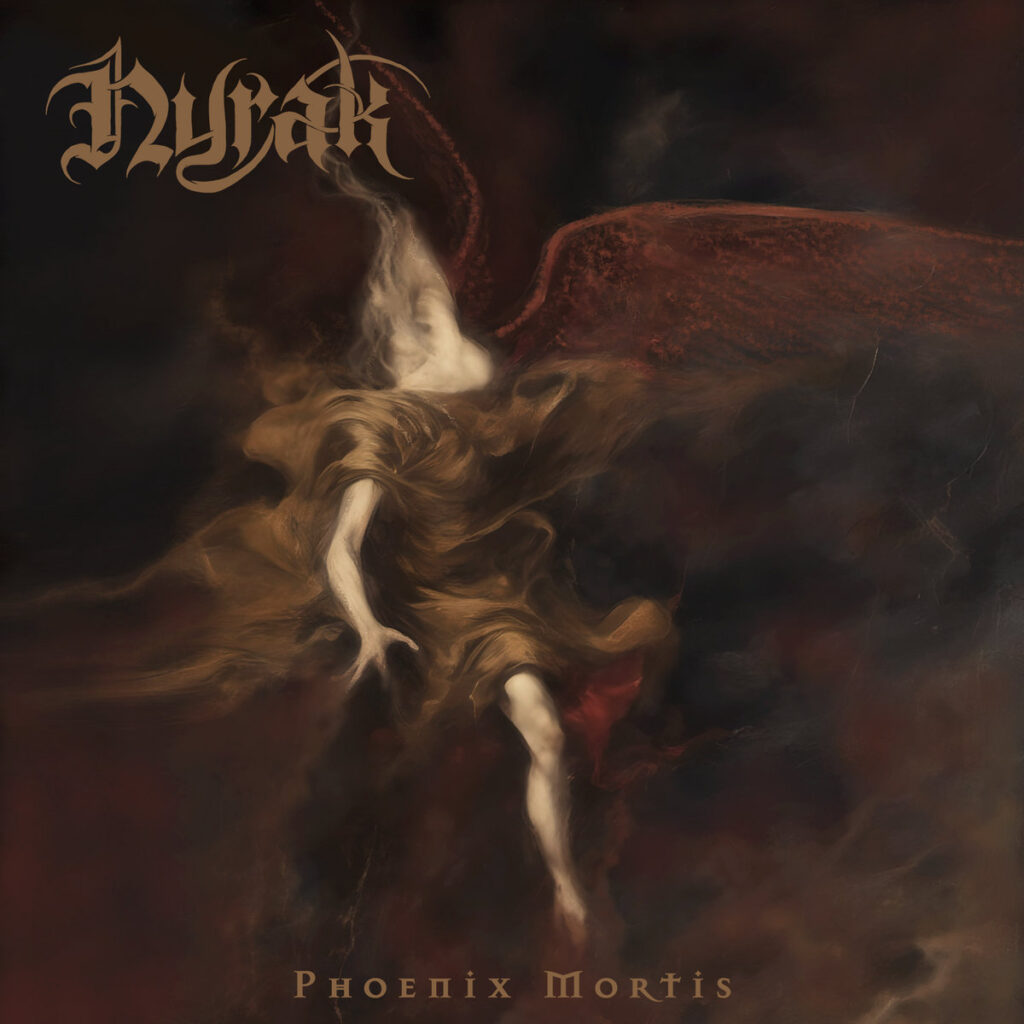
7. Speaking of the booklet… what exactly can be seen on the mysterious Phoenix Mortis cover art?
The cover art of Phoenix Mortis was designed to visually translate the album’s atmosphere and themes without being entirely literal. The image evokes a sense of decay, transformation, and the tension between destruction and rebirth, core concepts running through the album.
We collaborated again with Belial NecroArts, and we are always extremely satisfied with the results. He perfectly understands our intentions and makes the artistic translation of our ideas into the final image. His abstract and suggestive style allows the viewer to interpret what is happening and what emotions it evokes while simultaneously supporting the identity and concept of Nyrak.
8. As a drummer, I have to ask about the enviably precise drumming. Bram Veldeman excels not only in speed but also in control, creativity, and sometimes progressive approaches. What is his musical background, and how has he developed his style and technique? What is his practice routine, and how does he write his drum parts for Nyrak?
Bram is an extremely talented drummer with a broad musical background. Thanks to various sources of inspiration, he has developed his own Nyrak style. His drumming cannot be described as purely black metal, but contains influences from other genres, adding depth and variety to the compositions. This style has a major influence on the current Nyrak sound and contributes to the character of our music.
For the final drum parts, Bram first receives a Guitar Pro file or a full demo of the song, including guitar parts, basslines, and orchestrations. He then writes the final drum arrangements, taking into account the structure, dynamics, and emotional weight of the song, so that the drums not only provide rhythmic support but also enhance intensity and atmosphere.
His practice routine focuses on technique, speed, and precision, but also on developing a feel for dynamics and subtle variations. This results in drum work that is tight and aggressive where needed but also contains nuance and progressive accents, exactly what the Nyrak sound requires.
9. How were the recording, mixing, and mastering processes handled, and what was the goal?
For Phoenix Mortis, we used our established workflow. Initially, I record all guitar and bass parts myself. All orchestrations are exported as audio files. Drums are recorded afterward, followed by vocals.
For mixing, we worked with Wannes Verschoren, whom we know from our Dolby Atmos project on the Faceless Tyrant EP. He translates our ideas into the desired result. For Phoenix Mortis, it was important to preserve the aggression in the songs while creating a balance between intensity and atmosphere.
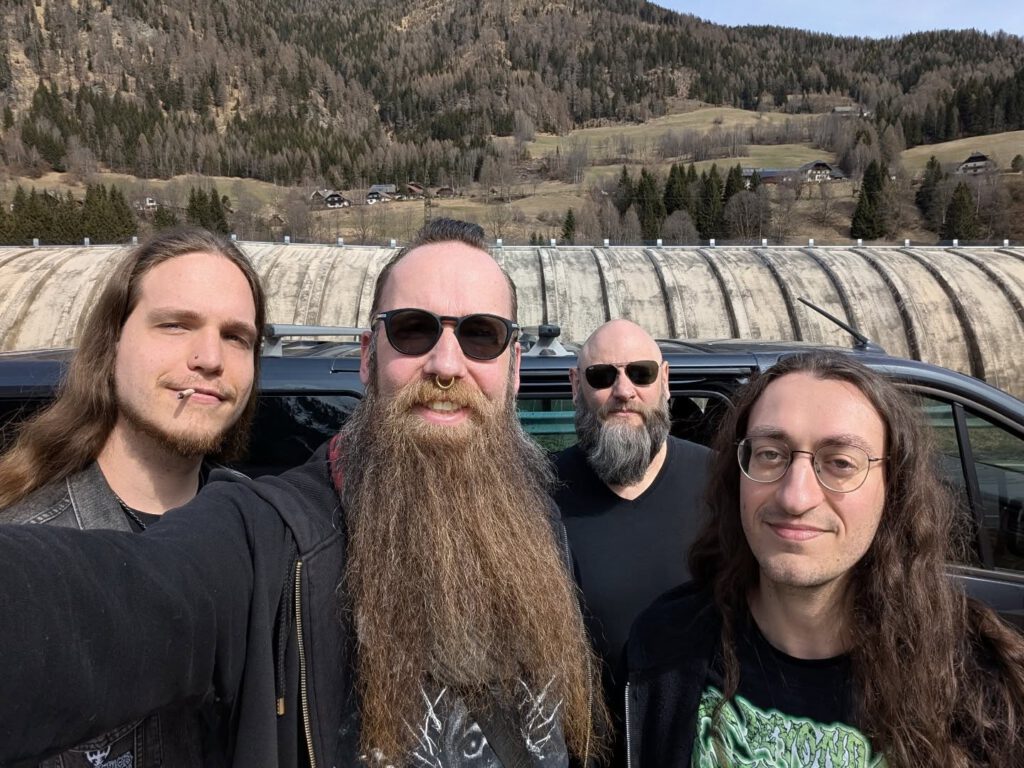
10. Your social media shows plenty of tour bus miles. Where have you played so far, and how does this complex music translate to the stage? Do you feel more at home in the studio or on stage?
This year, besides Belgium, we have already played in France, the Netherlands, and Austria. In November, we did a ten-day tour of Eastern Europe, with stops in Romania, Poland, Slovenia, the Czech Republic, Hungary, and Slovakia. Touring is demanding, with 7,000 kilometers driven in 12 days and a show every day, but as a band, it’s the ultimate experience.
Nyrak loves playing live. We really enjoy it. The experience adds an extra dimension on stage, where the power of the songs is much more pronounced. After the release of Phoenix Mortis, we chose to perform the album in its entirety. Our shows during the tour were very well received. While studio work is essential to develop and refine our sound, the stage offers something unique: direct energy and interaction with the audience. For us, it is not a matter of studio versus live, but using both complementarily.
For 2026, shows are scheduled in Belgium and abroad, including the Netherlands, England, Germany, Spain, and possibly Scandinavia.
11. How did you end up working with Dutch label Void Wanderer Productions, and what has that collaboration brought you so far?
Ward from Void Wanderer is a fantastic person to work with. We’ve been in contact since last year after he showed interest in releasing our work. As the collaboration progressed, it quickly became clear that this was the right match for us. We are extremely grateful that he believed in us and gave us the opportunity to work with him.
12. Where do you see Nyrak in five years? Do you intend to maintain this writing and release pace?
Hopefully, Nyrak will look roughly the same in five years with this lineup. One thing is certain: Nyrak will always remain connected to me, so it won’t really be buried in the coming years.
The essential thing is to release work that you fully stand behind. The pace of writing and releasing is not a goal in itself. In general, I think it’s important for a band to stay in a flow and continue developing. New material is an essential part of maintaining that flow.
Nyrak:
Bandcamp
Facebook
Instagram
Website
Void Wanderer Productions:
Bandcamp
Instagram
Facebook
Website