
The Netherlands is home to many great labels for extreme music. Heidens Hart, New Era Productions, Zwaertgevegt, to name a few. One of those labels is Void Wanderer Productions (VWP), run by a single mind: Ward Theunissen. In this interview we will dive into this label, talking about some history, the day to day business and what the future might bring us with VWP.
Greetings Ward, thank you for taking the time to answer a few questions. First and most importantly, how are you doing? Did the holiday season treat you well?
Cheers for asking, all good here. Spent an epic holiday in the mountains, nailed some snowboarding, and now I’m back among mere mortals.
Void Wanderer Productions was founded in 2018. Could you tell us something about how that came to be? What was your motivation to start a label in extreme music?
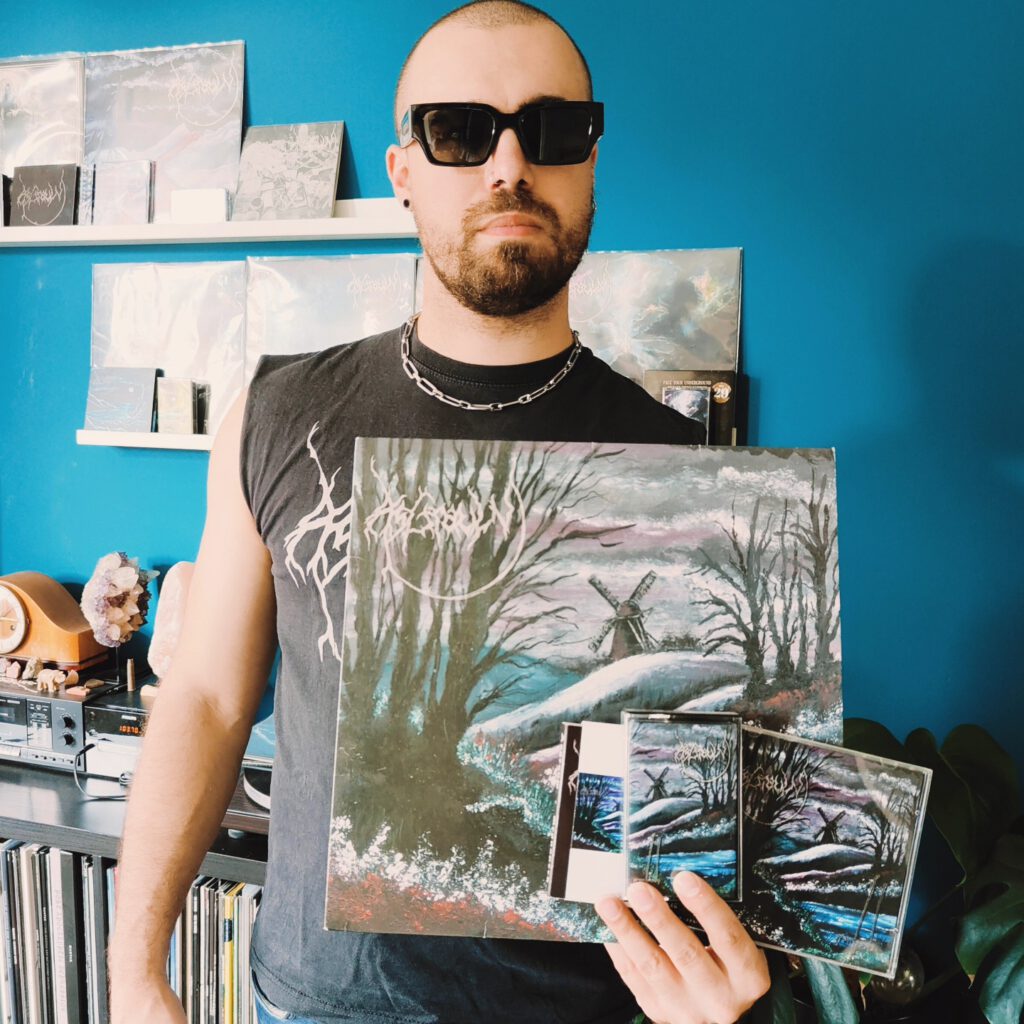
I did not bother starting a label until I knew what I was doing. If you want a date, call it 2014; Asgrauw – Schijngestalten. I financed that CD myself and ordered far more copies than anyone sane would. Left with a mountain of stock, I started trading and quickly realised labels do not trade with bands, because it is inefficient. Labels trade with labels.
That inefficiency is exactly where the idea “Void Wanderer” started. The interests actually sparked earlier, while recording Schijngestalten at Tuianti. There I saw a glimpse of how the label work gets done.
I spent a few years building a distro and printing Asgrauw merch on my own. I could have waited until after graduating, but waiting is for people who do not want it badly enough. In 2018 I launched the site, signed bands, and dropped Tyhjä – S/T. Extreme metal was the obvious choice; I’d been living and breathing it in Asgrauw for years.
After many CD releases, you also started with merch and later on vinyl, was this something that was planned all along, or did it just come across your path? What is your preferred format to release on?
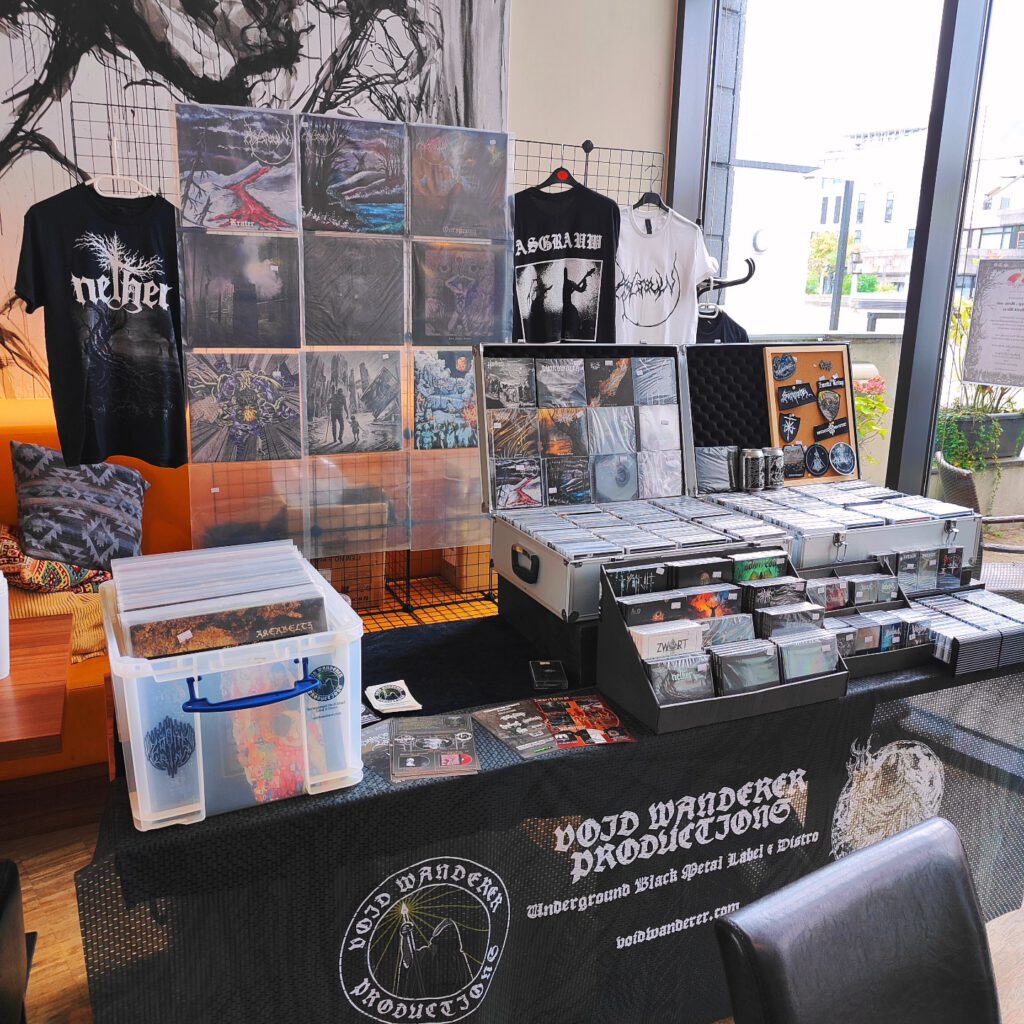
Actually, my second release was a shirt, my third was vinyl, I don’t consider myself as a CD label. I release more CDs overall because they’re practical and they sell. Merch only happens when the music calls for it and the design is worth it. Vinyl needs planning and capital. All three formats have their pros and cons:
Tapes: fine for tiny runs, but the price per unit is ridiculous now.
CDs: cheap, scalable, easy to ship, and still have a loyal, if picky, crowd.
Vinyl: the only format that actually looks like art; I do coloured pressings because the record should complete the package. It’s expensive in small runs, but the collectors always come through.
If you want to know what I listen to at home; vinyl. The ritual beats all other media including streaming every time.
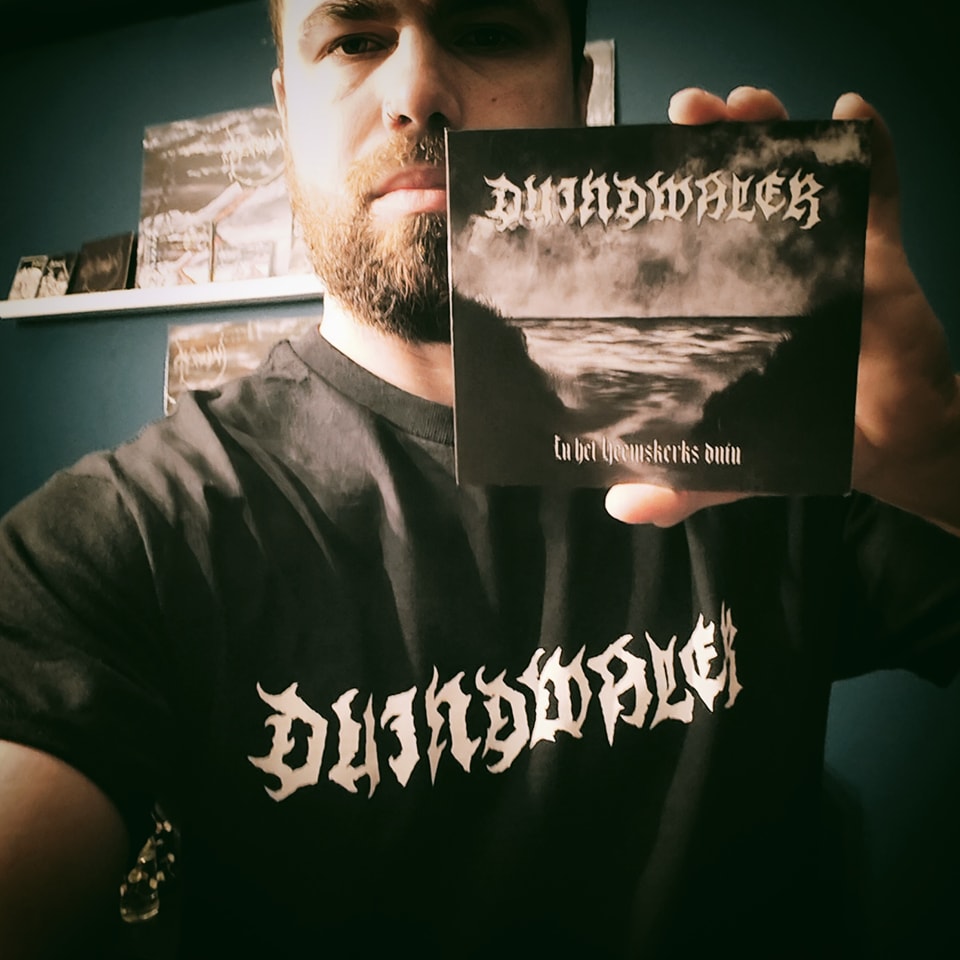
We did some releases together (Duindwaler – In het Heemskerks duin & Hellevaerder – Fakkeldragers), and I’ve gained a glimpse into your day to day business running VWP. What lessons did you learn along the way, and how did that evolve into the way you handle a release from a band?
Duindwaler and Hellevaerder were both killer releases; we pushed those albums far and wide together. But I’ve also seen the other side. But not every story’s a win. Some bands show up all hyped, then ghost the second the deal’s signed. No promo, no hustle. Some even sweet-talk me into tripling the pressing, then vanish. Or worse — they ask for a deluxe edition and quietly drop a budget version elsewhere without saying a word. That’s why I work with contracts now.
But hey, it’s not all bad. I’ve learned how to build real momentum with the right artists. Look at Grafhond, Veenlijk and Schavot; no name recognition at first, but we nailed the PR and sold out the debut releases in no time. Even the represses flew. Same story with albums two and three for Schavot. That’s how you do it.
To be fair, those bands were all seriously driven. They pushed their music hard, followed my PR blueprint, and we kept each other in the spotlight. But let’s be real, even that doesn’t guarantee success. I’ve seen bands do all the right things and still fall flat.
How do you decide to release an album, or not? Is there a checklist you run against a release, band & image, or is it based on personal connection with the music?
It all starts with a spark. I’ve got two obsessions: music and fitness. I test every submission in the gym; if it breaks my focus, it’s probably worth my time. If I can’t remember a single moment once the set is over, it’s dead on arrival. I’ll give records a few spins, but they’ve got to earn it.
If something makes the cut, I’ll do a quick background check, I’ve got my own filters. Drum machines? AI art? Plenty of people are fine with that. I personally struggle more and more with both and tend to avoid them. And if your project pushes religion or picks sides, don’t bother. Void Wanderer exists for one thing: raw, unfiltered emotional expression. No politics. No agendas.
You are registered at the Chamber of Commerce, not all underground labels take this step. Why do you think this difference is in place?
I think you won’t see this much even in the underground. Old‑school tape trading and tiny runs don’t require KVK registration; it’s basically a hobby. For me things shifted after about a year: the operation started to grow and I bought a house (no VWP money involved) that same year, so I felt the need to formalise everything. That decision brought its own headaches. The Belastingdienst (the Dutch Tax and Customs Administration) is strict, and I suspect that’s a major reason many underground labels avoid registration.
If you’ve been under the radar for years and then register, you can get nailed for past unreported income; I get why people stay hidden. Personally I struggle with anxiety around finances and fear making a costly mistake.
And don’t get me started on Bandcamp. No one gives a clear answer about digital earnings. The EU treats digital sales under different rules than physical ones, and Bandcamp only handles tax for the US, EU, UK, Canada and Australia. For everywhere else, you’re on your own. If anyone actually knows how to sort this, tell me!
We are both members of the Zwotte Kring collective (or better said, brotherhood). Could you tell a bit about our collective, and especially how this is connected to VWP?
In my mind Zwotte Kring (Zwot means Black in the Dialect of Groesbeek) first took shape as a practical idea in 2022, between Meslamtaea – Weemoedsklanken and Asgrauw – Façade. Floris and I were tired of watching one project drown out the other on social media, so in October we launched the Zwotte Kring Facebook and Instagram pages; a single showcase for everything we do.
It turned out to be a good move. Shortly after this, Schavot – Kronieken uit de Nevel dropped, our platform became the go‑to place to introduce new solo projects to our core listeners.
It didn’t stay just ours for long. Devi and Gerhans joined with their bands, and at the Oorsprong releases ritual we brought you, Daan, into the collective.
Now it’s a proper brotherhood: constant collaboration on writing, mixing and mastering, guest spots on each other’s records, and leveraging each other’s contacts.
Zwotte Kring grew out of a need inside Asgrauw, the same as why Void Wanderer Productions was created in the first place. And yes; many Zwotte Kring bands ask me to release their albums because they see the results. That doesn’t mean I sign everything; artists are free to pick their label.
After experiencing it myself, you take a different look to promoting a release. Working with multiple single releases, many social media posts and a tight schedule. How did this process come about? Is it a set path you keep on walking, or are you working more dynamic with the PR?
I run a strict schedule – my PR route -honed through years of trial and error. The structure is consistent, but I’m always sharpening it; every release teaches me something. Everything exists to serve the band and the album. I make sure each record gets the attention it deserves and the best chance to reach as wide an audience as possible.
You have a pact with WAR Productions from Portugal, you co-release many albums together. How did you come in contact with WAR? Can you tell us something on how this partnership evolved along the years?
Calling it a pact would be overstating it. WAR Productions showed up early; when I was still running a distro trade, they were one of the first labels willing to trade. For my sixth release ( Eternal Abyss – Doomed to Eternal Abyss) I brought in partners to co‑release it, WAR Productions was one of them.
I learned a ton from WAR Productions and we’ve put out many records together since. The upside was immediate: proper distribution and the ability to press in bigger numbers.
Let’s talk agendas: you recently posted that the release roster of 2026 is filling up quickly. Is this usually the case or is this a portrayal of growth? In your opinion, why is it so valuable to plan ahead many months? Does WAR Productions also share that vision?
Some weeks I receive up to 20 submissions. With 10–12 releases a year, you naturally start filling the schedule with what I consider high‑quality black metal. Recurring bands often get preference. A strict schedule matters to me: it ensures each release receives the attention it deserves and is produced and distributed on time.
I can’t say if War Productions fully shares this approach, though I’ve noticed he usually has multiple releases lined up well in advance.
How do you decide when to release an album, or even on a smaller scale: a single?
Release dates are mostly driven by the calendar. If I’ve scheduled eight months in advance, the next band will drop in month nine; sometimes a band asks to push their date back because of touring. Single rollout depends on how many singles we want, which is dictated by the album’s tracklist.
I aim for about a three‑week interval between singles; it simplifies logistics and, from years of testing, it works best for my label and target audience.
After an album is released, what is your take on the ‘aftercare’? And are there agreements with the artists on what is expected from them when the release date has been hit?
Aftercare is planned long before release day. While singles drop up front, I’m already securing reviews and interviews in the background and they surface when they’re supposed to. I handle flyer distribution, both physical and digital, and make sure physical stock is pushed out to distros, labels and record shops so nothing’s left to chance.
If a band is touring or playing frequently, I’ll check in on their inventory and offer restocks when needed.
I expect bands to actively promote the release on social media and to tag the label, I reciprocate. I don’t see my bands as rivals, they’re partners. Not surprisingly, the bands that keep tagging me are the ones that sell best.
Everywhere I look I see labels, companies and customers complain about shipping. What are some recent struggles you encounter while shipping out orders? How do you deal with damaged goods and returns?
Every year or two the postal services raises prices and tightens package specs, nothing you can do but adapt. Around New Year I sift through the changes, accept the new reality, and get on with it. Brexit and US tariffs hit import/export margins hard. The US tariff mess even stalled shipments for weeks, but I ship there weekly again.
Vinyl gets wrecked the easiest; carriers seem to get rougher every year. I plan for about a 10% damage rate, unfortunately that’s the reality. Returns are governed by European Trader Policy rules.
Thank you for the answers so far, let’s talk about the future of VWP: what is the growth you expect to see with this label for the next couple of years? How do you decide on what to invest in?
My main hope is that the growth keeps going the way it has over the past few years. If I can tighten the schedule without sacrificing focus, I might squeeze in an extra one or two releases a year. But nothing gets rushed; every album and single must get the push it deserves.
I only back quality black metal, the stuff that grabs me and proves itself. That’s how I’ve always operated. It shows in my selection process and in the expertise I use to match subgenres to the most appropriate formats.
Are you planning on doing more merchandise, vinyl and tape releases?
I’m not a one‑format label. All three formats are on the slate for next year, but tape is on its way out for now; the production math simply doesn’t add up anymore.
Shirts? I don’t commit to merch until the rollout is locked; we decide that when the announcement is imminent.
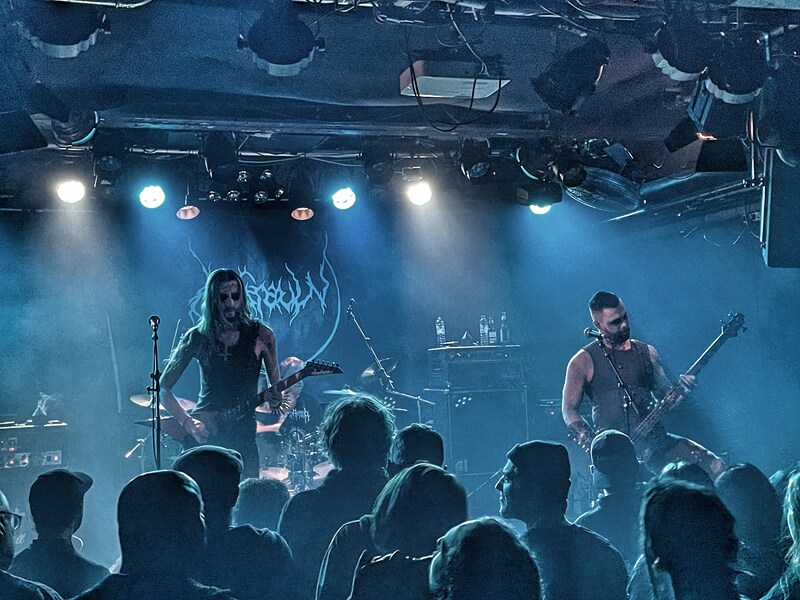
Can you tell the story of how Diabolical Echoes began, how it developed over the years, and what the biggest challenges and proudest moments have been?
Twenty years ago I started volunteering at Maddogs and one thing led to another: Michael and I put together a black metal night that quickly proved itself.
The first three editions weren’t yet called Diabolical Echoes, but they were the beginning, we already had heavy hitters like Darkened Nocturn Slaughtercult, Verbum Verus, Infinity, Wederganger, Cultus, Kjeld, Lubbert Das and Laster.
When Michael stepped back I gave the event a name. Yes; in 2017 it got printed as Diabolical Echos thanks to my dyslexia. But from 2018 it was Diabolical Echoes proper.
I tested different lineups and settled on four bands, it works best for me.
I handed off some Maddogs duties to focus on Void Wanderer Productions and left the chair after 13 years. That cost me some privileges, so I had to find new ways to keep Diabolical Echoes alive. This year it’s back in Willemeen, Arnhem for the second time.
Challenges? Covid killed 2020. Biggest regret: never getting Luctus over here, they’ve been a top pick for years. Still proud: every edition features an international act (Horna, Isvind, Bloedmaan for example), the event draws a crowd, and I’ve kept it running solo for years.
Can’t wait for this year’s edition, we’ll be on stage together. Pleased to say the Verloren Vertellingen set returns to the stage one more time, for anyone who missed it at last year’s Rock & Metal Society meeting.
In a recent post on the socials you have hinted at a new project, the Umbra Pact. Could you tell us more about this? Even a glimpse?
I’m keeping details under wraps until it’s ready to launch. Think of Umbra Pact as its own entity, similar to Void Wanderer Productions, Zwotte Kring and Diabolical Echoes, though it will be linked to them through shared bands and members. For now the key point is this: Umbra Pact exists to serve the bands attached to it and will be focused mainly on the live circuit.
I would like to thank you for taking the time to go in-depth together on this important part of your life. I think it is useful for people to see the other end of the tale, and the struggles that come with it. Is there anything you would like to say about yourself, Void Wanderer Productions or your other ‘child’ Asgrauw?
I believe I’ve said everything I need to about Void Wanderer Productions. I have a number of concrete plans for Zwotte Kring and Umbra Pact that I’ll be focusing on soon. As for Asgrauw, a new album is expected by the end of the year. It will be more abstract and cryptic, and in our opinion a clear progression from the previous release.
Thanks for the interview. See you at the next Diabolical Echoes edition, where we’ll share the stage again for the Verloren Vertellingen set.
Void Wanderer Productions:
Facebook
Instagram
Website
Zwotte Kring:
Instagram
Facebook