
English:
When H. started writing De Stroom, he thought he was working on the fifth Oerheks demo. Four and a half years later, it’s the project’s first official full-length. Water runs through the record, much as it has shaped the Hageland over the centuries. The ancient sea returns to cover the hills around Kaggevinne, and you can hear the Demer churning in drummer Laye’s cymbal work. We spoke to H. about the place he grew up in and how, in his imagination, it became the mythical Cagghenvinna.
1. Oerheks started in 2020 and has since released an impressive run of demos that could easily stand alongside full-length albums, both musically and in terms of the ground they cover. With De Stroom, we finally have the first official Oerheks album. What made this particular release an album? Was that a conscious decision, or did the material grow into something that called for a different approach?
Originally, I only ever wanted to put out demos with Oerheks. When I started working on De Stroom, it was just demo number five. In the end, Winterzonnewende became the fifth demo because I could feel De Stroom growing into something bigger than anything I’d released up to that point.
What really tipped the balance was the decision to use real drums this time. Laye, who’d already played a number of shows with us, recorded the drums in the summer of 2025 and took the whole thing up a notch.
2. The Hageland, and the area around Kaggevinne in particular, has been a source of inspiration for Oerheks since the beginning. While the earlier releases dealt mainly with ancient forests, folklore and vanished landscapes, water is at the heart of De Stroom. What drew you to the subject, and what stories did you want to tell?
Water still shapes Brabant, the Hageland and Kaggevinne to this day. You see it in the traces of ancient seas, which we’ll get to in the next question, in the rain and the floods, in the Demer with its marshes and floodplains… When you grow up and live here, there’s no escaping water or what it means for your everyday life.
As the ideas for the album began to take shape, all those things came together quite naturally. I started thinking about writing a song for each of the different aspects of water. That was how the saga came about. It takes you from ancient seas to rain and floods, then follows the course of the Demer before finally returning to the source with ‘Oerwater’.
3. The history of a landscape stretches back far beyond the arrival of humans. Among other things, De Stroom explores the ancient Diestian Sea and the shifting course of the Demer. How deeply do you dig into historical and geological sources before you start writing a piece? Where do the facts end and your own interpretation begin?
As deeply as I can. There usually isn’t a great deal of information available, but between book fairs and the internet, I’ve managed to build up a nice little Cagghenvinna library. Of course, there’s always been room for my own interpretation in Oerheks. Cagghenvinna is a mythical place that exists mainly in my head. You can travel there, but to see and feel the whole history of Oerheks, you’d have to get inside my head. Digging around for inspiration and writing the music go hand in hand. Together they give rise to something that takes on a life of its own. In this case, that was De Stroom.
4. You open the album with ‘Herovering der Diestiaenzee’, a piece that runs for over twelve minutes. The title suggests a landscape being reclaimed by a force that was already there millions of years ago. What’s the story behind the song, and how did you try to convey it musically?
I read up on the Diestian Sea as much as I could, particularly on how it came to leave so much iron-rich sandstone here in the ground, the local Diestian sandstone. Then, as usual, the inspiration came on long walks through the fields here. I tried to picture the sea in front of me, to imagine myself standing in it as the ridges formed all around me. I had a few pretty intense moments out there. That’s what the lyrics are based on.
5. Water can give life as well as destroy it. On ‘De Vloed Vervloekt’, it’s the threatening, destructive side that seems to come to the fore. Does the song refer to a particular event in the region’s history, or does the flood stand for the forces of nature that lie beyond our control?
It’s about the rain and the flooding we get here almost every year. I’ve seen the fields of Cagghenvinna under water several times in my life, and unfortunately floods are nothing new in the surrounding towns and villages either. Even so, they can still catch you completely by surprise and do an incredible amount of damage. The cadence of the music tries to capture that destructive force while acknowledging that it belongs to this landscape. Creation and destruction go hand in hand…
6. At nearly fifteen minutes, ‘Veranderende Demermeanders’ is the longest piece on the record. The title evokes a river constantly finding its own way. Did you try to work that movement into the structure of the song? With pieces this long, how do you know when you’ve taken a musical idea far enough?
Definitely. The song came together quite naturally and barely changed after I recorded the first bare-bones version. It felt like I’d caught the rhythm of the Demer right at the heart of the song from the start. Later, when Laye and I sat down to talk through the drum parts, we tried to bring that out even more. There’s one particular moment where he deliberately uses the cymbals to capture the way the water churns. What he plays there is absolutely brilliant. It really does make the song feel like a river in full flow.
7. The album closes with the much shorter ‘Oerwater’. After three substantial pieces, it’s a striking way to end the record. Where does this song fit into the wider concept? Is it a return to the source, or the beginning of a new cycle?
It’s a return to the source, literally and figuratively. That goes for the story and for me as an artist. I’d been playing around with the idea of doing an entirely acoustic song for a long time, and the lyrics to ‘Oerwater’ were a perfect fit. You wouldn’t know it from the title, but this is the second song in the ‘Stilte’ series. The first appeared on the first demo, Cagghenvinna. So it’s a return to the source for the band as well.
8. Oerheks brings together raw black metal, distinctly melodic passages, melancholy and atmosphere. Yet the music never feels as though atmosphere is its sole purpose. How do you strike a balance between the aggression and those almost contemplative passages? Has that balance shifted on De Stroom compared with the earlier recordings?
Interesting question. I don’t have a clear answer off the top of my head. What I can tell you is that writing and recording for Oerheks has always been very spontaneous. There’s very little planning involved. I have a vision, something I’m aiming for, and a lot of scraps of paper with ideas scribbled on them. The way the aggression, the melancholy and the more atmospheric moments build up and play off each other is just how Oerheks comes out.
It all comes from my influences, the different styles I play, the music I listen to and the music I make. Is the balance different on De Stroom? Yes, because I’ve grown as a musician and a songwriter through Oerheks. I spent a lot more time on these songs, paying much closer attention to how I put them together. I don’t know that the structures are any more logical, but they give the record a sense of scale and make the songs feel like parts of a whole. That’s another reason why De Stroom was more than just another demo.
9. You’ve said before that the theme is often in place before the music really takes shape. How does that process work these days? Do you start with a collection of riffs and melodies, or do you try to work out the whole story and its atmosphere in your head first?
De Stroom took longer to make than anything else in the band’s history. Four and a half years passed between recording it and having the finished record. One important detail is that I recorded it before Cagghenvinna even came out. About a month before, to be precise. So I didn’t yet have any sense of how the rest of the world saw Oerheks. I didn’t know what it was like on the other side of releasing something. I had no idea whether people would like the music or whether the project would find a following.
In a way, that was perfect. I still had a clean slate. I had no expectations when I put this thing together. To answer your question a bit more directly, I usually start with a concept in my head and a sheet of paper covered in ideas. Nine times out of ten, those ideas are guitar riffs, which I record during the session. The bass lines and leads are all written on the spot. Very little has changed since the first versions of these songs, though I do remember going back and changing some of the leads on ‘De Vloed Vervloekt’. You have to leave room for that too.
I like to hold on to the feeling of the original piece, but sometimes you have to take a step back and change something. The concept grows throughout that process, so the music and the themes develop together. Then there’s the visual side. You need an image that fits both the music and the concept. That’s how it all grew into the album you have now.
10. Déhà has been mixing and mastering Oerheks for quite some time. The recordings have a distinctive sound, and it can take a while to pick out the individual layers. How important is that sound to the band’s identity? During the production of De Stroom, did you make any conscious decisions about how to develop it while preserving its original character?
Déhà is an integral part of the Oerheks sound. The vision is entirely mine and the sound originated here, but he’s the one who makes it work on record. What I ask of him is tricky. I want an incredibly raw sound with layer upon layer of instruments, and I want to be able to hear everything. Déhà is a master at that. You can pick out any instrument without having to fiddle with the EQ. Of course, sometimes your ears and your brain need a little time to work out what’s going on, but that’s part of Oerheks too. Cagghenvinna gives up its secrets slowly. You have to want to dig for them.
11. March saw the release of Relieken I, a split with Aerdryk featuring the Oerheks track ‘Goden op de Heuvel’. It’s the first in a planned trilogy involving several like-minded artists. What’s the idea behind the project? Can you tell us anything yet about the next instalments and the musicians involved?
The trilogy revolves around objects found in the landscape. I’ve linked each object to a particular episode in Cagghenvinna’s past. How they fit together will only become clear at the end of the trilogy. What’s already apparent is that there’s a much stronger religious, or anti-religious, undercurrent to these releases. I already know which bands I’m doing the next splits with, but I’d rather keep their names to myself for now.
12. There’s a strong sense of kinship with the past in the music of Oerheks, while the destruction and disappearance of natural landscapes is very much a present-day concern. Do you see Oerheks purely as a way of bringing lost times back to life, or is there also an element of criticism in how you portray our relationship with the land today?
It’s black metal, and that music has always had something to say against humanity, society, modernism and so on. In Oerheks, that comes through as a longing for unspoilt nature, for the land as it was before people came into contact with it. When I lose myself in the stories of Cagghenvinna, the exact period of the past I’m in is often left open. ‘Herovering der Diestiaenzee’ is a good example. That was the first time I’d gone back millions of years. ‘Veranderende Demermeanders’ deals with something much more recent. In the Middle Ages, when the Demer was used for trade and navigation, several meanders were cut off and the river was diverted to give boats a straighter, faster route. Today, people realise how much damage that did to the biodiversity in and around the river, and the original meanders are being restored. That’s where the song title came from.
So yes, it’s a way of bringing the past and forgotten times back to life. It’s also a way of looking at what people have done to this landscape. I could point to the title ‘Landschapsanachronismen’ here too. It covers pretty much everything that seems out of place in this landscape.
13. The visual side of Oerheks clearly matters a great deal. The design for De Stroom draws on classical and soundtrack records from the seventies, eighties and nineties. What appealed to you about that aesthetic? How much do the artwork and the physical presentation contribute to the experience of listening to the music?
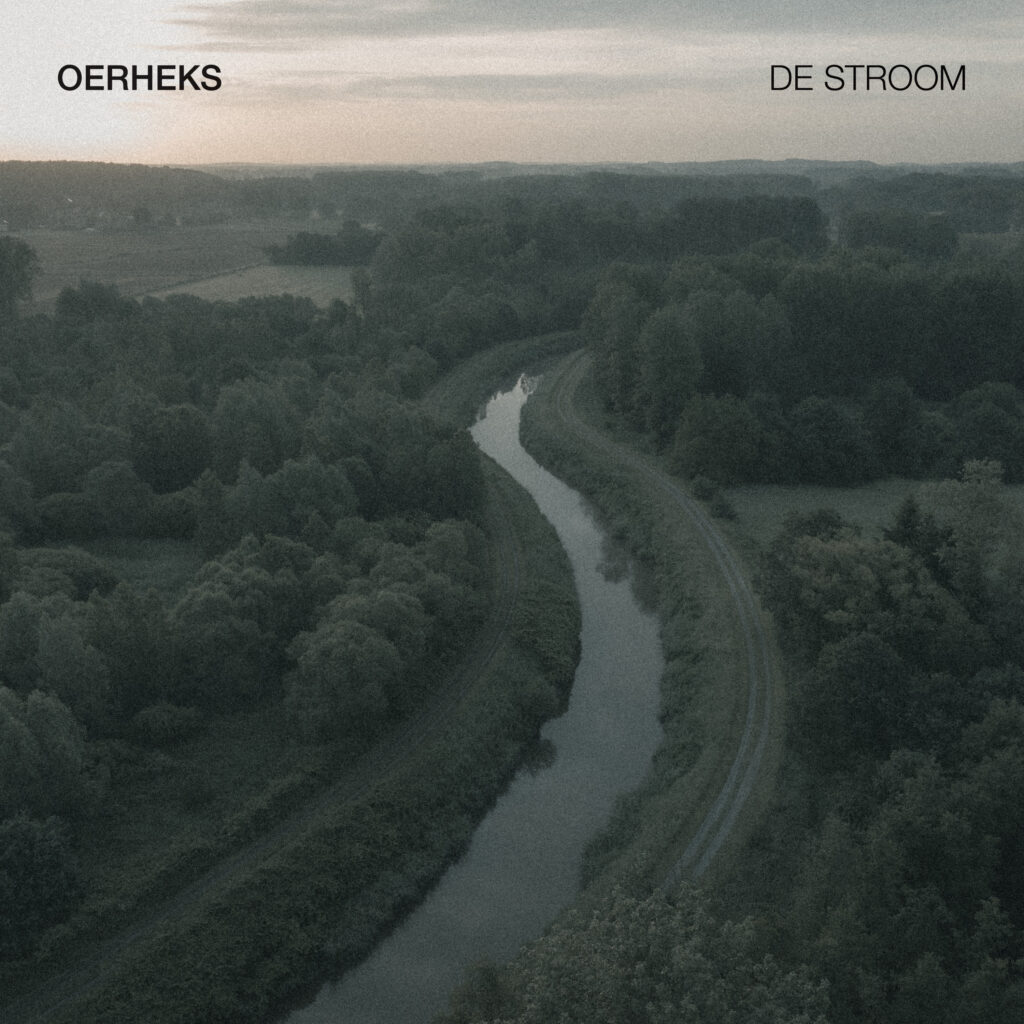
Those are the kinds of records and CDs I grew up with. When Pierre Perichaud, who drew the logo and has worked with Oerheks since the very beginning, heard the album, its storytelling reminded him of exactly the records you mention. Grainy nature photographs, a clean layout, a white background. It all brings out that storytelling quality. Photographer Davy Prenen and layout wizard Dan Fried brought their own ideas to it, and the result turned out better than I could ever have imagined.
The whole package matters a great deal to me. Everything has to fit together. The music, the concept, the atmosphere, the visuals. We gave all of that a lot of attention on De Stroom, especially in the final stages of bringing the record to life. Marius at Amor Fati and I both feel we pulled off what we set out to do, and we’re more than happy with the result. You really need to hold the record in your hands to take it all in.
14. Although Oerheks is a solo project in the studio, several musicians come together to perform the music live. The release show for De Stroom is scheduled for 4 December in Antwerp. How difficult is it to bring such layered, deeply personal pieces to the stage? Does the music change when other musicians bring their own interpretations to the songs?
For me, the first job was to figure out what on earth I’d recorded. There are so many layers in Oerheks that I had to go back and untangle every single one. I’m less keen on that part. Creating something is far more exciting and interesting, but sometimes it just has to be done… Once I’d worked it all out, I could write clear tabs for both guitars and the bass. The drums on the earlier demos were programmed, so Laye had to work those parts out for himself. Of course, I gave him room to move. An actual drummer has a much better idea of how to make something work live than I do sitting there cutting and pasting drum loops together.
Beyond that, there’s little need for anyone to put their own interpretation on things. Every musician I work with is thoroughly professional. It’s still quite overwhelming to see and hear a group of people like that playing my music.
15. Besides Oerheks, you’re involved in several other projects, including Silver Knife, Häxenzijrkell and the recently formed Mists. Even so, Oerheks seems to occupy a particularly personal place among them. What does it give you that you don’t find in your other bands? And as long as the Hageland keeps giving up new stories, can you see any reason to ever bring Oerheks to an end?
Well, Oerheks is a solo project, which makes it extremely personal to begin with. I can put a lot of myself into all my musical projects, but Oerheks touches on something a little different. It’s my baby, mine alone. That doesn’t always make things easier, but there’ll always be something pure about it, something that comes entirely from me. And for now, I’ve got more than enough ideas to keep Oerheks going. The thought of ending it had honestly never even crossed my mind.
Thanks for such an interesting interview!
H. / Oerheks
Nederlands:
Toen H. voor De Stroom aan het schrijven sloeg, dacht hij nog dat het de vijfde demo van Oerheks zou worden. Vier en een half jaar later ligt er de eerste officiële langspeler. De rode draad is het water dat het Hageland door de eeuwen heen heeft gevormd. Op de plaat keert de zee terug waar nu de heuvels rond Kaggevinne liggen, en in het bekkenwerk van drummer Laye hoor je de Demer kolken. We spraken met H. over de streek waarin hij opgroeide en hoe die in zijn verbeelding uitgroeide tot het mythische Cagghenvinna.
1. Oerheks ontstond in 2020 en heeft inmiddels een indrukwekkende reeks demo’s uitgebracht, die inhoudelijk en muzikaal nauwelijks onderdoen voor volwaardige albums. Met De Stroom verschijnt nu eindelijk de eerste officiële langspeler. Waarom is juist deze release een album geworden? Was dat een bewuste beslissing of groeide het materiaal vanzelf uit tot iets wat een andere benadering verdiende?
Oorspronkelijk wilde ik met Oerheks enkel demo’s uitbrengen. Toen ik aan ‘De Stroom’ begon te werken, was dat ook gewoon demo #5. De vijfde demo werd uiteindelijk ‘Winterzonnewende’, omdat ik voelde dat ‘De Stroom’ tot iets aan het uitgroeien was dat groter was dan de releases voordien.
De echte doorslaggevende factor om dit een album te noemen, was de beslissing om er deze keer echte drums op te zetten. Laye, die ook de verschillende live-optredens al mee deed, heeft in de zomer van 2025 de drums opgenomen en daarmee het geheel een niveautje hoger getild.
2. Het Hageland, en meer specifiek de omgeving van Kaggevinne, vormt al vanaf het begin de inspiratiebron voor Oerheks. Waar de eerdere releases vooral oude bossen, folklore en verdwenen landschappen behandelden, staat op De Stroom het water centraal. Wat bracht je bij dit onderwerp en welke verhalen wilde je hiermee vertellen?
Water is iets dat Brabant, het Hageland en Kaggevinne tekent tot op de dag van vandaag. Of het nu gaat over oude zeeën (zie volgende vraag), regen en overstromingen, de Demer met zijn broeken en overstromingsgebieden, … Als je hier woont en opgroeit, is er geen ontsnappen aan het water en wat het voor je dagelijks bestaan betekent.
Toen de concepten rond dit album zich aan het vormen waren, kwamen al deze dingen moeiteloos samen. Het idee groeide om over verschillende aspecten van water een nummer te maken. Zo ontstond de saga, die uiteindelijk loopt vaneeuwenoude zeeën tot regen en overstromingen, en van de stroom van de Demer tot het uiteindelijke terugkeren naar een bron met ‘Oerwater’.
3. De geschiedenis van een landschap gaat veel verder terug dan de menselijke aanwezigheid. Op De Stroom komen onder meer de vroegere Diestiaanzee en de veranderende loop van de Demer aan bod. Hoe diep graaf je in historische en geologische bronnen voordat je aan een compositie begint? En waar eindigen de feiten en begint je eigen interpretatie?
Zo veel ik kan. Meestal is er niet al te veel informatie beschikbaar, maar met een combinatie van boekenbeurzen en het internet heb ik al een mooie Cagghenvinna-bibliotheek aangelegd. Natuurlijk is er in Oerheks altijd plaats geweest voor eigen interpretatie. Cagghenvinna is een mythische plek die voornamelijk in mijn hoofd bestaat. Je kunt erheen reizen, maar om de volledige Oerheks-geschiedenis te zien en te voelen, zul je je in mijn hoofd moeten begeven. Het graven naar inspiratie en het schrijven van de muziek gaan hand in hand: beide dingen vormen samen iets dat z’n eigen leven gaat leiden; in dit geval dat van ‘De Stroom’.
4. Met Herovering der Diestiaenzee open je het album met een compositie van ruim twaalf minuten. De titel suggereert dat het landschap opnieuw wordt opgeëist door een macht die er miljoenen jaren geleden al aanwezig was. Wat is precies het verhaal achter dit nummer, en hoe heb je dat muzikaal proberen te vertalen?
Nadat ik zo veel mogelijk informatie ging opzoeken over de Diestiaenzee, en hoe die heeft gezorgd voor het vele ijzerzandsteen (Diestiaan) hier in de bodem, hebben zoals gewoonlijk vele wandelingen door de velden hier voor de inspiratie gezorgd. Ik probeerde als het ware de zee voor me te zien, met mezelf erin, en hoe de heuvelruggen rond me ontstonden. Het werden enkele intense momenten, waarop de teksten gebaseerd zijn.
5. Water kan zowel leven schenken als vernietigen. In De Vloed Vervloekt lijkt vooral die dreigende en destructieve kant naar voren te komen. Heeft dit nummer betrekking op een specifieke gebeurtenis uit de geschiedenis van de streek, of staat de vloed vooral symbool voor de oncontroleerbare krachten van de natuur?
Het gaat niet over één specifieke gebeurtenis, maar over de regen en overstromingen die hier bijna elk jaar voorkomen. In mijn leven tot nog toe heb ik de velden van Cagghenvinna al meermaals blank zien staan, en ook in de plaatsen rondom me zijn overstromingen helaas niets nieuws. Desalniettemin kunnen ze enorm verrassend en enorm destructief toeslaan. En inderdaad, de cadens van de muziek probeert dit vernietigende karakter te vertalen, maar probeert tegelijkertijd toe te geven dat het een integraal deel is van dit landschap. Creatie en vernietiging hand in hand…
6. Veranderende Demermeanders is met bijna vijftien minuten de langste compositie op de plaat. De titel verwijst naar een rivier die voortdurend haar eigen weg zoekt. Heb je geprobeerd die beweging ook in de opbouw van het nummer te verwerken? Hoe bepaal je bij zulke lange composities wanneer een muzikaal idee voldoende ontwikkeld is?
Zeker wel. Hoewel het nummer vooral organisch geschreven is en er maar weinig aan aangepast werd sinds de eerste skeletten werden opgenomen, voelde het alsof ik meteen het ritme van de Demer in de essentie van het nummer had gevonden. Toen ik nadien met Laye in overleg ging over de drumpartijen, hebben we dit natuurlijk nog proberen te benadrukken. Zo is er in dit nummer één specifiek moment waar hij heel bewust het kolken van een rivier vertaalt in een cymbaalspel dat echt geniaal is. Zo voelt het nummer ook echt als een wild stromende rivier.
7. Het album eindigt met het aanzienlijk kortere Oerwater. Na drie omvangrijke composities vormt dit een opvallende afsluiting. Welke betekenis heeft dit nummer binnen het grotere concept? Is het een terugkeer naar de oorsprong, of juist het begin van een nieuwe cyclus?
Het is letterlijk en figuurlijk een terugkeer naar de bron. Niet alleen in het concept, maar ook voor mij, als artiest. Ik speelde al lang met het idee van een volledig akoestisch nummer, en de tekst voor ‘Oerwater’ paste hier perfect op. Hoewel het niet expliciet in de titel staat, is dit nummer het tweede nummer in de Stilte-serie. Het eerste stond op de eerste demo ‘Cagghenvinna’. Zo is het ook voor de band een terugkeer naar de bron.
8. Oerheks combineert rauwe Black Metal met uitgesproken melodieuze passages, melancholie en atmosferische elementen. Toch klinkt de muziek nooit alsof die uitsluitend om de sfeer draait. Hoe bewaak je de balans tussen muzikale agressie en de bijna beschouwende passages? En is die verhouding op De Stroom anders geworden dan op de eerdere opnames?
Interessante vraag, en ik heb er niet meteen een duidelijk antwoord op. Wat ik wel kan zeggen, is dat de muziek en opnamesessies van Oerheks altijd heel spontaan zijn. Veel planning is er niet; wel een visie en een doel, en vele kladpapieren met ideeën op. Hoe de agressie, melancholie, atmosferische en meer agressieve momenten zich opbouwenen onderling verhouden, is puur hoe Oerheks is.
Het is een amalgamatie van mijn invloeden, mijn stijlen, de muziek die ik beluister en maak. Is die verhouding op ‘De Stroom’ anders in vergelijking met eerdere releases? Ja, want ik ben ook in Oerheks gegroeid als muzikant en muziekschrijver. Ik heb dan ook veel meer aandacht en tijd geïnvesteerd in het schrijven en bouwen van deze nummers. De opbouw is niet meteen logischer, maar maakt het geheel wel grootser, en doen het voelen als een geheel. Nog een reden waarom ‘De Stroom’ niet zomaar een demo is.
9. Je hebt eerder aangegeven dat de thematiek vaak al vaststaat voordat de muziek daadwerkelijk vorm krijgt. Hoe verloopt dat creatieve proces tegenwoordig? Werk je vanuit een verzameling riffs en melodieën, of probeer je eerst het volledige verhaal en de bijbehorende atmosfeer in je hoofd te ontwikkelen?
‘De Stroom’ kende het langste proces tot nog toe in de geschiedenis van de band. Tussen opnemen en finaal product zat er maar liefst vier en half jaar. Belangrijk detail is dat ik de plaat opnam nog vóór ‘Cagghenvinna’ uit was. Ongeveer één maand ervoor, om precies te zijn. Ik had dus ook nog niet het beeld van Oerheks dat de wereld had. Ik kende de andere zijde nog niet, ik wist niet of mensen deze muziek goed gingen vinden, of het project een volging ging hebben, etc.
Dat was eigenlijk ook perfect, mijn lei was nog helemaal schoon, bij wijze van spreken. Ik had geen verwachtingen toen ik dit ding in elkaar stak.
Om concreter op je vraag te beantwoorden: ik begin meestal met een concept in mijn hoofd, en een blad vol ideeën. Die ideeën zijn 9 van de 10 gitaarriffs, die ik tijdens de sessie opneem. De baslijnen en leads zijn allemaal composities van het moment, en hoewel er maar weinig is veranderd sinds de eerste versies van de nummers, herinner ik me dat ik leads in ‘De Vloed Vervloekt’ later aangepast heb. Ook daar moet ruimte voor zijn.
Ik hou me het liefst vast aan het gevoel van de oorspronkelijke compositie, maar soms moet je een stap terugnemen en iets aanpassen. In dat hele proces groeit het concept ook, en zo heb je een muzikale groei die samen gaat met een conceptuele en thematische groei. Daarbij komt dan ook het visuele werk dat een beeld moet geven dat bij zowel muziek als concept past. Zo groeide alles uit tot wat dit album uiteindelijk is geworden.
10. Déhà is al geruime tijd betrokken bij het mixen en masteren van Oerheks. De opnames hebben een karakteristiek geluid waarin de verschillende lagen niet altijd onmiddellijk van elkaar te onderscheiden zijn. Hoe belangrijk is die klank voor de identiteit van de band? Zijn er tijdens de productie van De Stroom bewuste keuzes gemaakt om het geluid verder te ontwikkelen zonder het oorspronkelijke karakter te verliezen?
Déhà is een integraal deel van het geluid van Oerheks. Hoewel de visie volledig van mij komt, en het geluid van Oerheks hier is ontstaan; is het door hem dat het ook effectief werkt op plaat. Mijn eis voor Oerheks is geen eenvoudige: een enorm rauw geluid met veel verschillende lagen instrumenten waar alles hoorbaar moet zijn. Déhà doet dit als een meester, en je kunt ook elk instrument eruit plukken zonder aan een EQ te moeten gaan prutsen. Uiteraard betekent dat ook dat het oor en je brein soms even de tijd nodig hebben om te ontcijferen wat er gaande is, maar ook dat is een integraal deel van Oerheks. De geheimen van Cagghenvinna laten zich niet zomaar horen, men moet er bewust in willen graven.
11. In maart verscheen Relieken I, een split met Aerdryk, waarop Oerheks het nummer Goden op de Heuvel presenteerde. Het werk maakt deel uit van een geplande trilogie waarin verschillende gelijkgestemde artiesten betrokken worden. Wat is de achterliggende gedachte van dit project? En kun je inmiddels iets vertellen over de volgende delen en de muzikanten die daarbij betrokken zullen zijn?
De trilogie gaat over gevonden voorwerpen in het landschap. Elk voorwerp heb ik gekoppeld aan een specifiek deel van het verleden van Cagghenvinna, dat pas duidelijk zal worden aan het eind van de trilogie. Wat al wel duidelijk is, is dat deze trilogie een stuk meer (anti-)religieus getint is. Met welke bands de volgende splits zullen zijn, maak ik liever nog niet bekend, maar ze liggen al vast.
12. De muziek van Oerheks ademt een sterke verbondenheid met het verleden, maar tegelijkertijd is de vernietiging en verdwijning van natuurlijke landschappen een bijzonder actueel onderwerp. Beschouw je Oerheks uitsluitend als een manier om verdwenen tijden opnieuw tot leven te wekken, of schuilt er ook een vorm van kritiek in op de manier waarop de moderne mens met zijn omgeving omgaat?
Het is black metal, en die muziek is altijd een vorm van kritiek op de mens, de maatschappij, modernisme, etc. Het vertaalt zich als een verlangen naar een ongerepte natuur, voor mensen er mee in contact kwamen. Het staat dan ook niet helemaal vast in welke tijd van het verleden we ons precies begeven als ik me nestel in de verhalen van Cagghenvinna. Een duidelijk voorbeeld daarvan is ‘Herovering der Diestiaenzee’, waar ik voor’t eerst miljoenen jaren terug ga in de geschiedenis. ‘Veranderende Demermeanders’ raakt dan weer een veel recenter feit: Toen de Demer in de middeleeuwen voor handel en scheepvaart werd gebruikt, werden verschillende meanders afgesneden en omgeleid, zodat schepen een rechtere en snellere baan kenden. Vandaag de dag beseft men zich hoeveel schade dat heeft aangericht aan de natuurlijke biodiversiteit in en om de rivier, en worden de oorspronkelijke meanders weer hersteld. Dit gaf de inspiratie voor de titel van het nummer. Kortom; het is inderdaad een manier om het verleden en vergeten tijden weer tot leven te brengen, maar het is ook een observatie van wat de mens met dit landschap aangericht heeft. Tot slot kan ik ook verwijzen naar de titel van ‘Landschapsanachronismen’, die allesomvattend is als het gaat over wat er niet lijkt te passen in dit landschap.
13. Ook het visuele aspect krijgt bij Oerheks veel aandacht. Voor De Stroom werd gekozen voor een vormgeving die geïnspireerd is op klassieke muziek- en soundtrackplaten uit de jaren zeventig, tachtig en negentig. Wat sprak je aan in die esthetiek? En in hoeverre beschouw je artwork en fysieke presentatie als een wezenlijk onderdeel van de muzikale ervaring?
Met dit soort platen en CD’s ben ik opgegroeid. Toen Pierre Perichaud (de tekenaar van het logo en een trouwe medewerker van Oerheks sinds het prille begin) de plaat hoorde, deed het verhalende karakter hem denken aan die platen die je vermeldt. Grainy natuurfoto’s met een strakke layout op een witte achtergrond om het verhalend karakter te versterken. In samenwerking met de visies van fotograaf Davy Prenen en layout-tovenaar Dan Fried werd het resultaat beter dan ik me ooit had kunnen voorstellen.
Het geheel is héél belangrijk voor mij. Alles moet kloppen: muziek, concept, sfeer, het visuele. Voor ‘De Stroom’ is hier heel veel aandacht aan besteed, vooral in de laatste fases van het tot leven brengen van deze plaat. Voor zowel Marius van Amor Fati als mijzelf is het opzet heel erg geslaagd en zijn we meer dan tevreden met het resultaat. Je moet de plaat in je handen houden om het geheel te kunnen opsnuiven.
14. Hoewel Oerheks in de studio een soloproject is, wordt de muziek live door meerdere muzikanten uitgevoerd. Op 4 december staat de releasepresentatie van De Stroom in Antwerpen gepland. Hoe lastig is het om zulke gelaagde, sterk persoonlijke composities naar een podium te vertalen? En verandert de muziek wanneer andere muzikanten hun eigen interpretatie aan de nummers toevoegen?
Het was voor mij vooral een kwestie om te gaan ontcijferen wat ik allemaal had opgenomen. De muziek van Oerheks is bijzonder gelaagd en elke laag moest nu terug ontleed worden. Van dat proces ben ik minder fan, omdat het veel minder spannend en interessant is dan creëren, maar het moet soms… Op die manier kon ik duidelijk tabs maken voor beide gitaren en bas. De drums van de eerdere demo’s waren geen echte drumopnames, dus die moest Laye zelf ontleden. Daarbij heb ik hem natuurlijk de nodige vrijheid gegeven. Een echte drummer weet veel beter hoe die iets moet vertalen in een live-optreden dan ik die wat drumloopjes na elkaar knip en plak. Verder is er weinig eigen interpretatie nodig. De muzikanten waar ik mee samenwerk zijn stuk voor stuk superprofessioneel, en het is nog steeds best overweldigend voor mij om zo’n groep mensen mijn muziek te zien en horen spelen.
15. Naast Oerheks ben je betrokken bij verschillende andere projecten, waaronder Silver Knife, Häxenzijrkell en het nieuwe Mists. Toch lijkt Oerheks een bijzonder persoonlijke plaats binnen je muzikale activiteiten in te nemen. Wat kan dit project je bieden dat je in je andere bands niet vindt? En zolang het Hageland nieuwe verhalen blijft prijsgeven, zie je dan überhaupt een reden om ooit een definitief einde aan Oerheks te maken?
Oerheks is sowieso een soloproject, wat het extreem persoonlijk maakt. En hoewel ik heel veel persoonlijke zaken in al mijn muzikale projecten kan steken, raakt Oerheks toch net iets anders. Het is míjn kindje, en alleen dat van mij. Dat maakt het niet altijd gemakkelijker, maar het zal altijd wel iets puur zijn, iets wat 100% vanuit mezelf komt. En voorlopig heb ik nog meer dan genoeg ideeën voordat Oerheks aan een einde komt. Dat idee was zelf nog nooit in me opgekomen.
Dank je voor het enorm interessante interview!
H. / Oerheks
Oerheks:
Bandcamp