
English:
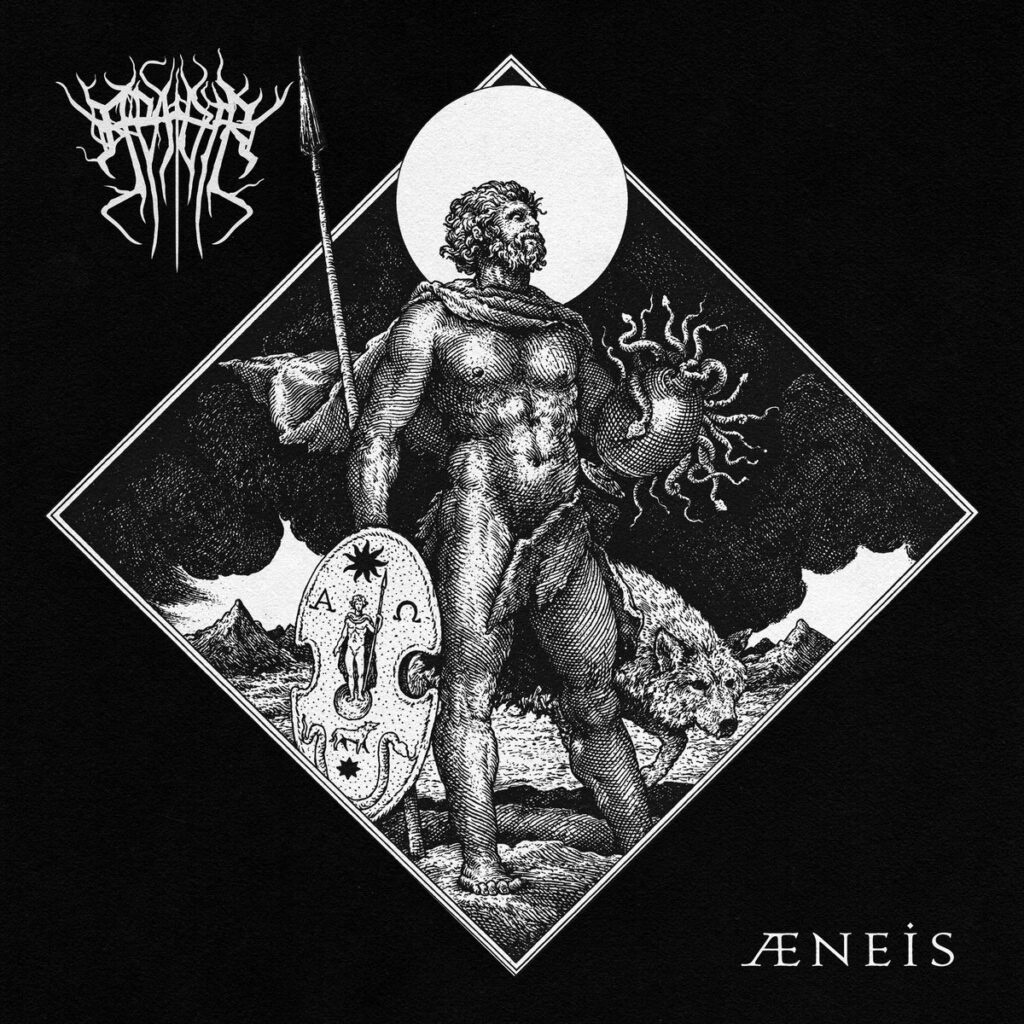
Aeneas is about to spare his defeated opponent Turnus when he recognises the young Pallas’s sword belt. Turnus took it as spoils after killing the boy. The sight of it puts an end to Aeneas’s hesitation. He kills Turnus in a blind rage, and that is where Virgil ends his Aeneid. More than two thousand years later, the Italian duo Abadir give Pallas a track of his own on Æneis. That tells me more about where this record is coming from than all the stories of Rome’s glory put together.
Abadir are Askios and Δ, who came together in Como in 2024. On their debut, Antikosmos, Askios handled guitars, bass and drums. Δ took care of vocals, mixing and mastering. With tracks such as “Phobos”, “Pandora” and “Nyx”, they had the whole of Greek mythology to draw on. They set themselves a tighter framework on Æneis. Virgil’s twelve books become twelve songs, with lyrics written and sung entirely in Italian. This time they turned to Carlo Meroni at ADSR Decibel Studio for the mix and mastering.
Abadir play raw Black Metal and often take their time letting an atmosphere settle in. That pays off in the middle of the album, where “La Soglia” and “Lativm” run to nearly fourteen minutes between them. Aeneas first descends into the underworld to speak to his father. He then arrives in Italy, where another war awaits him. Abadir give that turn in the story more time than they give the fall of Troy in “Ilio”. I like that choice. A city in flames is where you might expect the big set piece. After Troy, Aeneas’s flight could easily have become a long build-up to the next battle. Taking their time here gives his reunion with his father some weight. What I like about the longer atmospheric passages is that they give the rawer sections room to breathe. On a record this long, it matters where those passages fall. Here they come right between the loss of Troy and the fight for a new home. By the time “Lativm” ends, the relief of reaching Italy is already wearing off.
Twelve books in twelve tracks sounds straightforward enough, but listening through the album made me realise how much that fixed sequence asks of you. I have to sit down and give the longer pieces my full attention. On my first listen, the detour felt a little long in places. Once “Pallante” comes around, I can hear why Abadir spend so much time on what happens between battles. It gives the second half a bitter edge. Aeneas has finally set foot on land and people are already dying again.
With a concept album that runs for over an hour, there comes a point when I just want to put on a track without pulling Virgil off the shelf first. The band picked “Sacrificio” as the single. I’d start one track earlier, with “Pallante”. Pallas gets five minutes to himself before the sacrifice that gives the single its name. I prefer to hear the two back to back. With “Pallante” still in your ears, there’s something unsettling about the closer, “Il Lento Avanzare”. By then you’ve followed Aeneas from the fall of Troy to his last fight in Italy. When it’s all over, I find myself thinking about that sword belt again.
Nederlands:
Aeneas staat op het punt zijn verslagen tegenstander Turnus te sparen wanneer hij de zwaardriem van de jonge Pallas herkent. Turnus heeft die als buit meegenomen nadat hij de jongen doodde. Dat ene detail maakt een einde aan Aeneas’ aarzeling. Hij doodt Turnus in blinde woede, en daar laat Vergilius zijn Aeneis eindigen. Dik tweeduizend jaar later geeft het Italiaanse Abadir diezelfde Pallas een eigen nummer op Æneis. Dat zegt mij meer over de insteek van deze plaat dan alle verhalen over het roemrijke Rome bij elkaar.
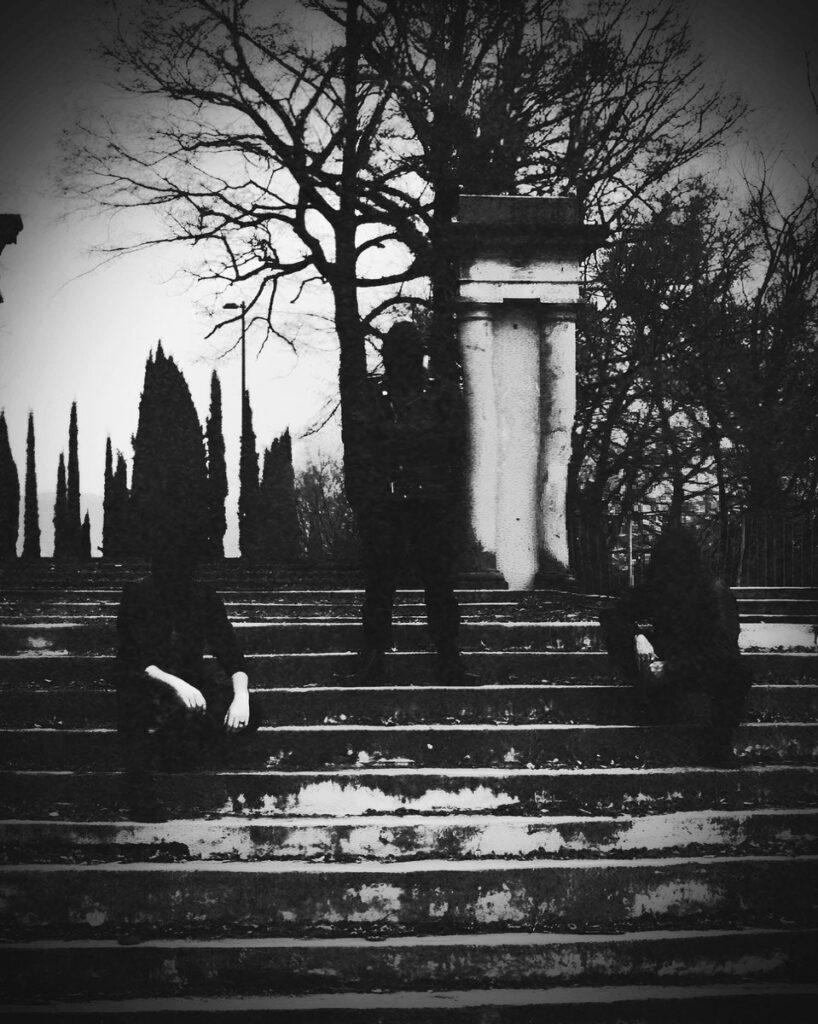
Achter Abadir zitten Askios en Δ, die elkaar in 2024 in Como vonden. Op het debuut Antikosmos nam Askios de gitaren, bas en drums voor zijn rekening. Δ verzorgde de zang en deed ook de mix en mastering. Met nummers als “Phobos”, “Pandora” en “Nyx” konden ze op die plaat alle kanten uit binnen de Griekse mythologie. Op Æneis leggen ze zichzelf een aardige beperking op. De twaalf boeken van Vergilius leveren twaalf nummers op, met teksten die de band volledig in het Italiaans schreef en inzong. Voor de mix en mastering ging het materiaal deze keer naar Carlo Meroni van ADSR Decibel Studio.
Abadir speelt rauwe Black Metal en neemt geregeld de tijd om een sfeer vast te houden. Dat komt goed uit in het midden van de plaat, waar “La Soglia” en “Lativm” samen bijna veertien minuten innemen. Eerst daalt Aeneas af naar de onderwereld om zijn vader te spreken. Daarna komt hij in Italië aan, waar een nieuwe oorlog wacht. Abadir trekt voor die omslag meer tijd uit dan voor de val van Troje in “Ilio”. Een mooie keuze, want bij die brandende stad zou je juist het grote spektakel verwachten. Na Troje had de vlucht van Aeneas gemakkelijk een lange aanloop naar de volgende veldslag kunnen worden. Door juist hier het verhaal wat langer te laten duren, krijgt ook het moment waarop hij zijn vader terugziet gewicht. De langere, atmosferische passages werken voor mij vooral doordat ze de rauwere stukken wat ademruimte geven. Op een plaat van deze lengte maakt het uit waar je die ruimte laat vallen. Hier zit ze precies tussen het verlies van Troje en de strijd om een nieuw thuis. Tegen de tijd dat “Lativm” voorbij is, voelt de aankomst in Italië dan ook maar even als een opluchting.
Twaalf boeken in twaalf nummers klinkt overzichtelijk, maar tijdens het luisteren merk je hoeveel die vaste volgorde van je vraagt. Vooral bij de langere stukken moet ik er echt even voor gaan zitten. Bij een eerste luisterbeurt vond ik die omweg soms wat lang. Vanaf “Pallante” valt voor mij op zijn plek waarom Abadir zoveel tijd uittrekt voor wat er tussen de veldslagen gebeurt. De tweede helft krijgt daardoor iets wrangs. Aeneas heeft eindelijk land onder de voeten en er vallen alweer doden.
Bij een conceptplaat van ruim een uur wil ik op een gegeven moment ook gewoon een nummer kunnen opzetten zonder eerst Vergilius uit de kast te trekken. De band schoof zelf “Sacrificio” naar voren als single. Ik zou één nummer eerder beginnen, bij “Pallante”. Pallas krijgt vijf minuten voor zichzelf voordat het offer uit de titel van de single aan bod komt. Ik hoor die twee dan ook het liefst direct na elkaar. Met “Pallante” nog in je oren krijgt ook afsluiter “Il Lento Avanzare” iets ongemakkelijks. Tegen die tijd heb je Aeneas gevolgd van de val van Troje tot zijn laatste gevecht in Italië. Toch betrap ik mezelf erop dat ik aan het eind vooral weer aan die zwaardriem denk.
82/100