
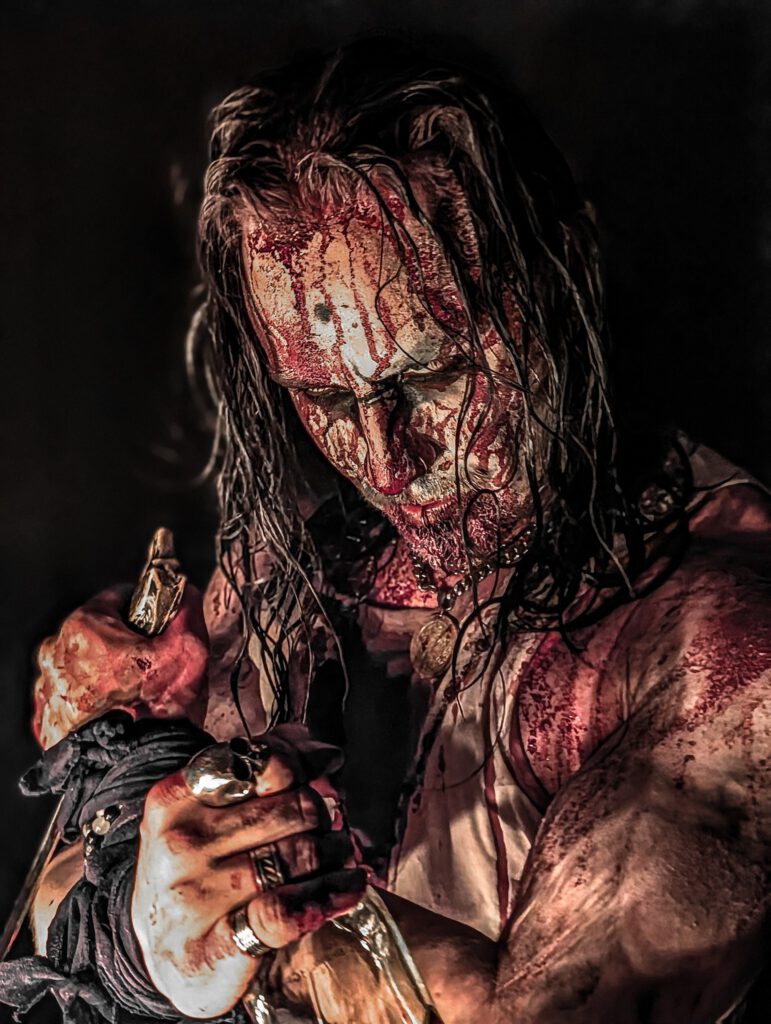
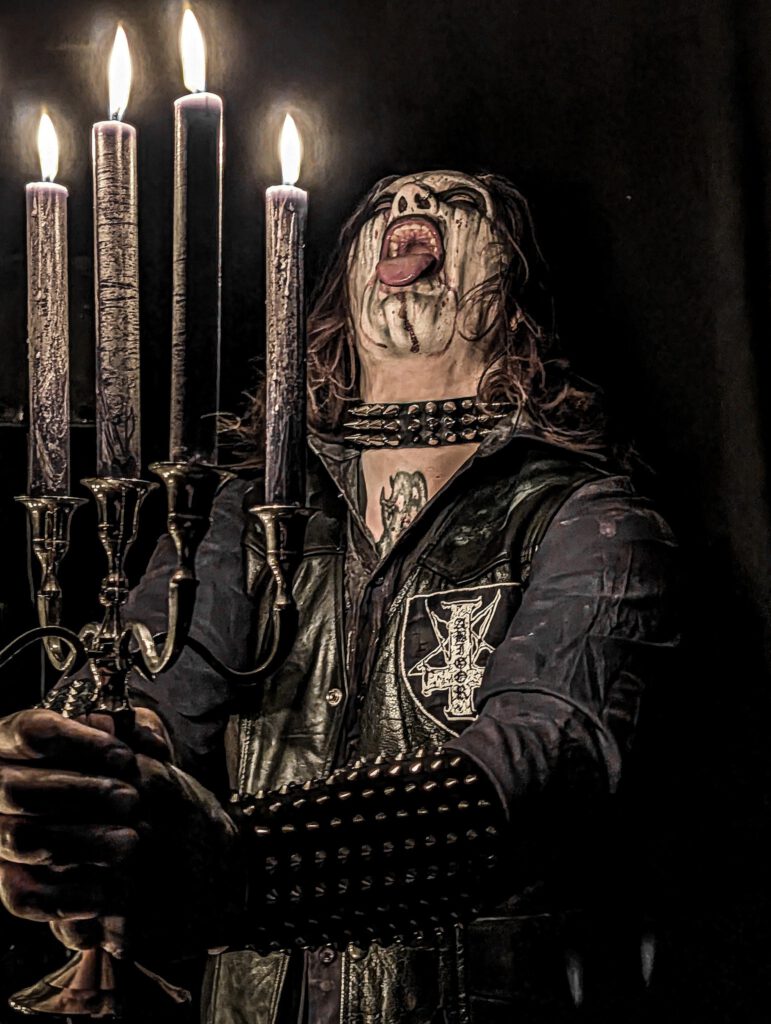
In the frozen silence of the far north, where the Torne River carves a natural border between Sweden and Finland, here exists a region shaped as much by endurance as by history. From this secluded landscape rises The True Rietas, the fiercely independent one-man Black Metal project of Ari XIII. With the debut album Torne Valley Black Metal, Rietas channels the spiritual weight, cultural memory, and uncompromising atmosphere of the Torne Valley into a raw and deeply personal sonic expression.
Rooted in Meänkieli language and identity, the project stands as both an artistic manifestation and an act of conviction. The Torne Valley, often overlooked within Scandinavia, carries a layered past of cultural suppression, religious dominance, and resilient local tradition. Rather than romanticizing or seeking validation, Ari XIII approaches this heritage with ruthless authenticity, allowing history, spirituality, and personal hermitage to converge through the uncompromising essence of Black Metal.
What began as an album never intended for release has evolved into a striking debut that has sparked curiosity about the region, its language, and its identity. In this interview, Ari XIII reflects on the unexpected reception of Torne Valley Black Metal, the significance of Meänkieli, the emotional landscape of his homeland, and why working alone is essential to preserving the raw, unfiltered spirit at the core of Rietas.
First of all, congratulations on the debut album “Torne Valley Black Metal.” How have the reactions to the album been so far?
-Thank you. The reactions have been somewhat surprising. Reason being I didn’t particularly have any expectations due to the nature of this album and the fact that originally it was never meant to be even released. But who am I to distract the natural course of things?
The Torne Valley is a rather unknown region within Scandinavia for many people. Could you explain what makes this area so unique, both historically and culturally?
-First and foremost it is indeed my home region, so naturally there’s a strong bond to begin with personally speaking. Also, historically and culturally, it does have an identity of its own. The “main capital” Tornio is allegedly named after a war spear and it was the northernmost city in Finland when it originated in 1621 in Suensaari (Wolves’ island). The region has been inhabited since the last ice age yet it still remains a bit secluded and thus, the history and the culture is extremely rich and interesting to me at least.
But I guess this region comes across more exotic to the people outside of it than to people who were “born and raised”, like me. As is the case with any culture or region. I’ve only started to truly appreciate the culture and the mythology of it after I made the decision to create a bit of distance and come across with the fact that at the end of the day; there’s no other place where I would prefer to leave my remains – reasons are many.
The Torne Valley lies directly on the border between Sweden and Finland. How has this political border influenced the identity of the people living there?
-Difficult to say since it’s purely a natural thing and has always been like that. In good and in bad; Alot of confrontations between the countries but still plenty of things in common.
The Tornedalians have a long history of cultural suppression. To what extent does this past serve as a source of inspiration for Rietas?
-It’s certainly one of those historical facts that fuel the ruthlessly independent nature of RIETAS even further. My personal origins are within an area where Laestadianism is a very noticeable factor, so this sense of suppression runs quite deep to begin with – There’s not much “room” for what I personally represent, so what we have here is an extremely closed off and strictly delimited field.
You chose Meänkieli as the primary language for both the band name and the lyrics. What does this language mean to you on a personal level?
-It is in my blood and spirit, so naturally there is the urge to respect it through action and conviction.
How alive is the Meänkieli language today, and how do you see its future developing?
-Meänkieli is still spoken today, but it is considered somewhat vulnerable I believe. Active daily use has certainly declined, especially among young people. Even the use of traditional Finnish language has declined, but that’s more of a problem in the Southern part of Finland. And I’m not surprised. Small cultures and languages keep disappearing due to the overall state of the world and its twisted attitudes and it only makes me appreciative towards my own hermitage even more.
Do you notice listeners becoming curious about Meänkieli and the Torne Valley through your music?
-Yes. It’s a natural thing, of course.
Why did Black Metal feel like the right medium to express the history, identity, and struggles of the Torne Valley?
-I believe it comes down to the fact that my musical roots are mostly in Black metal and I’ve developed mannerisms within that frame.
Also, my convictions to non-musical things are very much in line with something that, to me, is – our should be – the very essence of Black metal.
To what extent does the raw and minimalistic nature of Black Metal reflect the landscape and atmosphere of the Torne Valley?
-I think the raw nature of Black Metal does not reflect that nature only through the music and the visual landscape – it also is evident in the “emotional” landscape of Torne Valley; in its silence, endurance, and its insistence towards ruthless authenticity. Nothing in the landscape feels particularly artificial or overly polished, be it spiritual, physical or in music. Just direct and uncompromising as any good art.
The project is deliberately named (The True) Rietas. Why was it important for you to include “The True” in the name?
-Didn’t want any ambiguity about which RIETAS is the one that truly matters.
(And I am not even talking about Jon Nödtveidt. R.I.C.)
Rietas is a one-man project. What does working alone give you artistically that a traditional band setup would not?
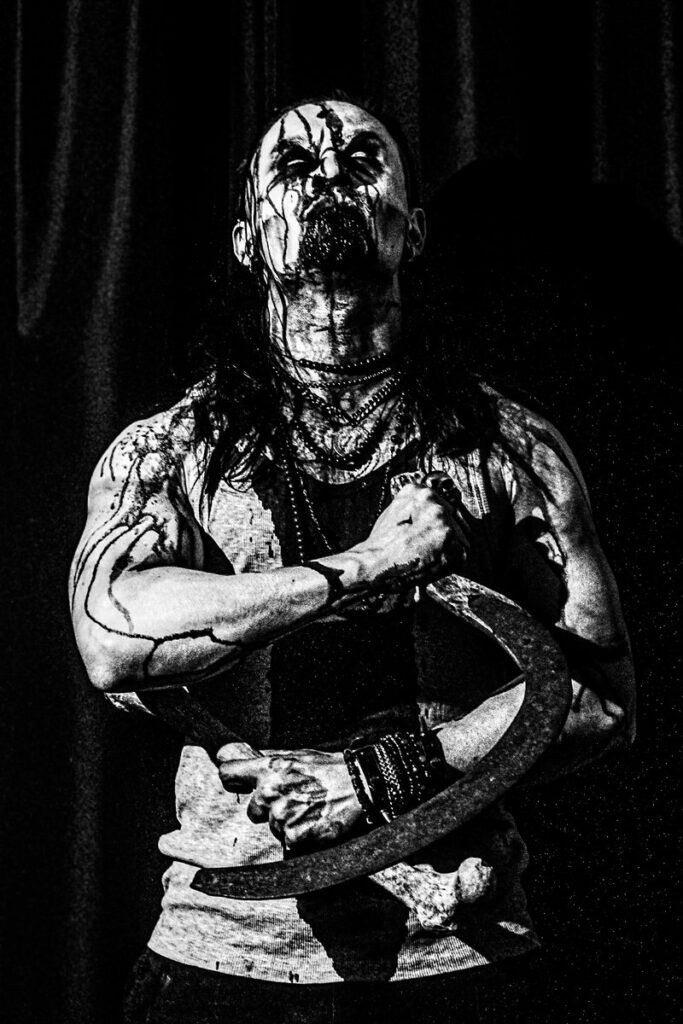
-It enables a natural tension towards the material that I don’t think would necessarily exist in a traditional band setup. The process feels more exposed, since there is no buffer nor collective “smoothing of edges” or any other bullshit that diminishes the personal trait and intention. The music carries the weight of a single perspective, and that gives it a very intimate and personal quality. You can hear the imperfections and flaws and they still remain in the recording. Reason being the fact that to me, that is exactly where the beauty lies. They make the music feel truly alive rather than “constructed”. What you hear is the raw, unfiltered state of the moment and that kind of straightforward sincerity is something I value deeply.
Can you describe your creative process when writing music and lyrics for Rietas?
-The creative process is the most interesting aspect to me personally. I try not to force ideas into existence, but instead allow them to surface naturally if they choose to do so. Usually when you get lost in the process, it begins to breathe on its own and usually leads to something interesting as well. With lyrics, some ideas are usually carefully considered, but even then I aim to let the words find their own form in their own way. The most meaningful moments are when a song feels like it writes itself. In those instances, creation becomes less about control and more about listening and that sense of discovery and magic is what I value, and hope, the most.
How much influence do regional folklore, spirituality, or pre-Christian beliefs have on your lyrical themes?
-Those things do serve an important point to a certain extent. But I’d say those things are something that I merely adapt and utilize within my own spiritual path, if that makes sense. True spirituality is always individual and the hidden traditions I follow are quite contrary to the dominant religion of the region, for example. The lyrics are of course a reflection of that.
Do you see Rietas primarily as a musical project, or also as a form of cultural preservation or activism?
-In a way – both.
How important is it for you to use music as a way to give a voice to smaller, often overlooked cultures in Europe?
-Not that important, actually. Because I don’t think that I or Torne Valley to begin with, would need any kind of validation or is even interested to be involved in these modern day “who’s the biggest victim” -games. I don’t wish to be heard in a world I don’t fundamentally want to belong to in the first place.
Do you think extreme music has a unique power to convey history and identity compared to other genres?
-I don’t think it’s typical particularly with extreme music, even though there are solid examples for sure.
The intention of the art should carry across any genre border.
How does “Torne Valley Black Metal” relate thematically and musically to potential future releases?
-Very well – I already have the next full-length album thought out. There’s plenty to cover still.
How do you see the position of Rietas within the broader Black Metal scene, both Scandinavian and international?
-No idea. But I’m certainly interested to see what lingers on the horizon!
Best regards
Ari XIII/RIETAS