
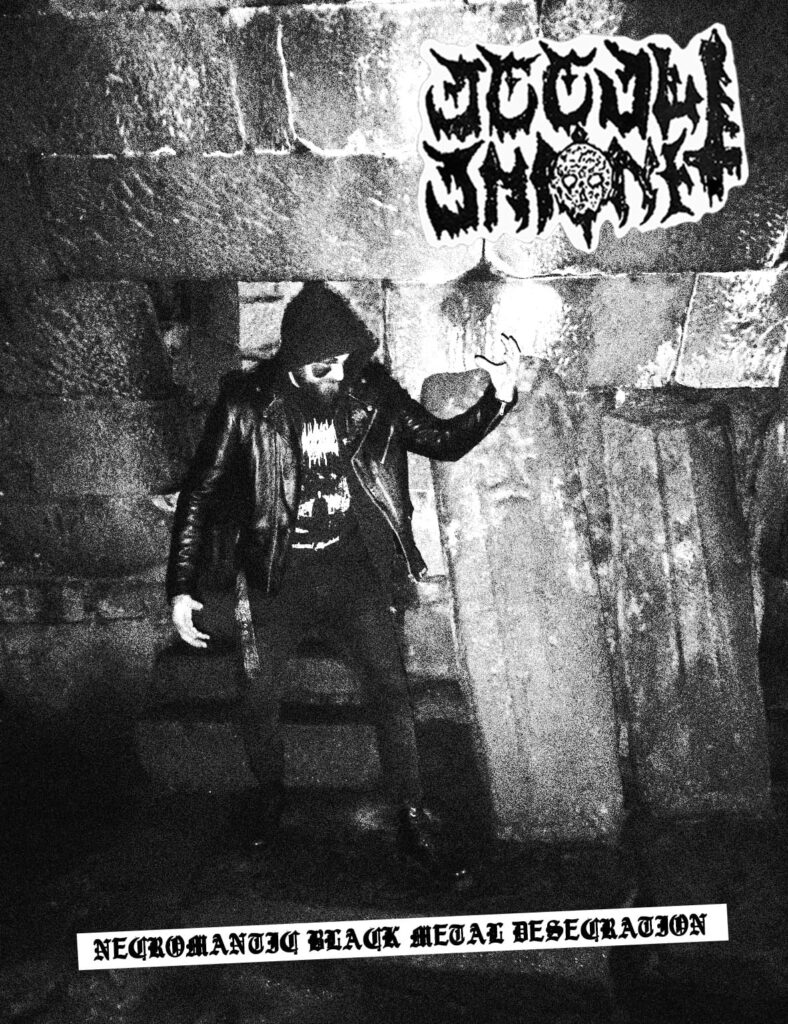
From the shadowed heart of Spain’s underground emerges Occult Shrine, a band devoted to Black Metal in its most arcane and unrepentant form. Rooted in ritual, obsession, and a fierce commitment to the genre’s spiritual core, Occult Shrine reject modern dilution in favor of an atmosphere steeped in darkness and invocation. Their work stands as a testament to Black Metal not merely as music, but as praxis—an occult shrine in sound, raised against the profane world.
In this interview, we descend into their philosophy, influences, and the intent that fuels their craft, exploring the fires that burn beneath their riffs and the silence that follows the ritual.
1. The debut demo Catacombs of Desolated Invocations carries a distinctly underground atmosphere. How important was it for this release to remain raw and unpolished?
Hails and thank you for the interview. The demo was primitively recorded by ourselves with our available equipment, so it would always sound unpolished and this was the plan from the start. The necrotic underground and mysterious sound is an essential part of black metal for me and I am satisfied with how it turned out. Black Metal should sound OLD!
2. You draw heavily from early ’90s black/death and occult metal. What do you miss in much of today’s extreme metal that you still find in this older style?
Of course! We drink from the fountains of black blood of the old masters. The main influences for Occult Shrine come from those undefined early 90s before the norwegian or scandinavian scenes, which we also worship, pointed the direction that would prevail in black metal in the following decades. In those late 80s and early 90s a lot of bands reached unprecedented levels of darkness in their sound without the necessity of being the fastest or the most brutal band.
Originality, personality, atmosphere and malignant riffs were the key. However a lot of bands took it wrong apparently, and the thing I miss the most in many current bands are the riffs. You can find a lot of bands nowadays with the same plain or “atmospheric” approach and without any traces left of the sharpness and evilness that should be found. To put it straight, the riffs are lacking. Some of the black metal is nowadays way too clean and too melodic, and it becomes aseptic, safe and sterile, which goes in the total opposite direction of the genre’s essence. However, the underground is full of quality and black gems to be found by the ones searching.
3. Bands like Necromantia, Varathron, and Mortuary Drape are often cited as references. Are these primarily musical influences, or did their attitude, aesthetics, and mysticism play an equally important role?
For sure they are total influences in all the points you mention. They are very important bands for me. These early bands from the south of europe achieved some of the most original and esoteric black metal ever done. Their music emanates occultism, necromancy and channels ancient rites that have remained dormant, waiting to be unearthed since the times of ancient pagan cults. Even if we worship the Scandinavian scenes as well, it’s true that the sound for Occult Shrine is more influenced by these southern bands, as well as from american black metal (american as in America, not just the USA!!!!)
4. When does influence turn into imitation? How do you preserve your own voice within such a recognizable idiom?
In relation to the previous bands, I don’t think we are even close to imitation. I love Hellenic black metal and Mortuary Drape, and they are among my main influences, but I think you can easily find many current bands sounding more similar to them than us. I would say that others like Samael, Mystifier, Profanatica, Demoncy and other primitive black metal bands influence our sound as well, and the result is a mix of everything.
When I am writing riffs I don’t try to sound like a specific band, I know the sound I want to make and the necromantical and cavernous invocations I am searching for. They have even described our demo as doom death metal! I don’t agree with that but maybe it indicates that we play our own approach to black metal. Anyway, I don’t care about tags or classifications so no problem with that. On the other hand, I don’t think that black metal needs to be very innovative in the end, so I also wouldn’t care if they think of us as an imitation of some old band we worship. It would even be a flattering description to somehow reach their level.
5. There seems to be a clear revival of this archaic sound. Do you see this as a natural cycle, or as a conscious reaction against modern production and trends?
I think that this type of sound is in the soul and essence of underground metal. The old recordings from the 80s and 90s with this archaic sound defined it as another component of the music. These raw productions gave that music an extra layer of mystery and made it sound from out of time, like emanations from dark dimensions outside this world. It will never go old cause it was archaic and primordial already from its birth. These “poor” productions also gave each recording a different sound and a lot of personality. You put some of those demos and usually guitars, drums, etc will have a very unique and strange tone that sets them apart from other recordings. This is not the case with the productions that are made with recording-studio standards of “quality”.
The revival you mention could be a mix of both, it’s a natural cycle cause there have always been bands understanding the importance of the primitive sound and also it can be a reaction to classic bands that used to sound very dark changing into cleaner or overproduced modern sounds.
6. Which current bands do you find genuinely convincing within this revival—and why those in particular?
A lot of them! While almost all mainstream “metal”, to call it something, is total garbage nowadays, the underground is alive and strong. This is where the essence lives, and a lot of bands nowadays totally understand this archaic black metal sound. For example from your country, two new bands I like that come to my mind are Necromantic Worship and Fír. Regarding total rotting archaic sound, a lot to mention: Forbidden Temple, Moenen of Xezbeth, Perverted Ceremony, Wulkanaz, Witchcraft and their related projects…..
7. Do you think this resurgence is here to stay, or will it once again retreat into the underground?
I think that the underground is where primitive and pure metal is always found, so I don’t pay too much attention to things happening outside of it. I’m sure bands carrying the morbid metal sound will always continue to emerge.
8. Occult Shrine evokes a strong sense of ritual and subterranean space. Is atmosphere the starting point in your songwriting, or does it emerge later in the process?
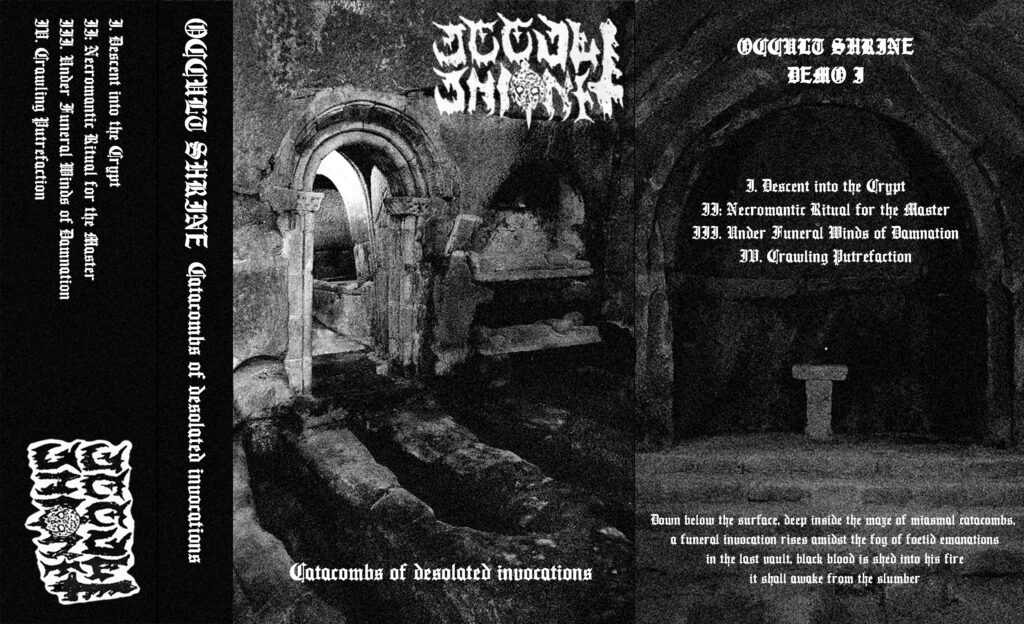
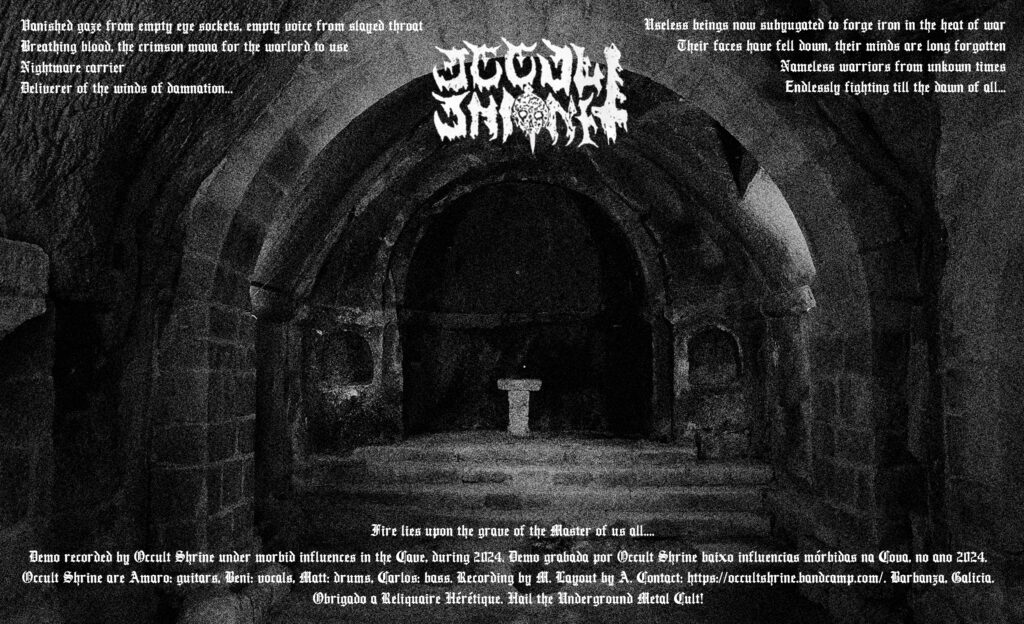
Yes, the inspiration for the project came from entering old crypts across Galicia and feeling the silence of death triumphant inside them. The songwriting tried to recreate the imperturbable darkness reigning inside of them. Of course, my morbid thoughts started producing all sorts of blasphemies emanating from those graves carved in cold and humid stone. The artwork for the project came as well from the pictures I took during those crypt profanations. So, all in all, to answer your question I think it is quite atmospheric work indeed.
9. To what extent is occultism, for you, an aesthetic language, and to what extent a personal belief or practice?
It’s never just an empty aesthetic language. As we were talking before, the old black metal bands emanated real esoteric magic from their sound. Once you were attracted to their music you were at the same time attracted to the occult texts, names and symbols. And so, the journey begins and the interest in occultism awakes.
Just think of the universe. The small fraction we can understand of it comes from the use of the human made equipment, limited of course by a human-based system of knowledge inside a universe which exceeds far beyond those limits. Most of the reality remains beyond human capacities, there are things beyond what mankind can grasp and understand. Dark forces such as death and chaos are rulers of this universe.
Everything is attracted to entropy and in the end, death is the ultimate fate of everything, even of the light and the universe itself. And this is where occultism is to be found and developed inside each one. I have always been attracted by occult history and writings and this is manifested in Occult Shrine. The relation between music carrying this essence and mysticism is very powerful and produces ritualistic status rather than being just aesthetic attributes. Just play some proper music alone in a dark night for example, or in some place of power, and the mind will visit strange planes and flow the spiritual cold currents of death.
10. Is music, for you, a form of invocation, or rather a documentation of something that is already present?
The Occult Shrine music is an invocation of the forces of death. As said, the inspiration for the project came from catacomb wanderings and crypt profanations, in search of the silent power of Death reigning in those cold stone graves during centuries. This power is the one I wanted to invoke again through the music, as offerings to the altar of death. For the next demo the inspiration came from ancient cults and sorcery rites, with again the music serving as an invocation to channel these old powers.
11. You are active in Occult Shrine, High Sorceress, and Feral Forms. How do you ensure that each project maintains its own identity and does not become interchangeable?
Each of them is very different. Occult Shrine arose from my morbid obsession with necromantic black metal. High Sorceress is a satanic Doom Metal band that was born after several jamming sessions with the same lineup that played in the Occult Shrine debut demo. We are all fanatics of Electric Wizard and ended up with a bunch of songs influenced by them after those jam sessions. So we recorded those songs as the first demo, “By Command of The Necroqueen”, and the label Doomshire Tapes was interested in releasing it. It was recorded also in the same space we used for Occult Shrine, called the cave of the cult, or “cova do culto” in galician.
My involvement in Feral Forms began after I moved to Italy one year ago and ended up joining the band as second guitar. It’s a very dark and evil death metal band, and for real those words are not plain. It’s very aggressive, with war metal influences, and I can only say that it’s a total honour for me to play with them. Each show we play is a savage act of real aggression and I am sure the future will provide great conquests for the band.
12. Is there a hierarchy among these projects, or does each serve a different necessity?
Now a lot of efforts go to Feral Forms since we have ambitious plans regarding playing live and writing new material. The band seriously annihilates and demands our blood in return!
But besides that I keep working on my projects and I wouldn’t say there is hierarchy among them. They just serve different necessities as you say. Occult Shrine is where I manifest my old devotion for the black metal of death, which is the music I have always been more attracted to. Of course, the psychedelic Doom metal of High Sorceress serves different needs and is dark in a very different way: it’s wicked, sleazy and perverted. It’s very influenced by the satanic erotic horror of the 70s, a different kind of ritual. The coven of the High Sorceress is a cult of perversion in honour of Satan.
13. What can Occult Shrine express or achieve that the other projects cannot?
Very different things. Occult Shrine is focused on ritualistic necromantic black metal. It’s supposed to transport the mind to a slumber status in trance between the rotten incenses of death in an abandoned tomb. It’s of course very different in nature to my non-black metal projects but also very different to another black metal project I have and that will see the light someday as well.
14. Do you see Occult Shrine as a long-term project, or something that should exist only as long as the necessity remains?
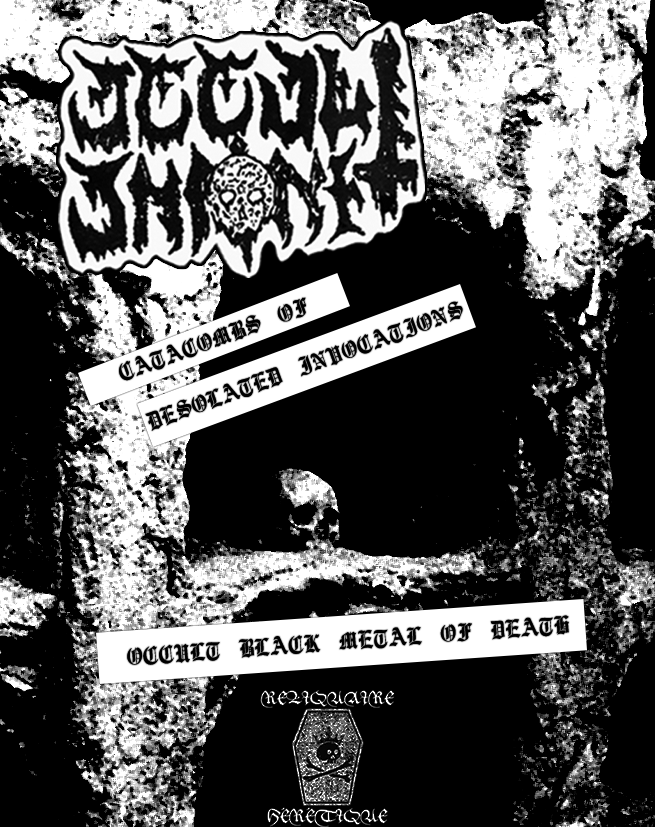
With only one demo released I cannot say too much about that. The first demo tape “Catacombs of Desolated Invocations” was first self-edited by us and shared with some contacts. Then we were contacted by Reliquaire Hérétique from Brazil, who showed interest in releasing the tape there. This was a huge honour since the label is made of true dedication and releases very good underground bands. Also as a side note it was a pleasure cause I worship the Brazilian black metal scene as one of the best ones!
Afterwards the demo was also edited in Europe by Profaner Records, which is another cult label I respect a lot, so all in all it aroused a respectable interest in the underground. I have already written the material for the second demo and it will be recorded in 2026. Then for the future, time will tell, but my plan is to keep developing the project and perform some live rituals at some point.
15. Are there plans for new material, and will it be a deepening of the same atmosphere, or a shift in direction?
Yes, I have already written the second demo. It follows the same atmosphere, as it is the marrow of this project. However, there are also some differences and I would say the second work will be better composed and with more Hellenic influences, which is always a good thing!
Occult Shrine:
Bandcamp
Profaner Records:
Bandcamp
Website
Facebook
Instagram
Review: Occult Shrine – Catacombs of Desolated Invocations Tape